| Dietary supplements | Powders, tablets, capsules, and blended supplement products | Spirulina is a nutrient-dense cyanobacterium. Its dry matter is commonly reported to contain a high proportion of protein, although the amount varies with species and growing and processing conditions. | It is easy to incorporate into concentrated, shelf-stable formats and is often chosen by consumers seeking plant-based ingredients. | Composition varies by product. Supplements should be assessed for identity, quality, and possible contaminants; spirulina is not a substitute for a varied diet. |
| Plant-based nutrition | Blended powders, nutrition mixes, and plant-forward formulations | Spirulina provides protein and other nutrients, but its nutrient profile is not identical to that of conventional protein foods. | Interest in plant-derived ingredients encourages its use as one component in broader nutrition blends. | It is usually used as an ingredient rather than as the sole protein source. Flavor, color, and formulation compatibility can limit the amount used. |
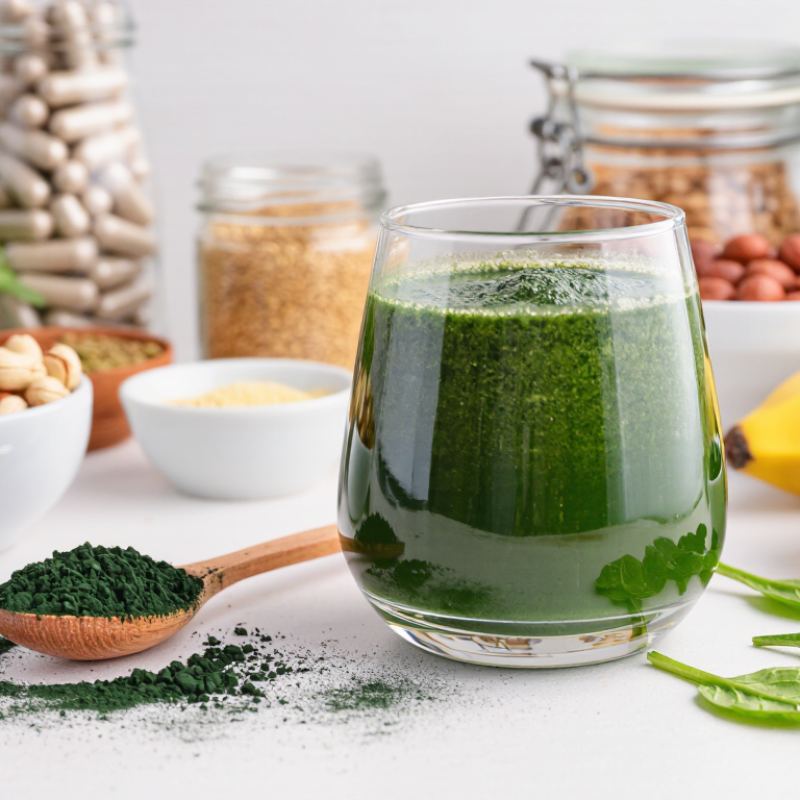
| Functional foods and beverages | Smoothie mixes, nutrition bars, drink powders, and selected formulated foods | The powder disperses into many dry mixes and can contribute a distinctive green color and characteristic flavor. | Food makers can add a recognizable algae-derived ingredient to products marketed around plant-based or functional-food positioning. | Earthy or marine notes may affect taste acceptance. Heat, light, oxygen, and processing conditions can affect product quality and appearance. |
| Natural blue colorants | Phycocyanin-rich spirulina extract, rather than ordinary whole spirulina powder | Phycocyanin is the blue pigment associated with spirulina. Extracts are used to provide blue shades in certain foods where their use is permitted. | Demand for alternatives to some synthetic colors has encouraged interest in spirulina-derived blue ingredients. | Permitted uses differ by jurisdiction and food category. The pigment can be sensitive to heat, light, and acidic conditions, so formulation testing is important. |
| Vegan and vegetarian product development | Supplement blends and plant-based food formulations | Spirulina is produced from photosynthetic microorganisms and is used as a non-animal-derived ingredient. | It fits product concepts aimed at consumers seeking ingredients of non-animal origin. | Vegan positioning does not by itself establish suitability for every diet or consumer. Product labeling and ingredient handling should be checked. |
| Clean-label and ingredient diversification | Whole powder or standardized extract, depending on the intended function | Spirulina can serve as a recognizable food ingredient, while extracts can provide more targeted pigment functionality. | Manufacturers may use it to diversify ingredient sources and respond to interest in algae-based products. | “Natural” does not mean universally approved or automatically preferable. Regulations, specifications, and labeling requirements vary by market. |



 08045479132

 Send Inquiry


 Send Inquiry
 Send SMS

