| Rotation range | Up to 360° continuous rotation | A central spindle, bearing, or turntable ring allows the upper platform to rotate around a vertical axis. | Users can view or position equipment from any direction without lifting or repositioning the entire stand. |
| Common bearing type | Ball-bearing turntable, roller-bearing assembly, or plain bushing | Rolling elements reduce sliding friction between the fixed base and rotating platform. | The bearing choice affects smoothness, noise, service life, cost, and allowable load. |
| Typical load range | Approximately 5–500 kg, depending on diameter, materials, bearing design, and load position | The bearing and support structure transfer the vertical load to the base while resisting overturning forces. | Buyers should compare rated load, safety factor, and load-center position instead of relying only on the stand’s external size. |
| Rotation direction | Clockwise, counterclockwise, or reversible | Manual models rotate by hand; powered versions use a motor, gearbox, and control system. | Reversible movement is useful for inspection, product presentation, photography, and operator access. |
| Manual rotation speed | User-controlled; commonly about 1–10 revolutions per minute during hand operation | The operator applies torque directly to the rotating platform or attached handle. | Manual operation avoids electrical certification requirements and is suitable for simple, low-duty applications. |
| Powered rotation speed | Often adjustable from approximately 0.5–30 rpm | A motor supplies torque through a gearbox or direct-drive mechanism; a controller regulates speed. | Adjustable speed supports inspection, display, scanning, filming, and automated handling processes. |
| Platform diameter | Commonly about 100–1,200 mm; larger custom platforms are possible | The platform distributes the load over the bearing and determines the usable placement area. | The diameter should accommodate the product footprint while leaving enough clearance for safe rotation. |
| Typical construction materials | Steel, stainless steel, aluminum, engineering plastics, or combinations of these materials | The frame provides stiffness, while the bearing system supports rotation and the surface provides product contact. | Material selection affects corrosion resistance, weight, hygiene, durability, and shipping cost. |
| Surface finish options | Powder coating, anodizing, zinc plating, brushed stainless steel, or polished surfaces | A protective finish reduces exposure of the base material to moisture, abrasion, and chemicals. | Finish requirements may vary by destination climate, industry regulations, and cleaning procedures. |
| Center-of-gravity requirement | The load should remain as close as practical to the rotation axis | An off-center load creates a larger overturning moment as the horizontal distance from the axis increases. | Correct positioning improves stability, reduces bearing stress, and helps prevent uneven movement. |
| Cable-management method | External cable loop, limited-angle routing, or slip ring for continuous rotation | A slip ring transfers electrical power or signals across a rotating interface without twisting cables. | This is essential when sensors, lights, displays, or powered tools must operate during continuous rotation. |
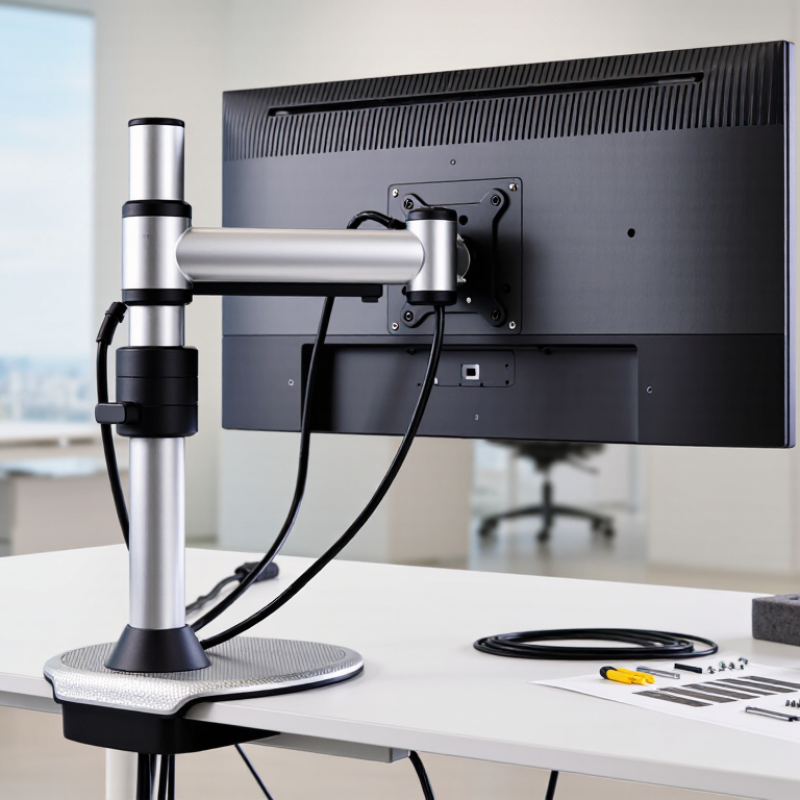
| Typical applications | Product displays, inspection stations, camera platforms, laboratory equipment, monitors, and light machinery | The rotating platform presents different sides of an object while the base remains stationary. | One stand can support multiple viewing or access angles, improving space utilization and workflow efficiency. |
| Installation surface | Desktop, floor-mounted, wall-mounted, or integrated into machinery | Mounting holes, clamps, brackets, or a weighted base keep the stationary section secure. | Buyers can select a configuration that matches available space, local installation practices, and transport constraints. |
| Maintenance requirement | Periodic inspection; lubrication may be required for serviceable bearings | Maintenance reduces friction, detects looseness, and helps protect the bearing from contamination. | Simple maintenance procedures help reduce downtime and simplify after-sales support across different regions. |
| Key purchasing checks | Load rating, platform size, rotation speed, mounting pattern, environment, and electrical requirements | These specifications determine whether the mechanical and electrical systems are suitable for the intended duty. | A complete specification reduces compatibility risks related to installation, shipping, safety, and local compliance. |



 08045479132
 Send Inquiry

 Send Inquiry
 Send SMS