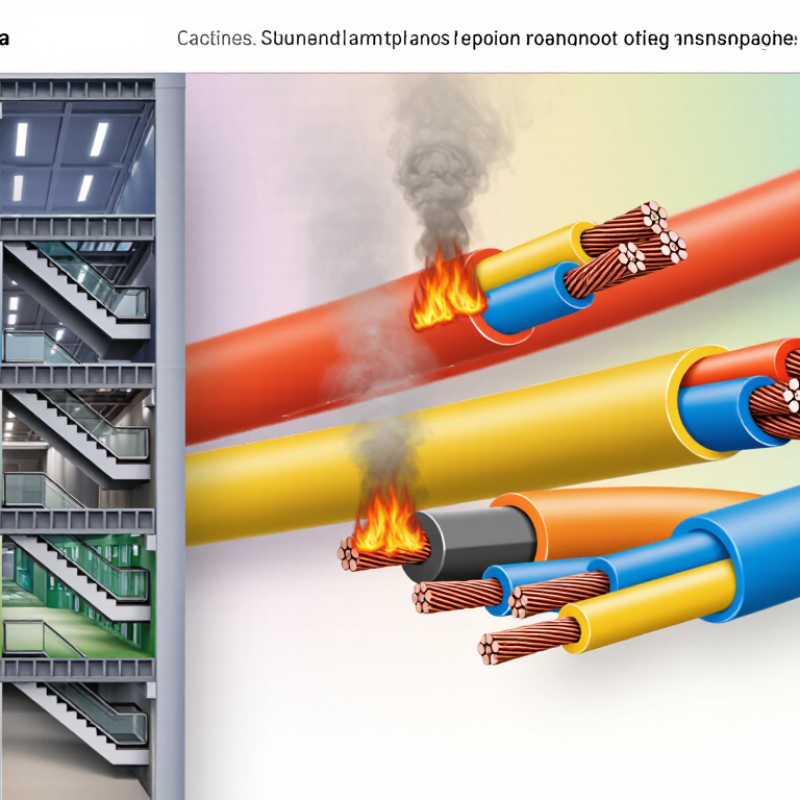
| Primary Function | Limits flame spread along the cable | Flame-retardant cables are designed to resist ignition and reduce the propagation of fire when exposed to a flame. They do not necessarily maintain circuit operation during a fire. | Helps prevent a localized cable fire from spreading rapidly through cable routes. |
| How the Cable Works | Material formulation and cable construction | Special insulation, sheath, fillers, tapes, or compounds can reduce heat release, slow flame travel, and promote self-extinguishing behavior after the ignition source is removed. | Supports safer cable containment in buildings, industrial facilities, transport systems, and infrastructure projects. |
| Single-Cable Flame Test | Resistance to vertical flame propagation | IEC 60332-1-2 specifies a vertical flame propagation test for a single insulated wire or cable using a defined flame application procedure. | Provides a common baseline for evaluating individual cables used in international projects. |
| Bunched-Cable Flame Test | Performance when several cables are installed together | IEC 60332-3 series tests flame spread on vertically mounted bunched cables. Different categories use defined cable quantities and test durations. | More closely reflects cable trays, risers, shafts, and densely packed installation environments. |
| Low Smoke Performance | Amount of smoke produced during burning | Low-smoke cable designs are commonly evaluated using IEC 61034-2, which measures light transmittance in a smoke chamber. Lower smoke can improve visibility during evacuation. | Important for enclosed public areas, tunnels, stations, data facilities, and high-occupancy buildings. |
| Halogen-Free Performance | Reduction of corrosive acidic gases | Halogen-free, low-smoke materials are commonly assessed for halogen acid gas emission under IEC 60754-1 and acidity and conductivity under IEC 60754-2. | Can reduce corrosive damage to electronic equipment and metal structures during a fire. |
| Fire Resistance vs. Flame Retardance | Different safety functions | Flame retardance limits flame spread. Fire-resistant or circuit-integrity cables are designed to continue operating for a specified period under fire conditions and require separate system-level testing. | Helps project teams select the correct cable for alarms, emergency lighting, pumps, controls, and ordinary power circuits. |
| Common Conductor Materials | Electrical current-carrying element | Copper and aluminium are widely used conductor materials. The selection depends on conductivity, weight, installation method, mechanical requirements, and applicable electrical codes. | Allows the cable design to be adapted to regional engineering and installation requirements. |
| Operating Temperature | Permitted continuous conductor temperature | Typical ratings depend on the insulation system and product design. Common thermoplastic and thermoset cable systems may have continuous conductor ratings such as 70°C or 90°C, but the exact rating must be verified from the product specification. | Supports correct ampacity calculations and prevents premature insulation aging. |
| Voltage Rating | Maximum intended system voltage | Cables are manufactured for defined voltage classes, such as 300/500 V, 450/750 V, or 0.6/1 kV. The selected rating must match the electrical system and local regulations. | Improves compatibility across different power distribution systems and project locations. |
| Installation Environment | Conditions surrounding the cable | Selection should consider indoor or outdoor use, moisture, ultraviolet exposure, oil, chemicals, mechanical impact, bending, burial, conduit, and cable-tray installation. | Reduces the risk of premature failure caused by environmental exposure rather than electrical loading. |
| International Compliance | Verification against recognized standards | Project specifications may reference IEC, EN, BS, NEC, or other national and regional requirements. Compliance should be confirmed through the applicable test reports, declarations, and installation rules. | Simplifies technical review and helps avoid non-compliance when equipment crosses national borders. |
| Construction Consistency | Repeatability of cable performance | Conductor size, insulation thickness, sheath material, concentricity, and manufacturing tolerances affect electrical and fire performance. Independent testing and documented quality control provide supporting evidence. | Improves reliability in large projects with long cable runs and multiple installation teams. |
| Typical Applications | Where flame spread control is important | Common applications include commercial buildings, hospitals, schools, transportation facilities, industrial plants, renewable-energy sites, communication rooms, tunnels, and public infrastructure. | Provides a practical safety upgrade for installations where cable fire propagation could affect people, assets, or service continuity. |
| Selection Check | Information to confirm before procurement | Verify conductor size, voltage rating, temperature rating, flame test, smoke and halogen performance, mechanical properties, environmental suitability, installation method, and local approval requirements. | Reduces specification gaps, substitution risks, and delays during international procurement and inspection. |



 08045479132
 Send Inquiry

 Send Inquiry
 Send SMS