| What it is | A manufacturing process in which heated thermoplastic is injected into a shaped mold, cooled, and ejected as a wheel cover. | It can produce repeatable parts with molded-in features such as ribs, clips, and surface textures. |
| Typical applications | Decorative covers fitted over compatible steel wheels on passenger vehicles and some light-duty vehicles. | Wheel covers can change a wheel’s appearance and help shield parts of the wheel from dirt and road splash. They are not structural wheels. |
| Common materials | Polypropylene (PP) is commonly used. Other thermoplastics, including ABS, may be selected where their performance and design characteristics suit the application. | Material choice affects impact behavior, flexibility, weight, heat resistance, surface finish, and cost. |
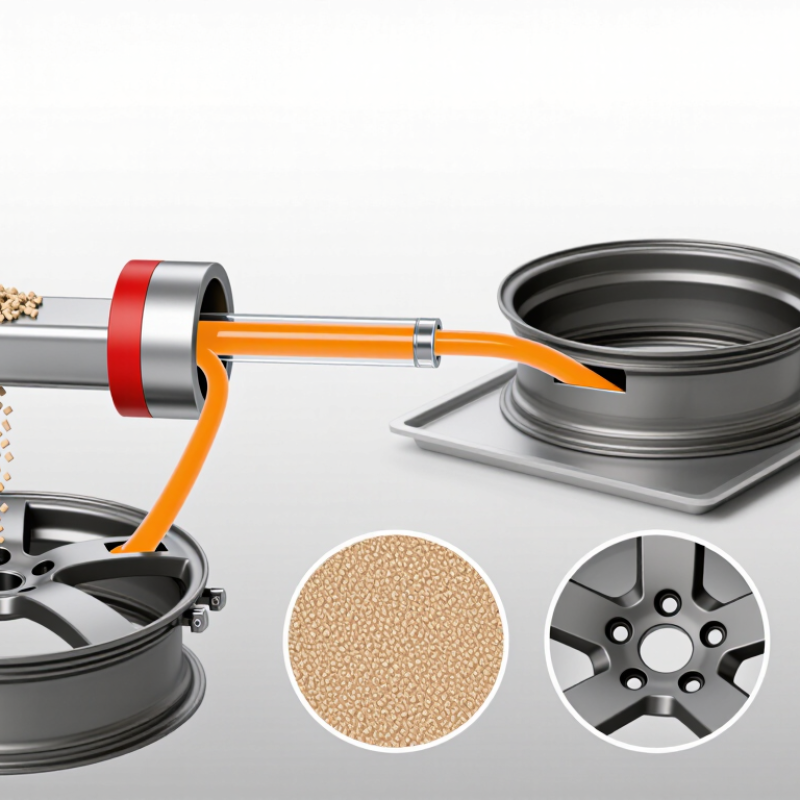
| How the process works | Plastic pellets are melted in an injection-molding machine, pushed into a closed mold, cooled, and removed. The part may then receive finishing or inspection. | The mold defines the cover’s geometry and surface details; process settings and mold design influence consistency and appearance. |
| Attachment features | Depending on the design, covers may use molded clips, retaining rings, or other retention features to fit a compatible wheel. | Fit and retention should be checked for the specific wheel design. Incorrect fit can cause looseness or loss of the cover. |
| Design considerations | Designers consider wheel dimensions, clearance, clip strength, wall thickness, draft angles, cooling, and the intended surface finish. | These factors help the part release from the mold and support reliable fit, appearance, and performance in use. |
| Advantage: repeatability | Once tooling and process settings are established, injection molding can make large quantities of similar parts. | Consistent production is useful for vehicle programs and replacement-part supply. |
| Advantage: design flexibility | Complex contours, ribs, openings, and decorative details can often be formed directly during molding. | Design features can be integrated into the part rather than assembled as separate components. |
| Advantage: lightweight construction | Thermoplastic covers are generally lightweight compared with many metal alternatives. | Lower part weight can make covers easier to handle and install; the cover does not replace the load-bearing wheel. |
| Limitations | Tooling requires upfront investment, and plastic parts can be affected by impacts, temperature, ultraviolet exposure, and aging. | Material selection, testing, and suitable care matter. A damaged or poorly retained cover should be inspected or replaced. |



 08045479132

 Send Inquiry


 Send Inquiry
 Send SMS

