What Is a Football Ball Launcher Machine?
A Football Ball Launcher Machine is a training device that sends footballs toward players at chosen speeds, heights, and angles. Depending on its design, it may use rotating wheels or another controlled feeding system. Coaches can use it to repeat passes, crosses, or shots without relying on a second player to serve every ball. That consistency makes drills easier to measure. Small details matter.
Ball condition, launch settings, and machine placement can all change the delivery. A ball with different pressure may travel differently, while uneven ground can affect setup. Coaches should follow the manufacturer’s instructions, secure the unit, and keep players clear of the feeding area during adjustments. Features vary between models, so published specifications are more useful than broad promises about speed or accuracy.
The machine is a practice aid, not a substitute for reading the game or responding to a teammate. Players still need varied, unpredictable situations. A launcher can provide useful repetition, but repetition alone may build habits that do not transfer well to match play. I would treat its settings as starting points, then adjust drills to players’ age, skill, and training goals. With sensible setup and active coaching, it can make focused ball-control and shooting sessions more practical.
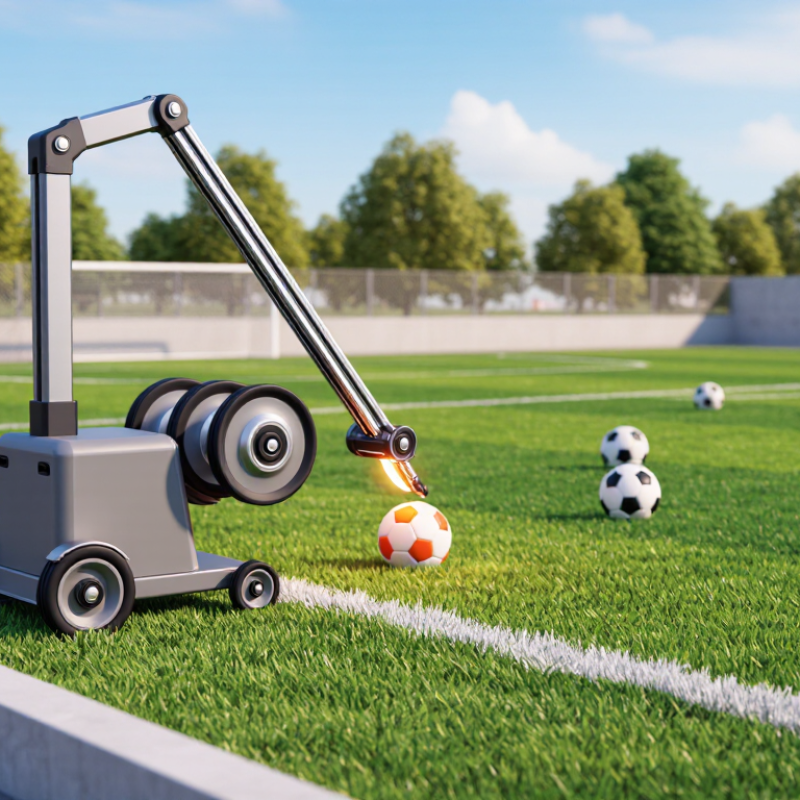
Definition and Purpose of a Football Ball Launcher Machine
What Is a Football Ball Launcher Machine?
Definition and Purpose of a Football Ball Launcher Machine
A football ball launcher machine is training equipment that feeds and projects footballs toward a player or target. Depending on its design, it can vary launch speed, angle, direction, and interval. Some models deliver ground passes; others send aerial balls for volleys or goalkeeper practice. Controls differ by model.
Its purpose is to make selected repetitions more consistent. A coach can direct balls toward a keeper’s near post or feed a winger repeated crosses from a marked channel. Players can practice first touch, positioning, striking, or reaction within a defined drill. FIFA’s Big Count 2006 estimated 265 million football players worldwide. This historical figure indicates the sport’s broad reach, not proof that launchers improve performance.
Repetition helps. It does not replace judgment. A machine cannot read fatigue, confidence, or match decisions. Coaches should adjust distance and delivery, check ball pressure, and vary practice. That detail is easy to overlook. Predictable feeds can limit decision-making, so human feedback still matters. A launcher is a tool, not a coach.
Main Components and Their Functions
What Is a Football Ball Launcher Machine?
Main Components and Their Functions
A football ball launcher machine uses powered wheels or rollers to send balls toward a player. The wheels grip the ball and create its speed and direction. Changing wheel speed can alter the delivery, though the exact adjustment depends on the machine’s design. Some models use paired wheels; others use different launching mechanisms. The motor supplies power, while a frame holds the assembly steady. A solid frame matters: vibration can shift the aim during repeated drills.
The feeder guides balls into the launch area, either one at a time or from a hopper. Its shape and angle help reduce jams, but damp or scuffed balls may still feed unevenly. A control panel lets an operator adjust settings such as speed, interval, and launch angle. Those controls should be tested at low power before a full practice session. A swivel base or adjustable mount helps aim passes at different heights.
Simple parts. Important details.
Inspect wheels for wear, check that moving parts are clear, and keep the machine stable on the surface.
One limitation deserves attention: settings do not guarantee identical passes every time. Ball condition and setup can change the result.
Training Uses and Safety Considerations
What Is a Football Ball Launcher Machine?
Training Uses and Safety Considerations
A football ball launcher machine sends balls toward players at a selected pace and angle. Coaches use it to repeat passes, crosses, or shots without needing another player to deliver each ball. This consistency can help athletes practise first touches, timing, and positioning. It is a training aid, not a substitute for varied practice or coaching. A machine cannot read a player’s movement.
Safety starts with setup. Place the launcher on stable, level ground, and keep the feeding area clear of hands and loose clothing. Check the machine and balls before use; damaged parts or wet, misshapen balls may affect delivery. Set a slow pace first, then adjust only when players are ready. Keep people outside the ball’s path, and pause the machine before clearing a jam or changing its position. Follow the operating instructions. Small details matter. I would still watch how each player responds; a setting that feels manageable to one person may surprise another.
Tips: Mark a clear waiting line with cones. Send one player into the receiving area at a time, and agree on a stop signal before starting. Recheck spacing after moving the machine. Don’t rush the next ball.



 08045479132

 Send Inquiry


 Send Inquiry
 Send SMS

