| DIP Coding Switch | Individual slide, rocker, or piano-style sections are set to open or closed positions. Each section represents one binary bit. | 2n states; for example, 8 positions provide 256 binary combinations. | Usually a set of independent single-pole contacts that are read as a binary code by a circuit. | Address selection, configuration settings, operating-mode selection, and equipment identification. | Low cost, easy to understand, and suitable for infrequent manual settings. | Not ideal for frequent adjustment; switch positions may be difficult to read in confined spaces. |
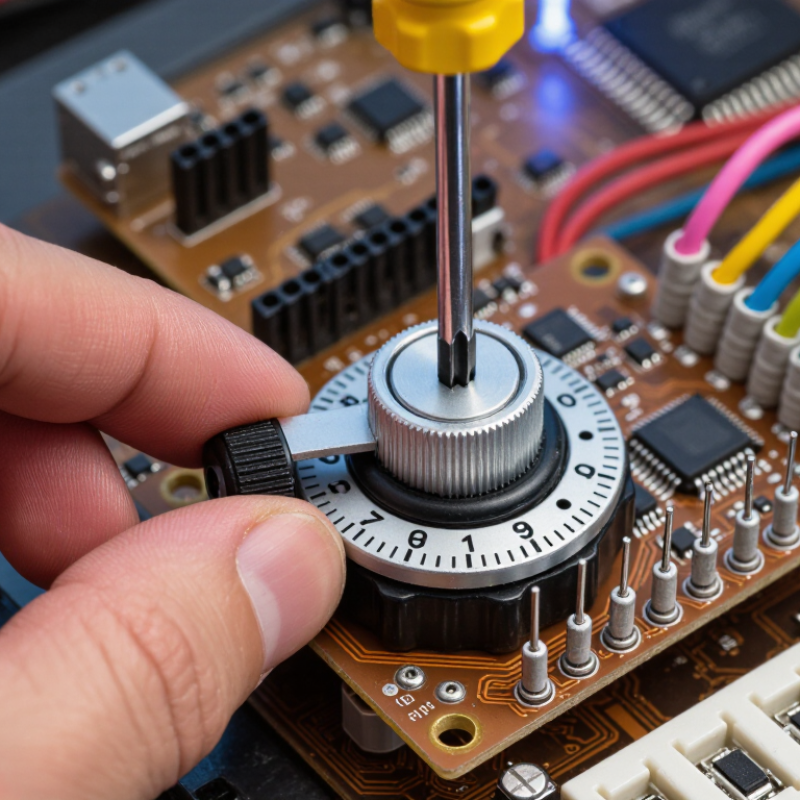
| Rotary Coded Switch | A knob rotates a common contact across several fixed positions. Internal contacts connect the selected position to an output pattern. | Commonly 10 positions for decimal selection; some versions provide 16 positions for hexadecimal coding. | May provide one-of-n selection or a coded output such as binary-coded decimal or hexadecimal. | Device addresses, channel selection, timing presets, control-panel settings, and measurement-range selection. | Fast visual adjustment and clear indexed positions. | Requires panel space for the knob and may have limited resolution compared with electronic controls. |
| Thumbwheel Coding Switch | A numbered wheel is turned with a finger or tool. Each wheel generally represents one decimal digit or a coded position. | Usually 10 states per wheel; multiple wheels create multi-digit settings. | Mechanical contacts or electronic sensing elements generate a digit-based output. | Preset values, test equipment settings, industrial controllers, and numerical identification fields. | Good numeric visibility and convenient field adjustment. | Can be larger and more expensive than a simple DIP switch when many digits are required. |
| Coded Pushbutton Switch | Pressing one or more buttons closes designated contacts or enters a selected code into an electrical control circuit. | Depends on the number of buttons and allowed key combinations. | Momentary or maintained contacts; a controller may scan the buttons and interpret the code. | Access-control keypads, operator interfaces, function selection, and equipment test panels. | Intuitive user input and easy code changes without opening the enclosure. | Mechanical contacts can wear, bounce, or require protection from dirt and moisture. |
| Slide Coding Switch | A slider moves between marked positions to open or close contacts and establish a predefined electrical configuration. | Typically 2 states per section; multi-section assemblies provide multiple binary combinations. | Usually independent single-pole contacts, with the selected state read directly by hardware or software. | Compact electronic devices, communication equipment, configuration panels, and power-management settings. | Compact construction and relatively simple operation. | Small sliders may be hard to operate and may be changed accidentally without a protective cover. |
| Coded Selector Switch | A rotary actuator selects one of several positions, and the switch routes a common electrical path to the selected circuit. | Usually one active position at a time; capacity equals the number of indexed positions. | One-of-n switching, sometimes with multiple poles for switching several circuits simultaneously. | Operating-mode selection, motor-control settings, instrumentation, and source or range selection. | Provides positive position selection and can handle more than one circuit with multi-pole designs. | The selected position may not directly represent a binary value and may require additional circuitry for digital processing. |
| Electronic Coding Switch | A sensor, membrane interface, or electronic input detects the selected code and sends it to a logic circuit or microcontroller. | Determined by the input matrix, sensing resolution, and control logic. | Digital signals, scanned key matrices, encoded serial data, or logic-level outputs. | Automated equipment, embedded systems, touch interfaces, smart instruments, and programmable controls. | Flexible, highly configurable, and suitable for frequent input or remote processing. | Needs power and control electronics; software errors, electromagnetic interference, or sensor failure may affect operation. |



 08045479132

 Send Inquiry


 Send Inquiry
 Send SMS

