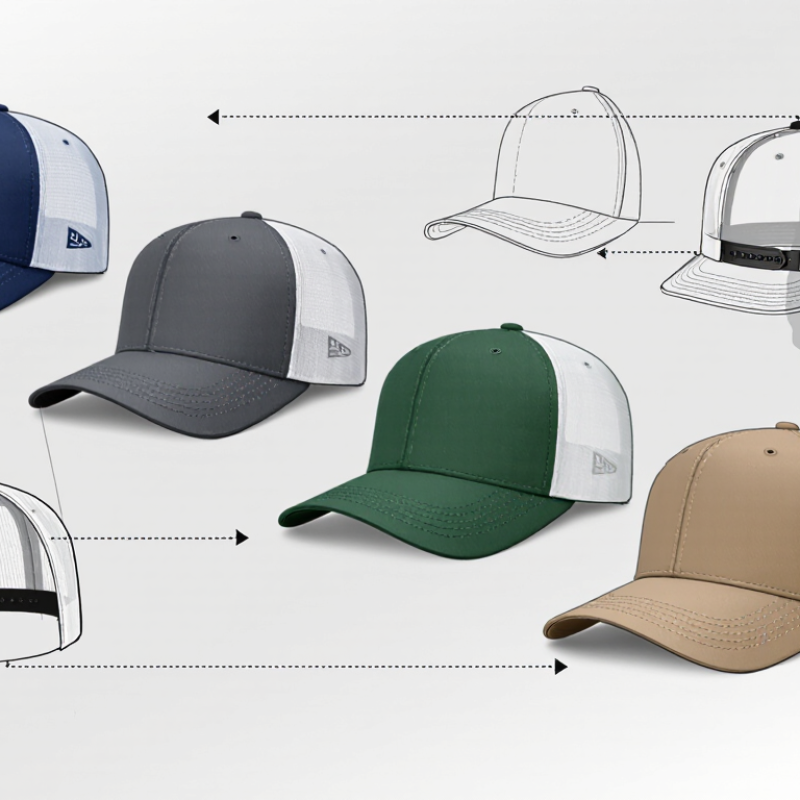
| Basic Definition | A cap combining a structured front, a breathable mesh back, and an adjustable plastic snap closure. | A general cap style with a curved or flat visor and a fabric crown; the back may use a strap, buckle, hook-and-loop adjustment, or another closure. | A cap made in predetermined head-size ranges without an adjustable rear closure. | A cap using elastic material in the sweatband or side panels to provide stretch around the head. |
| Rear Construction | Usually made with open polyester or nylon mesh panels for airflow. | Usually made from solid fabric, although some versions may include mesh or ventilation openings. | Typically uses solid fabric panels because the cap is shaped for a fixed size. | Usually uses solid fabric with an elastic section or stretchable sweatband. |
| Closure Type | Rows of plastic snaps allow the wearer to change the circumference. | May use a fabric strap, metal buckle, hook-and-loop tab, elastic band, or snap closure. | No rear adjustment; the cap is selected by its labeled size. | No traditional snap or strap is required because the elastic provides the adjustment. |
| Fit Flexibility | High; the closure accommodates a range of head circumferences, but the visible snap positions limit fine adjustment. | Varies by closure; strap and buckle systems often offer more continuous adjustment than snap tabs. | Low after purchase; accurate sizing is important for comfort. | Moderate to high; stretch improves comfort, but the fit depends on the elastic range and cap size. |
| Front Panel Structure | Often structured with foam, buckram, or another stiffening layer to create a taller front profile. | May be structured or unstructured, depending on the construction and intended silhouette. | Commonly structured, although unstructured fitted versions also exist. | Available in both structured and unstructured designs. |
| Typical Visor Shape | Often flat or moderately curved, though the shape can vary by design. | Frequently curved, but flat and pre-curved options are also common. | May be flat, curved, or semi-curved. | May be flat, curved, or semi-curved, depending on the model. |
| Breathability | Generally high at the rear because the mesh permits air circulation. | Ranges from low to moderate for solid-fabric designs; ventilation depends on the fabric and construction. | Usually moderate or lower than mesh-backed styles when made entirely from solid fabric. | Usually moderate; stretch fabric may improve comfort but does not necessarily provide open ventilation. |
| Common Materials | A combination of cotton, polyester, foam, nylon mesh, and plastic components is common. | Common fabrics include cotton, cotton blends, polyester, wool blends, and performance textiles. | Often made from cotton, wool blends, polyester, or other woven fabrics. | Commonly combines woven fabric with elastane-containing or elastic components. |
| Sizing Method | Usually sold as adjustable or one-size-fits-most; the actual range varies by construction. | May be adjustable, one-size-fits-most, or available in measured sizes. | Sold by measured head circumference or a corresponding size scale. | Usually sold in size ranges, such as small/medium or medium/large, with stretch within each range. |
| Best-Suited Conditions | Warm weather, outdoor work, travel, driving, casual wear, and activities where rear ventilation is useful. | Everyday wear, sports, outdoor activities, and casual outfits, depending on the material and fit. | Wearers who prioritize a consistent silhouette and a precise, low-adjustment fit. | Wearers who want a secure fit with some flexibility and fewer visible adjustment components. |
| Main Advantages | Adjustable fit, strong airflow, distinctive two-material construction, and a structured front suitable for graphics or embroidery. | Broad design variety, familiar styling, and multiple closure and fabric choices. | Clean appearance, stable fit, and a consistent shape when correctly sized. | Comfortable stretch, a smooth appearance, and a secure fit during movement. |



 08045479132

 Send Inquiry


 Send Inquiry
 Send SMS

