| Handheld or drum cable machine | Homes, apartments, restaurants, and other buildings; commonly used on smaller drain lines and accessible branch sewers. | When a localized blockage causes slow drainage or a fixture backup, and the line can be reached through a drain opening or cleanout. | Feeds a rotating cable and cutting or retrieval tool into the pipe to break up or remove obstructions such as hair, paper, and soft deposits. | Choose a cable and tool suited to the pipe size and material. It may open a passage through a blockage without washing all loosened material out of the line. |
| Sectional cable machine | Building drains and sewer laterals where operators need to work through cleanouts or access points, including some longer or larger lines. | When a blockage is beyond the reach of a short hand tool or when repeated cable sections are needed to reach the affected area. | Rotates connected cable sections with cutting heads or other attachments to clear obstructions and certain root intrusions. | Root cutting removes growth inside the pipe but does not repair cracks, open joints, or other conditions that allowed roots to enter. |
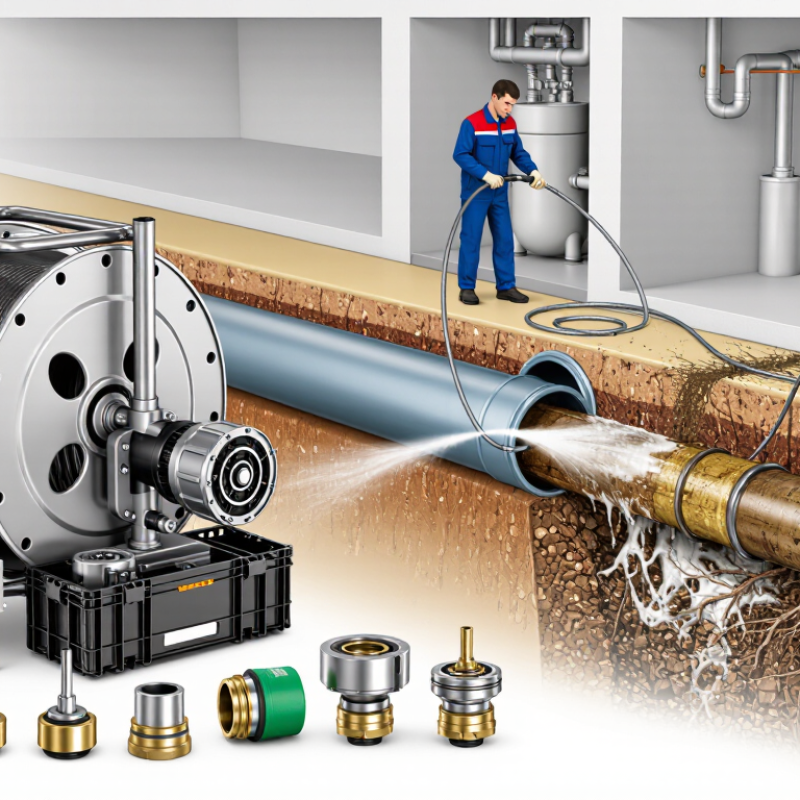
| Portable or trailer-mounted water jetter | Residential and commercial drains, sewer laterals, and other lines that can be accessed with a suitable hose and nozzle. | When grease, sludge, silt, or loose debris has built up along the pipe, or when flushing is needed after mechanical cutting. | Uses pressurized water and a selected nozzle to scour pipe walls and carry loosened material toward an access point. | Pressure and nozzle selection should match pipe condition and size. Water jetting may be unsuitable for damaged or fragile pipe until its condition is assessed. |
| Truck-mounted combination sewer cleaner | Municipal collection systems, larger commercial properties, and public sewer networks with accessible manholes or other entry points. | During scheduled maintenance, after a reported blockage or overflow, or when substantial debris needs to be flushed and removed. | Combines high-pressure water jetting with vacuum recovery to loosen deposits and collect water, grit, and debris. | Often used by trained crews on larger lines. Traffic control, confined-space procedures, and proper disposal of recovered material may be required. |
| Mechanical root-cutting attachment | Sewer laterals and mains with documented root intrusion and a suitable access point. | When inspection or cleaning records indicate roots are restricting flow or contributing to recurring blockages. | Uses rotating cutting blades or chains to cut roots projecting into the pipe; the cut material is then removed or flushed out. | Repeated root growth can indicate a structural defect. Cleaning is a maintenance measure, not a substitute for repairing a damaged pipe. |
| Routine sewer-cleaning equipment | Public sewer mains and private systems with recurring buildup, known trouble spots, or a maintenance schedule. | Before problems become backups, based on observed conditions, prior blockage history, and the responsible operator’s maintenance plan. | Removes accumulated sediment, grease, and other material to help maintain flow and reduce the likelihood of blockages. | Cleaning frequency should be based on line conditions and records; there is no single schedule that suits every sewer system. |



 08045479132

 Send Inquiry


 Send Inquiry
 Send SMS

