| Technical comparison framework: the entries below describe ten manufacturing and quality criteria, not a verified ranking or performance claims about specific companies. Final specifications depend on the product design, rated capacity, applicable standard, and intended use. |
| No. | Design or Manufacturing Dimension | Factual Technical Information | Useful Verification Record |
| 1 | Wire Rope Construction | Wire rope is made from wires laid into strands, with the strands laid around a core. Constructions such as 6×19 and 6×36 describe the number of strands and the nominal number of wires per strand; actual wire layouts vary by rope design. | Rope specification, construction designation, rope diameter, and supplier documentation. |
| 2 | Rope Core and Material | Common core types include fiber core and independent wire rope core. Rope material and core selection affect properties such as flexibility, resistance to crushing, and suitability for the operating environment. | Material certificate and stated core type matched to the approved design. |
| 3 | Surface Finish and Environment | Wire rope may be supplied bright, galvanized, or in corrosion-resistant alloy, depending on the specified material and service conditions. A coating or finish should not be treated as a substitute for selecting a suitable rope material. | Material and coating specification, plus any required corrosion or environmental requirements. |
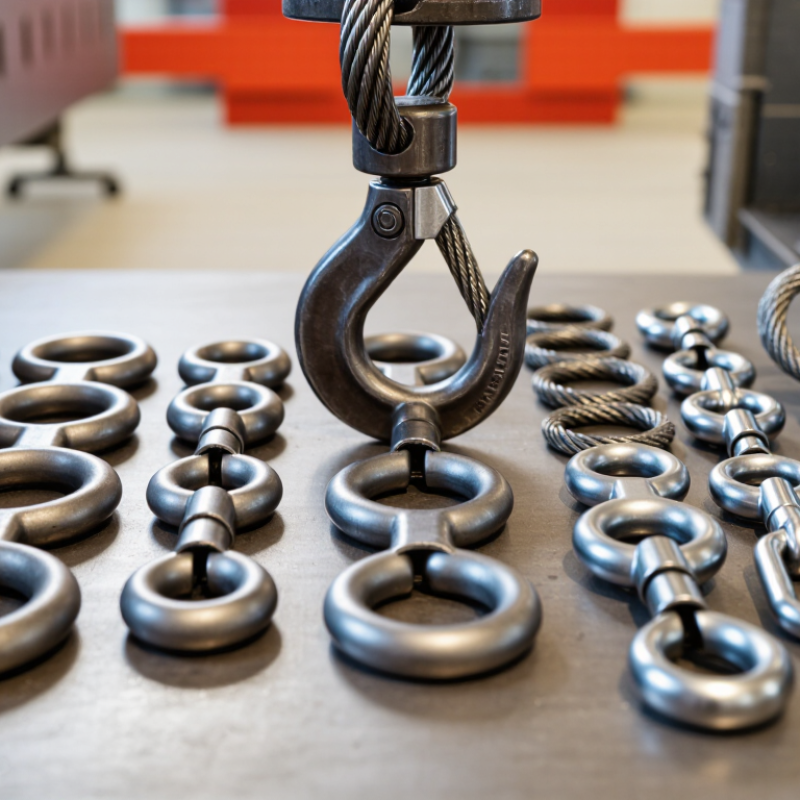
| 4 | Threaded End-Fitting Design | A threaded lifting-loop assembly may combine wire rope with a threaded terminal or other purpose-designed end fitting. Thread form, engagement, geometry, and load path must be defined for the specific assembly. | Approved drawing showing thread designation, dimensions, engagement, and assembly configuration. |
| 5 | Rated Capacity and Load Path | The working load limit (WLL) applies to the complete lifting assembly as specified by its designer or manufacturer. Capacity depends on the rope, termination, fitting, geometry, and loading conditions—not on rope diameter alone. | Product rating documentation and design calculations or qualification records for the complete assembly. |
| 6 | Cutting and Rope-End Preparation | Rope is cut to the required length and prepared for its selected termination. Appropriate handling and preparation help control strand disturbance and support consistent assembly. | Work instructions, length checks, and recorded inspection of prepared rope ends. |
| 7 | Termination Assembly | Wire-rope terminations may use different methods, including mechanical fittings or ferrule-secured arrangements. The suitable method depends on the rope, fitting, design, and applicable requirements. | Termination method, component traceability, assembly instructions, and process inspection records. |
| 8 | Dimensional and Visual Inspection | Inspection can check rope diameter, overall length, fitting dimensions, thread condition, assembly alignment, and visible damage. Acceptance limits should come from the approved drawing and applicable product requirements. | Inspection plan and completed records showing measured dimensions and visual-check results. |
| 9 | Testing and Standards | Testing requirements depend on the assembly type, applicable regulations or standards, and the manufacturer's design. Standards in the EN 12385 series address steel wire ropes; EN 13411 covers wire-rope terminations; ASME B30.9 addresses slings. Applicability should be confirmed for the specific product and market. | Test procedure, applicable standard and edition, test records, and product-specific conformity documentation. |
| 10 | Marking, Traceability, and Instructions | Lifting equipment should be identifiable and supplied with information appropriate to its intended use. Product identification and traceability support inspection, maintenance, and confirmation of the correct rated capacity. | Identification or batch records, stated WLL, inspection guidance, and instructions for use and retirement. |



 08045479132

 Send Inquiry


 Send Inquiry
 Send SMS

