| Common Types of Street Outdoor Lights |
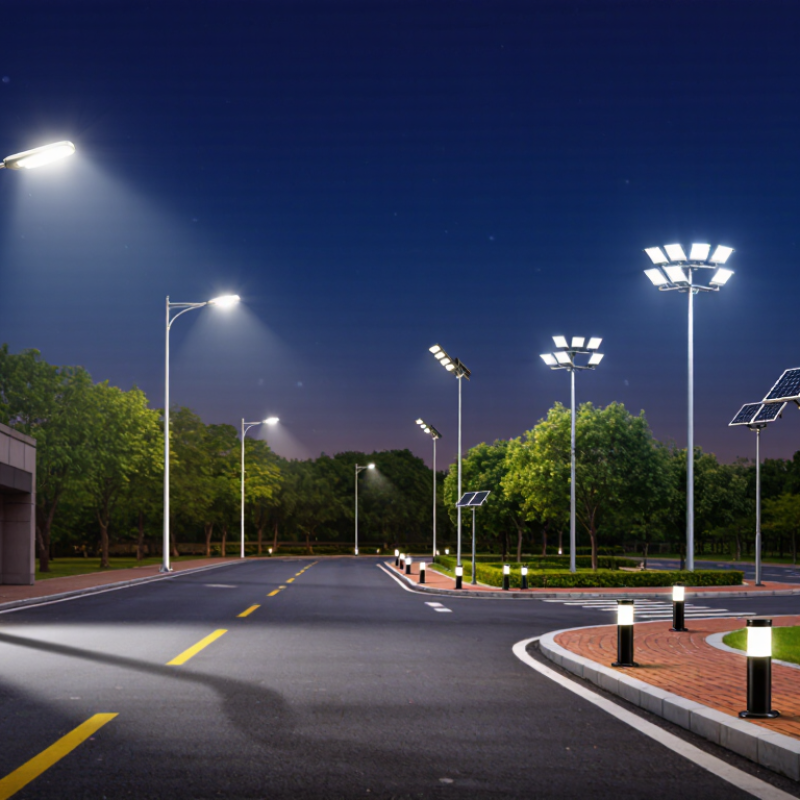
| Roadway lighting | LED cobra-head or roadway luminaire | Usually grid-powered; solar versions are also used in suitable locations | Streets, roads, and intersections | Directional optics can distribute light along the roadway and limit unnecessary spill when properly designed. | Pole spacing, mounting height, light distribution, and applicable roadway standards affect performance. |
| Pedestrian-area lighting | LED post-top or area light | Grid-powered or solar-powered | Sidewalks, paths, plazas, and parks | Can provide more localized illumination for pedestrian spaces and public areas. | Optics and placement should reduce glare and avoid poorly lit gaps between fixtures. |
| High-area lighting | High-mast LED lighting | Typically grid-powered | Large intersections, interchanges, and transport areas | A high mounting position can illuminate a broad area from fewer poles. | Installation and maintenance may require specialized equipment and access planning. |
| Decorative streetscape lighting | Decorative post-top or heritage-style LED fixture | Usually grid-powered; solar options are available | Town centers, promenades, and historic districts | Combines functional lighting with a fixture style suited to the surrounding streetscape. | Decorative appearance should not compromise suitable light distribution or service access. |
| Off-grid locations | Integrated solar LED street light | Solar panel, battery, and LED luminaire in one assembly | Remote roads, trails, and locations where grid connection is impractical | Can avoid a new utility connection and much of the electrical trenching associated with grid extension. | Performance depends on sunlight, shading, seasonal conditions, battery capacity, and system design. |
| Solar vs. Grid-Powered Street Lights |
| Power system | Solar street light | Photovoltaic panel charges an onboard battery, which powers the light after dark. | Best suited to sites with adequate solar exposure and no convenient grid supply. | Can reduce dependence on utility infrastructure and avoid ongoing electricity use from the grid. | Battery condition, panel cleanliness, shading, and available sunlight influence dependable operation. |
| Power system | Grid-powered street light | Connected to the electrical utility through a wired supply. | Urban streets and other sites with accessible electrical infrastructure. | Does not rely on a local solar battery to provide power through the night. | May require cabling, trenching, utility coordination, and payment for electricity. |
| Selection tip: Compare the total installation and maintenance requirements, local solar conditions, lighting needs, and availability of grid infrastructure before choosing a system. |



 08045479132

 Send Inquiry


 Send Inquiry
 Send SMS

