Change Language
Call Us08045479132

What Are the Top Types of Paper Takeaway Containers?

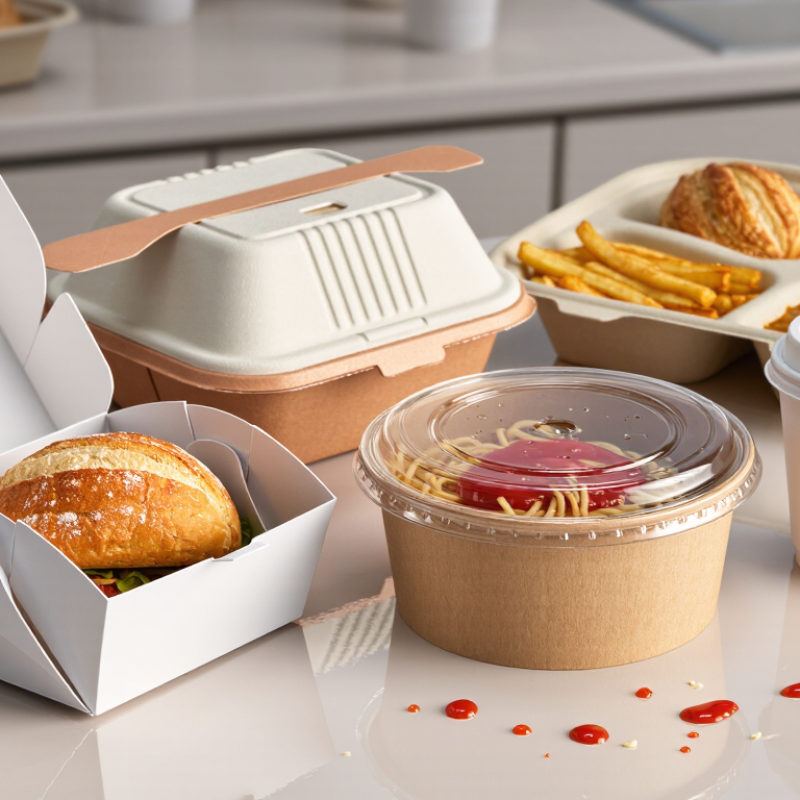
A paper container can look sturdy on a counter and still soften beneath a hot, sauced meal. That small failure matters. Paper Takeaway Containers include folding paperboard boxes, kraft bowls, paper wraps, cups, and molded-fiber trays. Each form handles food differently. A box may keep a sandwich tidy, while a bowl better contains noodles and sauce.

Packaging author Walter Soroka describes packaging as “the science, art and technology of enclosing or protecting products for distribution, storage, sale, and use.” His definition is broad, but useful here. A takeaway package must protect food, travel well, and suit the meal. Dry pastries need different support from oily noodles or steaming curry. Seams, coatings, lids, and vents all affect performance. No single container works for every menu.

This guide compares the main types by shape, typical use, and practical trade-offs. It considers how easily containers stack, whether lids stay secure, and how grease or steam may affect the paper. A café serving crisp fries, for example, may need ventilation to limit trapped moisture. A soup shop needs a leak-resistant bowl and a dependable lid. These details are easy to overlook during ordering.

Material claims also deserve a closer look. Paper-based does not automatically mean recyclable in every local system, especially when coatings or food residue are involved. That part can be frustrating. The right choice depends on the dish, service conditions, and available disposal options—not appearance alone.

What Are the Top Types of Paper Takeaway Containers?

What Defines a Paper Takeaway Container?

A paper takeaway container is a food-service package whose main structure is made from paper fibers. It may be folded paperboard, molded fiber, or corrugated board. Not every brown, paper-like box is entirely paper. A thin lining or coating may help resist soup, oil, and steam.

That barrier matters. Without it, hot food can soften the fibers, leak through seams, or leave grease marks. The trade-off is easy to overlook: a container can look recyclable while its coating or food residue affects how local facilities handle it. “Paper” describes the main material, not necessarily the whole package.

The U.S. Environmental Protection Agency’s 2018 materials-management report estimated a 80.9% recycling rate for the broad paper-and-paperboard containers-and-packaging category. That figure does not measure takeaway containers alone. It also cannot guarantee that a specific lined box will be accepted locally. For buyers, useful checks include the container’s intended food, its resistance to heat and moisture, and clear disposal guidance. A box holding a dry pastry has different demands from one carrying curry. The material label is only a starting point.

Which Types of Paper Containers Hold Soups and Other Liquids?

Paperboard soup cups are a common choice for broth, noodles, and single servings of stew. Their walls are usually coated with a thin barrier that slows leaks and keeps the outside easier to hold. The barrier may be plastic-based or made from another material, so check the product specifications rather than assuming all paper cups behave alike. Thin liquids expose weak seams quickly. A cup that works for yogurt may soften under hot soup.

Wider paperboard tubs and bowls suit thicker soups or meals with toppings. They offer room for a spoon and are less awkward to carry than narrow cups. Look for a rolled rim, a secure-fitting lid, and a coating rated for hot, wet foods. Small gaps around a lid can let broth escape during delivery. Test a filled container for the expected holding time, especially if food will travel in a bag. There is a trade-off: heavier coatings can improve leak resistance, but disposal options depend on local collection facilities. I would not trust a “compostable” label alone; the actual materials and available processing matter. Even a well-made container can fail if it is overfilled or sealed while the rim is wet.

What Are the Top Types of Paper Takeaway Containers? - Which Types of Paper Containers Hold Soups and Other Liquids?
Container Type Typical Construction Suitability for Soups and Liquids Common Uses Key Considerations
Paper soup cup Paperboard cup with a liquid-resistant inner lining and a rolled rim; often paired with a fitted lid. Very suitable when designed and specified for hot liquids. Soup, broth, oatmeal, and other pourable foods. Check the lining, lid fit, temperature rating, and intended holding time. A lid helps reduce spills but does not make a container leakproof if it is tipped.
Paper food bowl Shaped paperboard bowl, commonly with a moisture-resistant lining and a separate lid. Suitable for many soups and saucy foods when the product is rated for liquids. Ramen, curry, chili, salads, and grain bowls. Wide openings make filling and eating convenient. For hot or long-held liquids, confirm the bowl and lid are compatible and designed for that use.
Paper hot-drink cup Single- or double-wall paperboard cup with a liquid-resistant lining. Suitable for beverages; not always intended for thick foods or meal-sized servings. Coffee, tea, hot chocolate, and smaller portions of broth. Double-wall construction improves insulation, but does not by itself provide better leak resistance. Use a compatible lid for takeaway service.
Barrier-treated molded-fiber bowl Pressed plant-fiber pulp, sometimes supplied with a coating or other barrier treatment. Conditionally suitable; liquid performance varies by design and treatment. Hot meals, sides, and some soups or saucy foods. Uncoated fiber can soften or absorb liquid. Verify hot-liquid suitability and the recommended holding time before using it for soup.
Grease-resistant paperboard takeout box Folded paperboard box, often treated or lined to resist grease and moisture. Limited for free-flowing liquids; better suited to moist or saucy foods. Fried foods, noodles, rice dishes, and sauced entrees. Grease resistance does not necessarily mean leak resistance. Seams and folded corners may allow thin liquids to escape.
Unlined paperboard carton Folded paperboard without a dedicated liquid barrier. Not recommended for soups or other free liquids. Dry foods, baked goods, and items with minimal moisture. Liquid can soak into the material and weaken the carton. Choose a container specifically designed and tested for liquid contents instead.

Selection note: Liquid-holding performance depends on the complete container design, including its lining or treatment, seams, lid, temperature, and holding time. Check the supplier’s specifications and test the intended food before service.

How Do Paper Boxes and Clamshells Package Solid Foods?

Paper boxes and clamshells suit different solid foods. A flat-bottomed box works well for fries, pastries, rice bowls, and sandwiches that need a stable base. Its straight walls make stacking and portioning simple. For a burger or a slice of cake, a hinged clamshell holds the top and bottom together during handoff. The lid closes quickly. Not perfectly, every time.

The food should guide the package design. Crisp fried items need room for steam to escape; trapped condensation can soften their coating. A vented box may help, though too many openings can let food cool faster. Greasy or saucy foods need an appropriate inner barrier. Check a filled sample after several minutes for oil marks or seepage. Paper packaging is not automatically leakproof. That detail is easy to miss.

For delivery, test the package with a real portion, not an empty sample. Place a hot sandwich inside, close it, then tilt it gently and inspect the seams, corners, and lid tabs. A weak clamshell hinge may pop open under pressure. Excess space in a box can let food slide around. Small handling tests often reveal problems that a quick look cannot.

What Are Paper Cups, Trays, and Sleeves Used For?

Paper cups hold coffee, tea, soft drinks, and other takeaway beverages. Their best use depends on the drink’s temperature, the cup’s construction, and whether a secure lid is needed. A cup carrying hot coffee should feel stable in the hand and resist softening during a normal serving period. Cold drinks bring a different issue: condensation can make the outside slippery. Small details matter.

Paper sleeves add grip and reduce direct contact with a hot cup. They are useful at busy counters, where customers may carry drinks while walking. But a sleeve does not fix a flimsy cup or replace a well-fitted lid. Trays serve another purpose: they keep sandwiches, pastries, or several drinks together for easier carrying. A shallow tray suits light items, while heavier or moist foods need firmer construction. Not always. A tray that looks sturdy when empty may bend under a full meal, so checking it with realistic loads is worthwhile. Paper packaging also varies in coatings and recovery options; local recycling facilities may not accept every cup or tray. Choose by the food, the journey, and the handling conditions—not appearance alone.

What Are Paper Cups, Trays, and Sleeves Used For?

Common uses for three paper takeaway formats

A value of 1 indicates a commonly used format for that food or drink; 0 indicates it is not a typical use. This is a qualitative guide, not market-share data.

How Do Food Type and Serving Needs Shape Container Choice?

Food type sets the first requirement. Dry pastries and sandwiches often travel well in lightweight paperboard cartons or folded paper sleeves.

Fried foods need more attention. Grease-resistant lining can limit staining, while small vents help release steam and preserve a crisp surface. Too many vents, though, may let food cool quickly.

Sauces and broths call for sturdier tubs with secure-fitting lids. Check the seams and lid fit with the actual serving temperature; paper containers are not automatically leakproof.

For mixed meals, compartment trays keep rice, salad, and dressing apart, but they take more storage space. Portion size matters, too. A shallow box may squash a tall sandwich, while an oversized bowl lets food slide during delivery.

Test a filled container on a short trip. Watch for soft corners. One detail is easy to miss: condensation can soften paper even when the container holds its shape.

Compare options using the real menu, not just an empty sample. A tidy chart may still overlook a messy sauce.

Back to top