| Type E full-face insulation gasket | Insulating gasket material with bolt holes around the full flange face; material varies by service. | Separates the flange faces electrically while covering the full face area. | Match NPS, bolt-hole pattern, flange outside dimensions, facing, gasket thickness, and required sealing material. | Can be specified for Classes 150, 300, 400, 600, 900, 1500, or 2500 when a correctly dimensioned kit is available and suitable for the service. |
| Type F ring insulation gasket | Insulating gasket sized to fit within the bolt circle. | Provides electrical isolation at the sealing area without extending to the outside edge of the flange. | Verify the inside and outside diameters, bolt-circle clearance, flange facing, and gasket seating requirements. | Class affects flange geometry and operating ratings. Confirm the exact flange dimensions rather than selecting by class name alone. |
| RTJ insulation gasket | Insulating gasket shaped for a ring-type-joint flange groove; materials and design depend on the kit specification. | Provides electrical isolation at a flange joint with an RTJ facing. | Match the RTJ groove dimensions and ring designation, as well as NPS and class. Do not substitute a flat-face or raised-face gasket. | Use only where the flange has a compatible RTJ facing. Verify the applicable B16.5 dimensions and the gasket supplier’s design data. |
| Insulating bolt sleeves | Nonconductive sleeves, commonly made from polymeric insulating materials. | Isolate each bolt or stud from the flange and help prevent electrical continuity through the fasteners. | Check bolt or stud diameter, required sleeve length, clearance through the flange holes, and temperature and chemical compatibility. | Fastener and hole dimensions vary with NPS and class. Confirm the sleeve fits the actual bolting arrangement. |
| Insulating washers | Nonconductive washers, often paired with metallic backup washers. | Separate nuts or bolt heads from the flange surface while distributing clamping load. | Check washer inside and outside diameters, thickness, compressive properties, and the installation arrangement specified for the kit. | Higher-load applications require careful review of kit design and material limits; class designation by itself is not a washer load rating. |
| Sealing gasket or facing layer | Service-selected sealing material, which may be combined with or bonded to an insulating core. | Creates the pressure seal at the joint while the kit provides electrical isolation. | Select for fluid compatibility, temperature, pressure, flange facing, bolt load, and applicable gasket requirements. | Check the flange material’s pressure-temperature rating and the gasket’s documented limits for the actual operating conditions. |
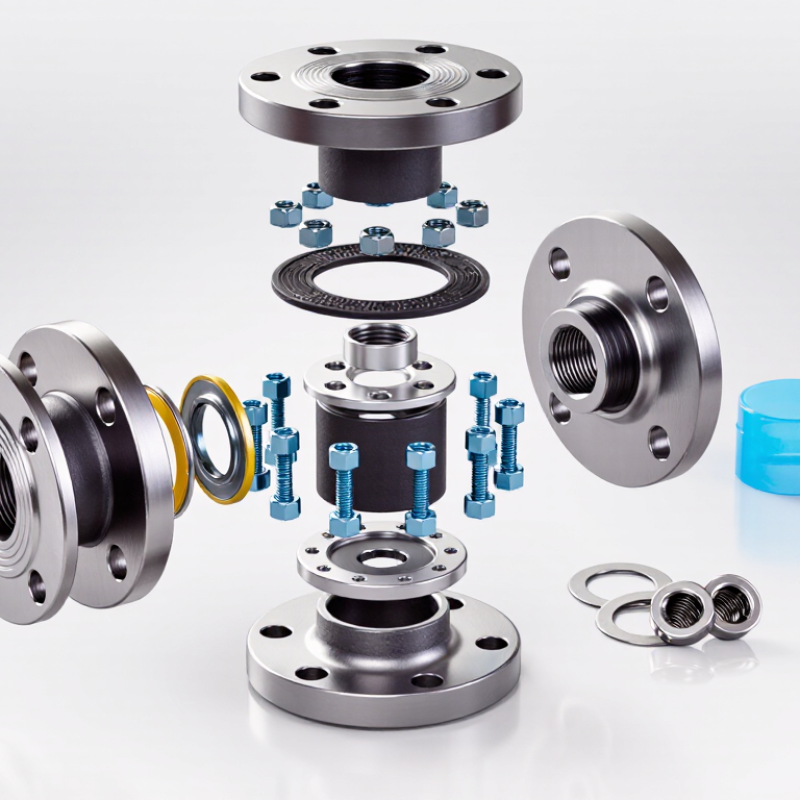
| Insulation kit for flat-face or raised-face flanges | A matched set typically containing a gasket, sleeves, and insulating and backup washers. | Insulates the joint as an assembly, reducing the risk of a conductive path through the flange bolting. | Specify both flange details, including NPS, class, facing, bolt count, bolt-hole size, and any dimensional differences between the mating flanges. | Class 150 through Class 2500 are not interchangeable dimensions. Confirm that the complete kit is made for both mating flanges. |



 08045479132

 Send Inquiry


 Send Inquiry
 Send SMS

