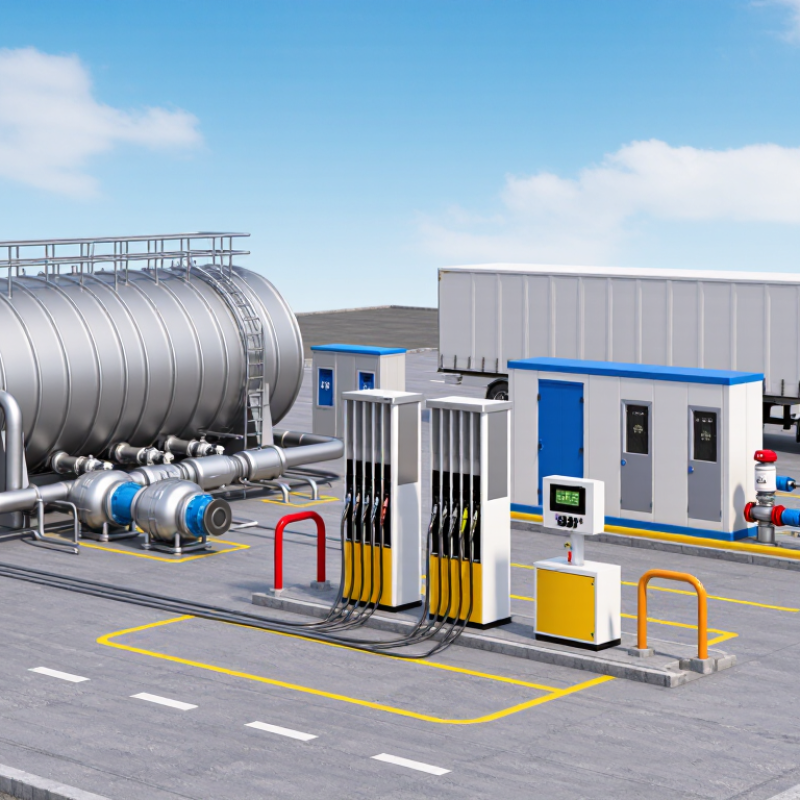
| Cryogenic LNG storage tank | Stores LNG at cryogenic temperature before dispensing. | Liquid level, pressure, temperature, and tank status. | Insulation, pressure protection, and level alarms help manage cryogenic inventory and operating conditions. |
| LNG transfer and dispensing pump | Moves LNG from storage through the station's dispensing equipment. | Pump status, pressure, temperature, and flow, as provided by the station design. | Interlocks and shutdown controls can stop transfer when an abnormal condition is detected. |
| LNG dispenser and fueling connection | Delivers LNG to a vehicle through compatible fueling hardware. | Dispensed quantity and, depending on configuration, operating pressure and equipment status. | Compatible couplings and operating procedures help limit leakage and unintended release during fueling. |
| Emergency shutdown (ESD) system | Initiates a defined safe response when an emergency or specified fault occurs. | ESD pushbuttons, trip signals, valve position, and system status. | Can isolate LNG transfer by closing designated shutdown valves and stopping associated equipment, according to the engineered shutdown logic. |
| Emergency shutdown valves | Isolate selected sections of LNG piping when actuated. | Open/closed position and actuation status. | Provide a means to limit continued flow during an emergency; valve location and fail-safe action are determined by the design. |
| Natural gas detection system | Detects methane or combustible gas in designated areas. | Gas concentration and detector fault/status signals. | Alarms can alert personnel and may initiate ventilation or shutdown actions where included in the safety design. |
| Fire and cryogenic leak detection | Identifies fire conditions or signs of an LNG release in protected areas. | Detector alarms, device health, and system status. | Provides early warning and can be connected to site alarms or ESD logic as specified by the design. |
| Pressure and temperature instruments | Measure operating conditions in tanks and process piping. | Pressure and temperature readings, alarms, and instrument status. | Help operators identify conditions outside approved operating limits and support protective actions. |
| Safety instrumented system (SIS) or safety controller | Processes designated safety inputs and executes specified protective functions. | Safety inputs, logic status, output status, and detected faults. | Supports independently engineered safety functions where required by the hazard assessment and applicable standards. |
| Vent and pressure-relief equipment | Manages intended venting and protects equipment against excess pressure, as designed. | Relief-device condition and related pressure indications, where instrumented. | Provides engineered pressure protection and directs vented gas to designated locations where required by the system design. |
| Control and alarm system | Displays operating information and supports normal station control. | Process readings, equipment status, alarms, and event history, depending on configuration. | Helps operators recognize abnormal conditions and coordinate response; it does not replace independent protective systems where those are required. |



 08045479132

 Send Inquiry


 Send Inquiry
 Send SMS

