Change Language
Call Us08045479132

China Top Prefabricated Substation Manufacturers

China’s power infrastructure is expanding as electricity demand rises and renewable projects connect to the grid. The International Energy Agency’s Electricity 2024 report projects global electricity demand will grow by an average of 3.4% annually from 2024 to 2026. This growth puts pressure on substations, especially where industrial parks, solar farms, and urban loads need reliable connections. A Prefabricated Substation can shorten on-site installation by integrating key equipment within a factory-built enclosure. But speed alone is not enough.

The IEA’s Electricity Grids and Secure Energy Transitions report estimates that annual grid investment must more than double, from about USD 300 billion today to over USD 600 billion by 2030, to meet climate and energy goals. That is a major shift. For buyers comparing China’s top prefabricated substation manufacturers, the practical questions are specific: What voltage levels and transformer capacities can they supply? How do they document routine and type testing? Can their designs handle local temperatures, dust, humidity, and transport limits? Manufacturer websites may showcase clean enclosures and compact layouts, but independent test records and clear project references matter more. Specifications can also look complete while leaving gaps in service access or future expansion. This guide introduces leading suppliers and the evidence buyers should examine, while recognizing that no ranking can replace project-specific engineering review.

China Top Prefabricated Substation Manufacturers

What Is a Prefabricated Substation?

China Top Prefabricated Substation Manufacturers

What Is a Prefabricated Substation?

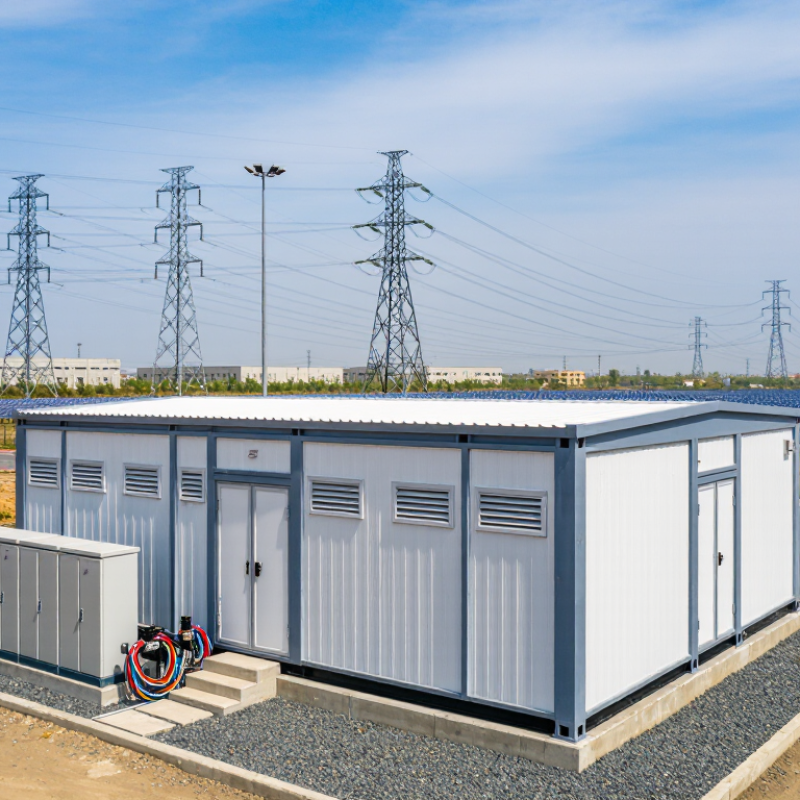
A prefabricated substation is an electrical power facility assembled in modules before it reaches its installation site. It typically combines a transformer, switchgear, protection devices, and control equipment inside a prepared enclosure. Cable connections and ventilation are planned as part of the design. The unit arrives largely assembled, which can reduce on-site construction work.

Its size and layout depend on the required voltage, capacity, surroundings, and maintenance access. For example, a compact unit near a commercial building may need careful noise control and clear access for technicians. Factory assembly allows components to be fitted and checked in a controlled setting. Still, transport can cause delays, and site conditions may differ from the drawings. That detail is easy to underestimate.

Tips: Check the foundation, cable entry points, ventilation, and service clearances before delivery. Ask for equipment ratings and inspection records, and confirm that the installation suits local operating conditions. A neat enclosure is not enough. The internal layout matters, too.

How Prefabricated Substations Are Designed and Manufactured

China Top Prefabricated Substation Manufacturers

How Prefabricated Substations Are Designed and Manufactured

A prefabricated substation begins with the site, not the enclosure. Engineers check load forecasts, soil conditions, access routes, climate, and required voltage levels. They then coordinate transformers, switchgear, protection systems, cabling, ventilation, and fire separation within a transportable layout. Clearances matter. A door that opens into a cable tray is a small design failure with costly consequences.

Factory assembly allows wiring and equipment interfaces to be checked before shipment. Teams install components on a prepared base, test control circuits, verify protective relays, and document inspection results. The International Energy Agency’s 2023 report, Electricity Grids and Secure Energy Transitions, estimates that over 80 million kilometres of grids must be added or refurbished by 2040. It also says annual grid investment needs to exceed USD 600 billion by 2030. Modular substations can support faster deployment, but transport limits and site-specific conditions still constrain standardization. A tidy factory test does not replace careful commissioning on site.

Tips: Confirm lifting points, cable-entry positions, and maintenance access before production. Ask for test records and drawings that match the delivered unit. Leave space for future upgrades. It is easy to underestimate that.

China’s Prefabricated Substation Manufacturing Landscape

China’s prefabricated substation manufacturing landscape is shaped by rapid grid expansion and demand for faster, more controlled installation. Manufacturers typically integrate transformers, switchgear, protection systems, and monitoring equipment into factory-built modules. On site, crews connect the modules, verify interfaces, and complete commissioning. The process can reduce civil work, but transport limits and site access still matter. A large enclosure is not automatically an easy installation.

The National Energy Administration reported that China’s installed power generation capacity reached about 3.35 terawatts at the end of 2024, up 14.6% year over year. More generation capacity means more grid connections, though it does not directly measure substation orders. The International Energy Agency’s Electricity Grids and Secure Energy Transitions report says annual grid investment needs to exceed USD 600 billion by 2030. That matters. It points to sustained pressure for grid upgrades, including compact substations serving industrial parks, renewable-energy sites, and urban distribution networks.

Manufacturing capability depends on more than assembly speed. Buyers need consistent factory testing, clear interface drawings, and reliable coordination between electrical and civil teams. Small details count: cable entry direction, lifting points, ventilation, and room for maintenance access. Still, gaps remain. Public data rarely isolates China’s prefabricated substation output, so capacity claims should be checked against project references and documented test procedures. A neat module can still create awkward work later.

How to Evaluate Leading Prefabricated Substation Manufacturers in China

China Top Prefabricated Substation Manufacturers

How to Evaluate Leading Prefabricated Substation Manufacturers in China

When assessing Chinese prefabricated substation manufacturers, look beyond price and delivery promises. The IEA’s Electricity 2024 report forecasts global electricity demand growth averaging 3.4% annually from 2024 to 2026. This reinforces the need for equipment that can operate reliably as power systems expand. It does not, by itself, prove demand for any particular substation design.

Ask suppliers to map their designs against the applicable edition of IEC 62271-202. Request type-test and routine-test records, protection ratings, temperature-rise results, and clear component traceability. Check whether the enclosure suits your site’s altitude, humidity, dust, and corrosion exposure. Then review factory acceptance testing: inspect wiring labels, busbar connections, ventilation, and cable entry points. A factory audit helps, but it cannot replace a careful review of test evidence. A polished brochure is not proof.

Tips: Compare like for like. Confirm transformer capacity, switchgear configuration, delivery scope, commissioning support, and spare-parts availability in writing. Ask for references from projects with similar climate and load conditions. I would still question unusually short lead times; sometimes the details are simply missing.

Applications, Standards, and Emerging Trends in Prefabricated Substations

China Top Prefabricated Substation Manufacturers

Applications, Standards, and Emerging Trends in Prefabricated Substations

Prefabricated substations serve renewable-energy sites, factories, transport networks, and dense urban districts where space and installation time are limited. A factory-assembled unit can arrive with switchgear, a transformer, and protection systems housed in a weatherproof enclosure. The International Energy Agency’s Electricity Grids and Secure Energy Transitions report says annual grid investment must rise above US$600 billion by 2030, from about US$300 billion today. That expansion makes faster, repeatable substation deployment increasingly relevant. But site access, heat, salt air, and maintenance clearances still shape the design.

Standards help turn compact layouts into dependable equipment. IEC 62271-202:2022 covers high-voltage/low-voltage prefabricated substations, while IEC 60076 addresses power transformers. Project teams must also check local grid codes, fire requirements, earthing, and environmental conditions. Emerging designs add remote monitoring, digital protection, and interfaces for solar, wind, and battery systems. Useful, yes—but more sensors also mean more data to maintain and secure. Modular construction is not automatically simpler.

Tips: Ask for temperature-rise, ingress-protection, and short-circuit test records. Check how doors open around cable trenches and whether technicians can replace components safely. A neat drawing can still hide an awkward service visit.

Prefabricated Substations: Medium-Voltage Levels and IEC Scope

Common medium-voltage distribution levels shown alongside the upper rated-voltage limit covered by IEC 62271-202.

The 11 kV, 22 kV, and 33 kV values are examples of distribution-system nominal voltages; actual utility practices vary by country. IEC 62271-202 covers prefabricated substations for AC systems above 1 kV and up to and including 52 kV.

Back to top