| Nylon wheels | Polyamide, commonly PA6 or PA66 | Solid molded wheel; may include a separate bearing or bushing | Strong and wear-resistant, with good resistance to many oils and chemicals. Hard running surface offers relatively low rolling resistance on smooth floors. | Material-handling equipment, carts, machinery, and industrial casters | Hard wheels can be noisy and may mark or damage delicate floors. Moisture and temperature can affect dimensions and performance. |
| Polypropylene wheels | Polypropylene (PP) | One-piece molded wheel or molded wheel body with an integrated hub | Lightweight and resistant to moisture and many common chemicals; often selected for economical, light-duty use. | Light-duty carts, bins, display equipment, and applications in damp environments | Generally less suited than engineered nylon to high loads, impact, or sustained elevated temperatures. Capacity depends on design and operating conditions. |
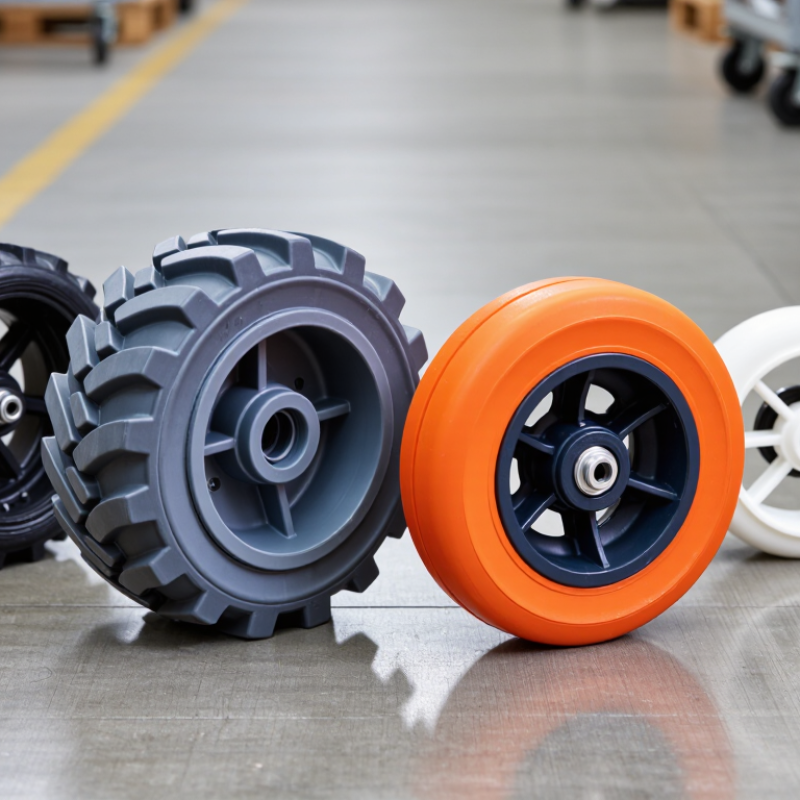
| Polyurethane-tread wheels with plastic cores | Polyurethane tread over a nylon or other polymer core | Two-material wheel with a bonded or molded-on resilient tread and a rigid plastic hub | Combines a quieter, more floor-friendly tread with a comparatively rigid core. Available in different tread hardnesses and formulations. | Institutional and industrial carts, powered equipment, and general material handling | Performance varies with tread formulation, hardness, bonding, load, and floor conditions. Polyurethane wheels are not necessarily suitable for every chemical or high-temperature environment. |
| Thermoplastic rubber (TPR) wheels | TPR, often formed as a resilient tread on a polymer hub | Soft or semi-soft tread molded onto a plastic core, or a molded wheel with an integrated hub | Provides cushioning, quieter travel, and improved grip compared with a hard plastic wheel. | Indoor carts, furniture, light equipment, and applications where noise and floor protection matter | Load capacity and rolling resistance depend on tread hardness and wheel size. Soft treads can develop flat spots under prolonged stationary loading. |
| Thermoplastic elastomer (TPE) wheels | Thermoplastic elastomer, sometimes combined with a rigid plastic center | Single-material molded wheel or a softer TPE tread over a harder polymer core | Elastic, impact-absorbing construction; some grades can be processed as thermoplastics and may be recyclable where suitable collection systems exist. | Light- to medium-duty carts, equipment, and consumer or institutional products | TPE covers a broad family of materials. Heat, chemical resistance, hardness, and load capacity must be checked against the specific grade. |
| Phenolic resin wheels | Phenolic thermoset resin, commonly reinforced with fillers | Compression-molded rigid wheel, often with a separately fitted bearing | Hard, dimensionally stable, and suitable for some demanding industrial environments and elevated temperatures compared with many ordinary thermoplastics. | Industrial equipment, ovens or hot-area service when the wheel is specifically rated for it, and heavy-duty material handling | Phenolic wheels are rigid and can be noisy or harsh on floors. Impact resistance and allowable temperature depend on the formulation and design. |
| Acetal (POM) wheels | Polyoxymethylene (POM), also called acetal | Precision-molded or machined rigid wheel, often used with a bearing or bushing | Low friction, good dimensional stability, and useful wear properties in accurately made components. | Guide rollers, small industrial wheels, mechanisms, and precision equipment | Wheel size, bearing arrangement, load, and temperature determine suitability. Check chemical compatibility for the specific operating environment. |
| Polyethylene wheels | Polyethylene (PE), including high-density grades | Solid molded or machined wheel; may be paired with a separate hub or bearing | Good moisture and chemical resistance, with a relatively low-friction surface. Some grades offer useful impact resistance. | Material-handling equipment, washdown areas, and applications involving contact with moisture or selected chemicals | Stiffness, wear, and load performance vary by grade. Verify creep under sustained load and compatibility with the specific chemicals involved. |



 08045479132

 Send Inquiry


 Send Inquiry
 Send SMS

