| Peristaltic Pump Filler | A rotating pump compresses flexible tubing and moves the liquid without direct contact between the product and the pump mechanism. | Injectable solutions, ophthalmic liquids, biological products and other sterile liquids. | Approximately 0.1–1,000 mL, depending on tubing, pump head and container format. | Often within ±1% to ±2% after calibration and process validation. | Low product-contact parts, easy tubing replacement and suitability for sterile applications. | Tubing wear, pulsation and tubing compatibility must be controlled. |
| Piston Pump Filler | A piston draws a measured volume into a cylinder and then discharges it through a filling nozzle. | Syrups, suspensions, creams, gels, lotions and high-viscosity pharmaceutical formulations. | Approximately 1–5,000 mL, with the actual range determined by cylinder size. | Commonly within ±0.5% to ±1% for stable, well-controlled products. | Good volumetric repeatability and effective handling of viscous products. | Piston seals and valves require cleaning, inspection and compatibility checks. |
| Time-Pressure Filler | Compressed air or gas applies pressure to a product vessel for a controlled period, forcing liquid through the filling needle. | Low-viscosity liquids, sterile solutions and products requiring gentle handling. | Approximately 0.5–1,000 mL. | Often within ±1% to ±2%, depending on pressure stability and liquid properties. | Few moving product-contact components and relatively gentle filling action. | Foaming, viscosity changes and pressure fluctuations can affect accuracy. |
| Auger Powder Filler | A rotating screw conveys and meters powder from a hopper into bottles, jars or other containers. | Oral powders, dry pharmaceutical ingredients, nutritional powders and inhalation-related powders. | Approximately 0.1–2,000 g, depending on powder density and auger configuration. | Commonly within ±1% to ±3%; powder flowability strongly affects results. | Suitable for free-flowing and cohesive powders with adjustable dosing control. | Dust control, electrostatic behavior and powder segregation require attention. |
| Vacuum Filler | A controlled vacuum draws liquid into containers until the liquid reaches a defined level or filling point. | Low-viscosity liquids in containers where consistent liquid level is important. | Approximately 5–1,000 mL. | Typically level-based rather than purely volume-based; performance depends on container uniformity. | Provides a visually consistent fill level and can compensate for minor container-volume differences. | Not suitable for highly viscous or strongly foaming products without process adaptation. |
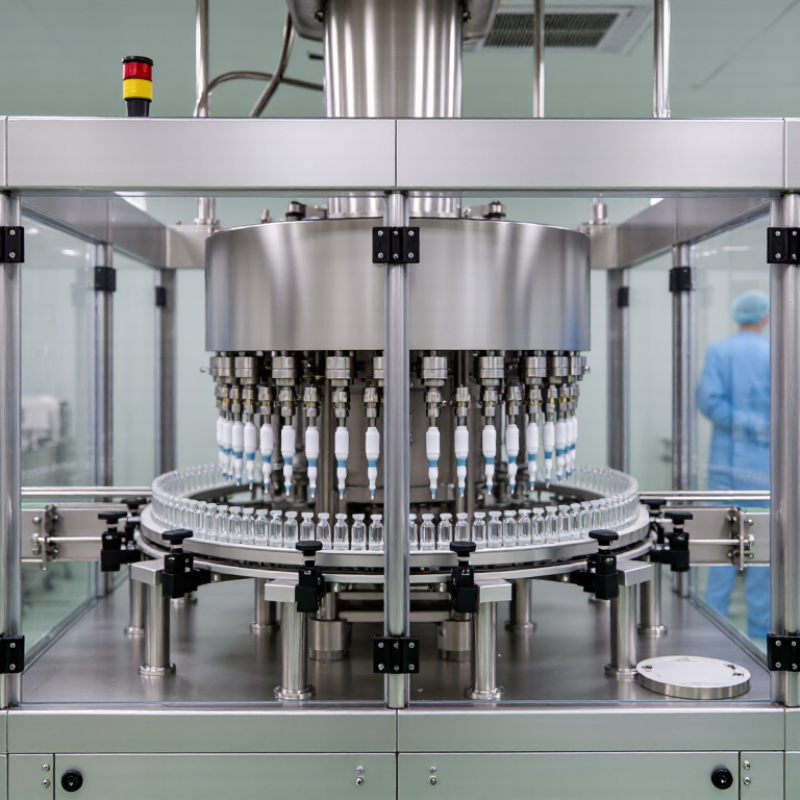
| Aseptic Filling Line | Sterilized product, containers and closures are brought together in a controlled environment using validated sterile processing steps. | Injectables, ophthalmic products, biologics and other products requiring aseptic presentation. | From small vial volumes to larger infusion containers, depending on line design. | Usually designed for tight dosing control, with final limits established through validation. | Supports sterile manufacturing when combined with validated sterilization and environmental controls. | Requires qualified cleanroom systems, environmental monitoring, aseptic procedures and documented validation. |
| Net-Weight Filler | Load cells measure the product mass during filling and stop or adjust the flow at the target weight. | Liquids, powders and granular products where mass-based dosing is preferred. | Approximately 10 g to several kilograms, depending on equipment configuration. | Often within ±0.1% to ±0.5% under stable operating conditions. | Compensates for product-density variation and provides direct weight measurement. | Vibration, airflow, container movement and scale calibration can influence readings. |



 08045479132
 Send Inquiry

 Send Inquiry
 Send SMS