| Applicable test methods | Support free-fall testing in accordance with ASTM D5276 and ISO 2248 | Both standards address the vertical impact or free-fall testing of loaded containers | Improves test comparability across laboratories, suppliers, and importing markets |
| Drop-height range | Adjustable height with a clearly calibrated measurement scale | A practical laboratory configuration commonly covers approximately 300–1,500 mm | Accommodates different package sizes and test protocols without changing equipment |
| Height-setting accuracy | Use a rigid guide system and repeatable height-setting mechanism | Target repeatability should be stated in the equipment specification and verified during calibration | Reduces variation between operators and improves the reliability of test results |
| Load capacity | Select a rated capacity higher than the heaviest package to be tested | Common laboratory models are available with capacities around 60–100 kg; verify the actual rating before purchase | Prevents overload damage and supports heavier transport cartons or assembled products |
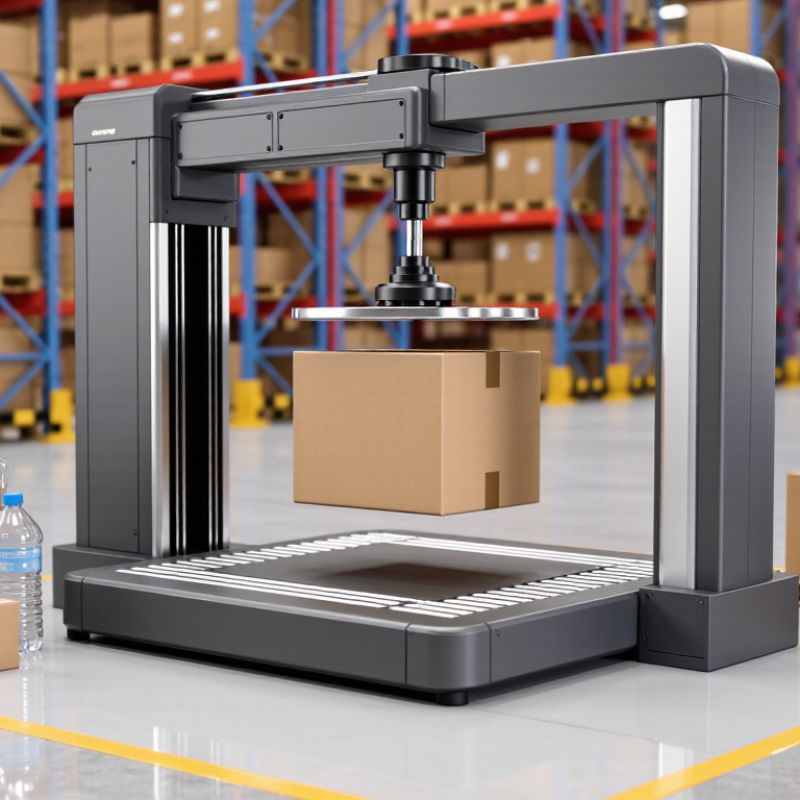
| Impact table | Rigid, level steel impact surface with sufficient area for the tested package | The impact surface should remain flat, stable, and free from movement during release | Provides consistent impact conditions and limits errors caused by table deflection |
| Package dimensions | Confirm platform and clearance dimensions against the largest package format | A useful platform size is typically at least 600 × 600 mm for general carton testing | Avoids interference with the frame and allows stable positioning before release |
| Release mechanism | Electromagnetic, pneumatic, or motorized release with minimal initial push | The package should be released cleanly without rotation or intentional horizontal force | Improves repeatability and prevents the release system from influencing impact behavior |
| Test orientations | Allow controlled testing on the package face, edge, and corner | Orientation selection should be documented for every test sequence | Helps identify weaknesses in closures, corners, cushioning, and load-bearing panels |
| Safety protection | Include guarded moving parts, emergency stop, stable anchoring, and operator clearance | A surrounding safety enclosure is recommended where package mass or drop height creates a hazard | Supports safer operation and helps meet workplace risk-control requirements |
| Calibration | Provide a documented calibration procedure for height, level, and release operation | Calibration intervals should be risk-based and aligned with the laboratory quality system | Creates traceable evidence for internal audits, customer complaints, and regulatory reviews |
| Power and installation | Specify local voltage, frequency, floor loading, and installation footprint before ordering | Electrical requirements vary by country; common single-phase supplies include 110 V or 220–240 V | Reduces commissioning delays and prevents compatibility problems at the destination site |
| Documentation and support | Require an English manual, wiring information, spare-parts list, inspection records, and remote service support | Documentation should identify operating limits, maintenance points, and recommended verification checks | Makes training, maintenance, troubleshooting, and cross-border acceptance more efficient |



 08045479132
 Send Inquiry

 Send Inquiry
 Send SMS
