| Outdoor miniature circuit breaker assemblies | Up to 1,000 V AC or 1,500 V DC | IEC 60898-1 for household and similar applications; IEC 60947-2 for industrial applications | Weatherproof distribution box, feeder cabinet or photovoltaic combiner enclosure | IP54–IP65 | Common ratings include 4.5 kA, 6 kA and 10 kA, depending on the product category and test standard | Outdoor lighting, small commercial feeders, auxiliary circuits and distributed energy systems |
| Outdoor molded-case circuit breaker | Up to 1,000 V AC or 1,500 V DC | IEC 60947-2; UL 489 in the United States and Canada | UV-resistant insulated enclosure, stainless-steel cabinet or outdoor switchboard | IP54–IP66 | Typically from approximately 18 kA to 100 kA at the specified voltage, frame size and test condition | Industrial distribution, motor feeders, data-center infrastructure and renewable-energy plants |
| Outdoor air circuit breaker in a switchboard | Up to 1,000 V AC | IEC 60947-2; UL 1066 for applicable low-voltage power circuit breakers | Outdoor metal-clad or weatherproof low-voltage switchgear | IP54–IP55 | Commonly 42 kA to 100 kA, subject to rated voltage, frame size and short-time withstand rating | Large commercial facilities, utilities, transport systems and industrial substations |
| Medium-voltage Outdoor Vacuum Circuit Breaker | Above 1 kV to 52 kV | IEC 62271-100; IEEE C37.04 and related IEEE C37 standards | Outdoor pole-mounted recloser, compact switchgear or sealed metal enclosure | IP54–IP66 | Common system ratings include 12 kV, 17.5 kV, 24 kV, 36 kV and 40.5 kV; interrupting current is commonly 12.5–31.5 kA | Distribution feeders, industrial substations, utility networks and renewable-energy collection systems |
| Outdoor medium-voltage automatic recloser | Typically 12 kV to 38 kV | IEC 62271-111; IEEE C37.60 | Sealed pole-mounted tank with electronic controller and remote communications | IP65–IP68 | Common continuous-current ratings range from approximately 200 A to 800 A; fault-current ratings depend on the model and network | Overhead distribution, rural networks, feeder automation and fault isolation |
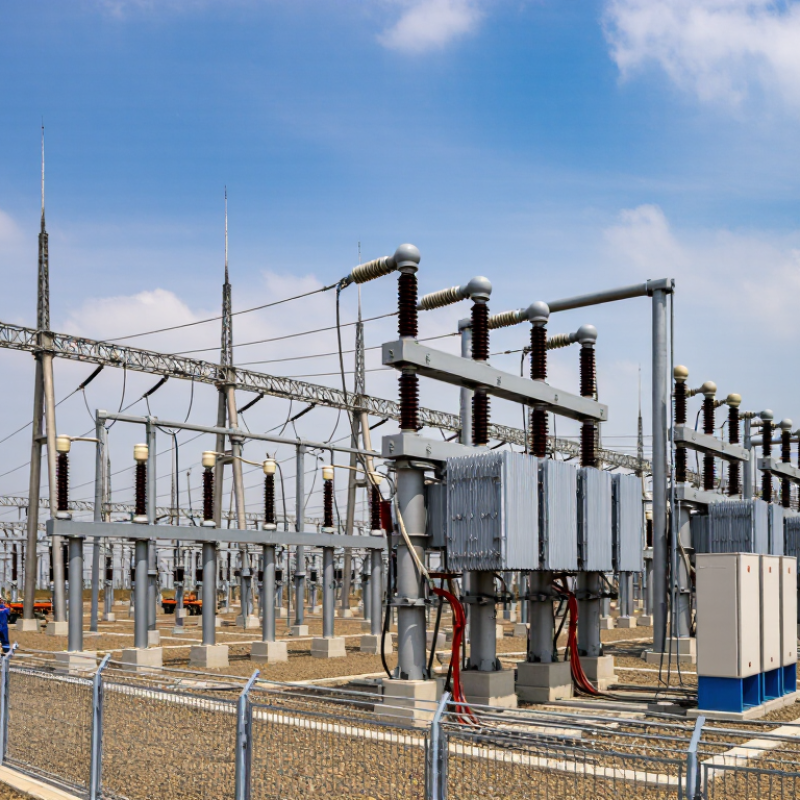
| High-voltage outdoor live-tank circuit breaker | 72.5 kV to 245 kV | IEC 62271-100; IEEE C37.04 and IEEE C37.06 | Open-air substation structure with porcelain or composite bushings | IP not usually the primary enclosure metric | Typical rated short-circuit breaking currents are 31.5 kA, 40 kA or 50 kA, depending on the voltage class and grid specification | Transmission substations, grid interconnection points and utility switching yards |
| Extra-high-voltage outdoor circuit breaker | 362 kV to 550 kV and above | IEC 62271-100; applicable national grid and utility specifications | Outdoor gas-insulated interrupter modules installed on steel support structures | Designed for open-air service | Common system voltages include 420 kV and 550 kV; short-circuit ratings are frequently specified at 40 kA or 50 kA | Bulk transmission, interconnection substations and long-distance power networks |
| Outdoor photovoltaic DC circuit breaker | Up to 1,500 V DC | IEC 60947-2 and IEC 60947-3, depending on the switching and protection function | UV-stabilized enclosure, combiner box or outdoor inverter cabinet | IP65–IP66 | Short-circuit ratings vary by design; selection must account for the PV array fault current and the DC time constant | Solar farms, rooftop PV systems, battery interfaces and DC distribution |
| Outdoor battery-energy-storage DC breaker | Up to 1,500 V DC, with higher-voltage systems using specialized equipment | IEC 60947-2, IEC 60947-3 and project-specific energy-storage requirements | Thermal-managed battery container, outdoor power-conversion enclosure or dedicated DC cabinet | IP54–IP66 | Selected according to battery fault current, prospective short-circuit current, DC voltage and required isolation capability | Utility-scale storage, microgrids, backup power and renewable-energy integration |



 08045479132
 Send Inquiry

 Send Inquiry
 Send SMS
