| Straight-Mast Rough-Terrain Forklift | 2,700–8,200 kg
(6,000–18,000 lb) | 3–7.5 m
(10–25 ft) | Large pneumatic tires, high ground clearance, and strong traction for packed soil, gravel, mud, and uneven construction surfaces. | Lumber, concrete blocks, pipe, roofing materials, and general construction deliveries. | High lifting capacity, durable chassis, good visibility, and effective load handling on uneven ground. | Less versatile than a telescopic handler; usually requires a relatively open travel path. | Heavy construction material handling |
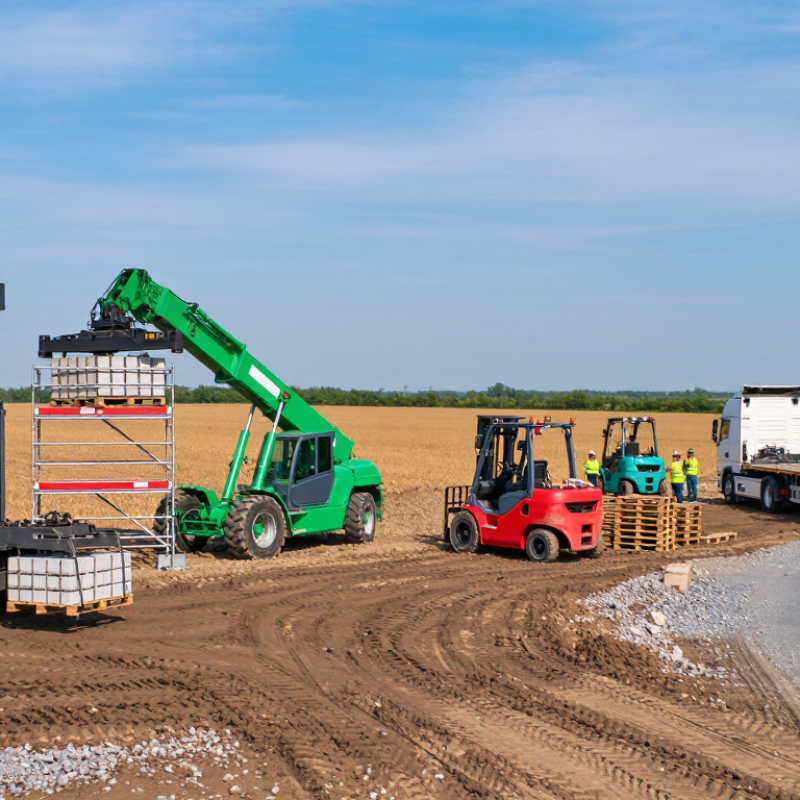
| Telescopic Handler | 2,500–5,500 kg
(5,500–12,000 lb) | 6–18 m
(20–60 ft) | Four-wheel drive, high clearance, and stabilizing features support travel across rough or sloped sites. | Placing materials at height, loading platforms, farm bale handling, truss work, and site logistics. | Combines forklift, crane-like reach, and elevated work capability; attachments can expand its use. | Capacity decreases as reach increases; forward load placement requires careful load-chart control. | Versatile multi-purpose projects |
| Articulated Rough-Terrain Forklift | 1,800–4,500 kg
(4,000–10,000 lb) | 3–6 m
(10–20 ft) | Center articulation improves maneuverability on narrow, irregular, or partly obstructed outdoor work areas. | Residential construction, landscaping, building-stone placement, and work in confined outdoor spaces. | Small turning radius, strong maneuverability, and the ability to position loads around obstacles. | Generally lower capacity and less lateral stability than larger straight-mast machines. | Tight residential and landscape sites |
| Compact Rough-Terrain Forklift | 1,300–2,700 kg
(3,000–6,000 lb) | 2.5–5 m
(8–16 ft) | Compact frame, pneumatic tires, and four-wheel drive for narrow access routes and uneven ground. | Small farms, nurseries, renovation projects, utility maintenance, and residential construction. | Easier transport, lower operating footprint, and better access through gates or restricted work zones. | Limited lifting height and capacity for heavy structural materials or large palletized loads. | Small operators and restricted access |
| Agricultural Rough-Terrain Forklift | 1,800–4,000 kg
(4,000–9,000 lb) | 3–7 m
(10–23 ft) | Designed for soil, gravel, field roads, and farmyards; often configured for traction and seasonal outdoor use. | Pallets, feed, fertilizer, produce bins, hay-related materials, and agricultural supplies. | Good ground clearance, outdoor durability, and compatibility with farming attachments. | Performance can be affected by soft soil, steep slopes, wet conditions, and unstable loads. | Farms, orchards, and agricultural yards |
| Rough-Terrain Container and Yard Forklift | 4,500–16,000 kg
(10,000–35,000 lb) | 3–6 m
(10–20 ft) | Heavy-duty pneumatic tires and reinforced frames support high-load travel over prepared yards and firm unpaved surfaces. | Shipping containers, steel products, precast concrete, timber yards, and infrastructure projects. | Very high capacity, robust counterweight design, and strong performance in demanding material yards. | Large operating radius, high transport weight, and reduced suitability for soft ground or confined sites. | High-capacity outdoor yards |
| Electric Rough-Terrain Forklift | 1,500–3,500 kg
(3,300–7,700 lb) | 3–6 m
(10–20 ft) | Suitable for firm outdoor surfaces, covered work zones, and low-emission areas; traction depends on tire and drive configuration. | Indoor–outdoor construction work, agricultural buildings, municipal projects, and noise-sensitive locations. | Low local emissions, reduced noise, and potentially lower routine energy and maintenance requirements. | Operating time, charging access, battery weight, and performance in deep mud or severe weather must be evaluated. | Low-noise and lower-emission operations |



 08045479132
 Send Inquiry

 Send Inquiry
 Send SMS