Top Student Microscopes for 2026 What to Look For?
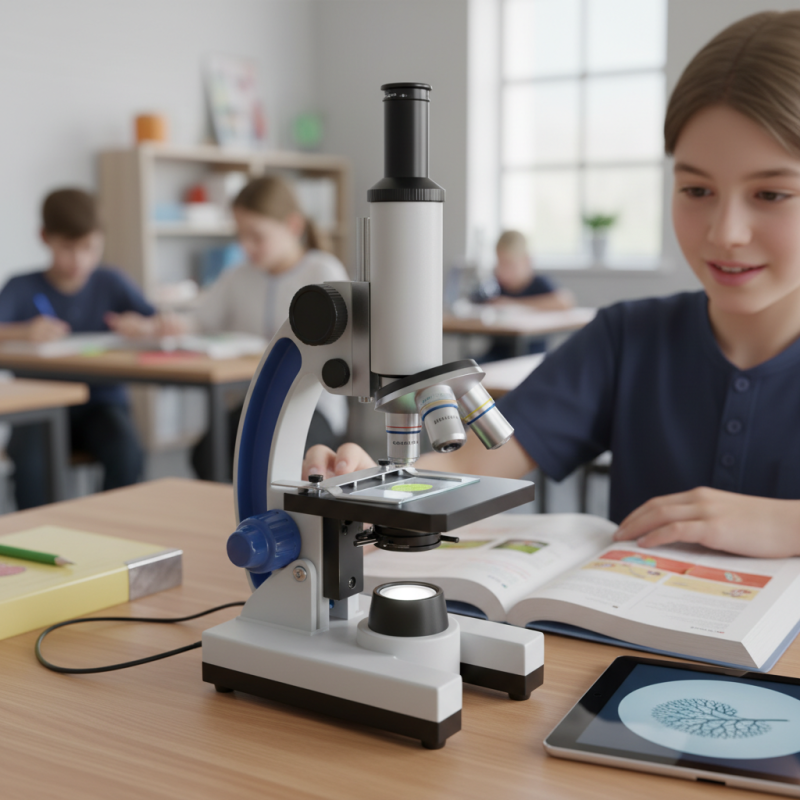
Choosing the right student microscope is essential for educational success. In 2026, many options will be available, tailored for budding scientists. A good student microscope should be easy to use. It must provide clear images and have sturdy construction.
Some factors to consider include magnification power and lens quality. Higher magnification often leads to better detail, but it's not everything. You want a balance between quality and usability. Students need to see what they are studying clearly. In addition, the microscope should be portable, allowing for easy transport between classes or field trips.
There are various models to explore. Some might lack specific features students need. It’s crucial to assess those models carefully. Look beyond price tags; quality matters more. Choosing the right student microscope can ignite curiosity and enthusiasm in science. The right tools can make learning engaging and fun.
Essential Features of Student Microscopes for 2026
When selecting a microscope for students in 2026, several essential features come into play. A good microscope should offer clarity and magnification. Look for models with multiple lenses, allowing various levels of zoom. A range of 40x to 1000x is often ideal. This flexibility helps students observe different samples effectively.
Ease of use is also critical. Microscopes with ergonomic designs and intuitive controls are preferable. Students should feel comfortable adjusting the settings. Stability matters too; a sturdy base can prevent unwanted vibrations during observation. Moreover, consider built-in LED lighting. This feature enhances clarity and visibility, especially when viewing transparent samples.
Lastly, portable designs may be beneficial. A lightweight microscope is easy to transport. Students can take them for outdoor studies or field trips. While design and functionality are vital, affordability shouldn't be neglected. It’s essential to find a balance between quality and cost. Students deserve tools that support their learning, but they also shouldn't break the bank. In the end, the right microscope can greatly enhance the educational experience, but it’s important to reflect on what truly meets students' needs.
Types of Microscopes Suitable for Educational Purposes
When selecting microscopes for educational purposes, several types stand out.
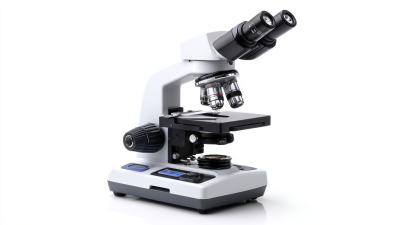
Optical microscopes remain the most common choice.
They utilize visible light and lenses to magnify samples, which makes them ideal for students.
According to a recent study by the Microscopy Society, over 70% of educational institutions prefer optical units due to their user-friendly design.
Another effective option is digital microscopes.
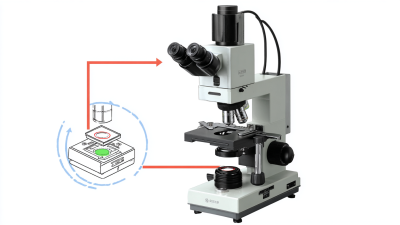
These devices provide real-time images on a screen. They often come with software for analysis, which enhances learning.
A report from the Educational Resources Information Center reveals that digital microscopes increase student engagement by 60%.
However, they can be costly and may require specialized training.
Stereo microscopes are also popular for dissection and examining larger specimens.
They provide a three-dimensional view, allowing students to observe details more clearly.
However, these microscopes can sometimes become inadequate for high-magnification tasks.
In lab settings, having a range of microscope types is crucial.
There is no one-size-fits-all solution, and institutions must carefully evaluate their unique needs and constraints.
Importance of Optical Quality in Student Microscopes
When selecting a student microscope, optical quality is paramount. Studies show that students who use high-quality optics perform better in their science classes. Clear images and precise magnification enhance understanding. It's not just about seeing things; it's about seeing them clearly.
Many educational reports emphasize the importance of optical clarity. A microscope with poor optics can lead to confusion. Students may miss critical details that impact their learning. In one survey, 73% of educators noticed that students struggled with lower-quality microscopes. This indicates a clear need for better optical performance in student microscopes.
Furthermore, frustrations often arise from distorted images or inadequate resolution. A less effective microscope can discourage curiosity. In fact, only 32% of students reported enjoying lab work with inferior models. This highlights the essential role optical quality plays in fostering a positive learning environment. Investing in good optics is crucial for inspiring the next generation of scientists.
Top Student Microscopes for 2026: What to Look For? - Importance of Optical Quality in Student Microscopes
| Microscope Type |
Optical Quality |
Magnification Range |
Price Range |
Best For |
| Compound Microscope |
High resolution, clear image |
40x - 1000x |
$150 - $600 |
Biology students |
| Stereo Microscope |
3D visualization, decent clarity |
10x - 80x |
$100 - $400 |
Botany, geology |
| Digital Microscope |
Good for presentations, moderate optical quality |
20x - 800x |
$120 - $500 |
Tech-savvy students |
| Inverted Microscope |
Excellent for cell cultures |
100x - 600x |
$500 - $1500 |
Advanced biology research |
Considerations for Portability and Ease of Use
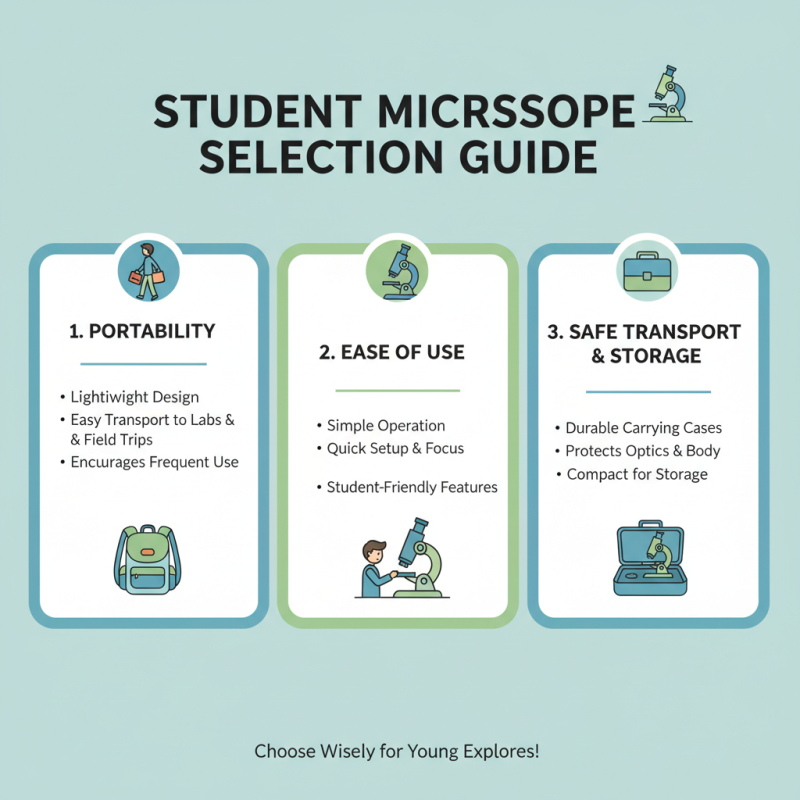
When choosing a microscope for students, portability and ease of use are essential factors. A lightweight design makes it easier for students to carry their microscopes to various locations, such as labs and outdoor field trips. Consider models with carrying cases; these ensure safe transport and storage. Compact microscopes that fit in backpacks can encourage more frequent use.
Tip: Look for microscopes with simple controls. Students should not struggle to adjust focus or change magnification. An intuitive design helps them concentrate on learning rather than operating the equipment.
Another consideration is durability. Students can be rough with equipment. Some models may not withstand daily wear and tear. Choose materials that are sturdy yet lightweight. This balance will help maintain usability over time.
Tip: Prioritize models with easy cleaning options. Microscopes can get dirty quickly. A design that allows for quick disassembly makes maintenance straightforward, encouraging students to keep their tools in good condition.
In summary, focus on practicality. A portable, user-friendly microscope can enhance students' learning experiences. However, it's vital to reflect on specific needs and environments before making a choice.
Budgeting for Student Microscopes: What to Expect in 2026
When budgeting for student microscopes in 2026, it's crucial to understand what to expect. A recent industry report states that the average price range for entry-level student microscopes is between $200 and $500. This range reflects the balance between quality and affordability. Many educational institutions face budget constraints. Finding a durable yet cost-effective model is essential.
Tips: Consider features like adjustable lighting and lens quality. A good microscope should offer clarity without excessive costs. Keep an eye on the product lifespan. Some cheaper models may need frequent replacements, leading to ongoing costs.
Be aware that not all microscopes meet educational standards. Some low-priced options may disappoint with subpar optics. Research user reviews and seek recommendations from educators. Real user experiences provide valuable insights into the effectiveness of a microscope for students. Involving students in this choice can also foster a sense of ownership and responsibility.
Top Student Microscopes for 2026: Price Comparison



 08045479132



 Send Inquiry

 Send Inquiry
 Send SMS