Top 10 Types of CNC Machining Metals for Global Buyers?
Choosing the right Cnc Machining Metal can determine a component’s strength, accuracy, cost, and service life. Global buyers often compare materials by price alone, but that approach can create expensive problems later. In practical machining work, aluminum is valued for its low weight and fast cutting performance. Stainless steel offers corrosion resistance for medical, food-processing, and industrial environments. Titanium delivers excellent strength, though it demands slower cutting speeds and careful heat control. Brass machines cleanly and supports reliable electrical and plumbing components. Copper conducts heat and electricity well, but its softness requires suitable tooling and workholding. Carbon steel, tool steel, nickel alloys, and magnesium each present different benefits and machining risks. Small details matter.
This guide examines the top ten metals used in CNC machining for international purchasing decisions. It considers machinability, tensile strength, corrosion resistance, thermal behavior, surface finishing, availability, and total production cost. Experienced suppliers also review tolerances, batch size, delivery conditions, and inspection requirements before recommending a material. Material certificates and clear technical drawings improve purchasing reliability. Yet no metal is perfect. A lightweight alloy may deform under load, while a stronger grade may increase machining time and tool wear. Even familiar materials can behave differently after heat treatment or finishing. That uncertainty deserves attention. The comparisons ahead combine established engineering knowledge with practical manufacturing considerations, helping buyers ask better questions and avoid selecting metal based on a single specification.
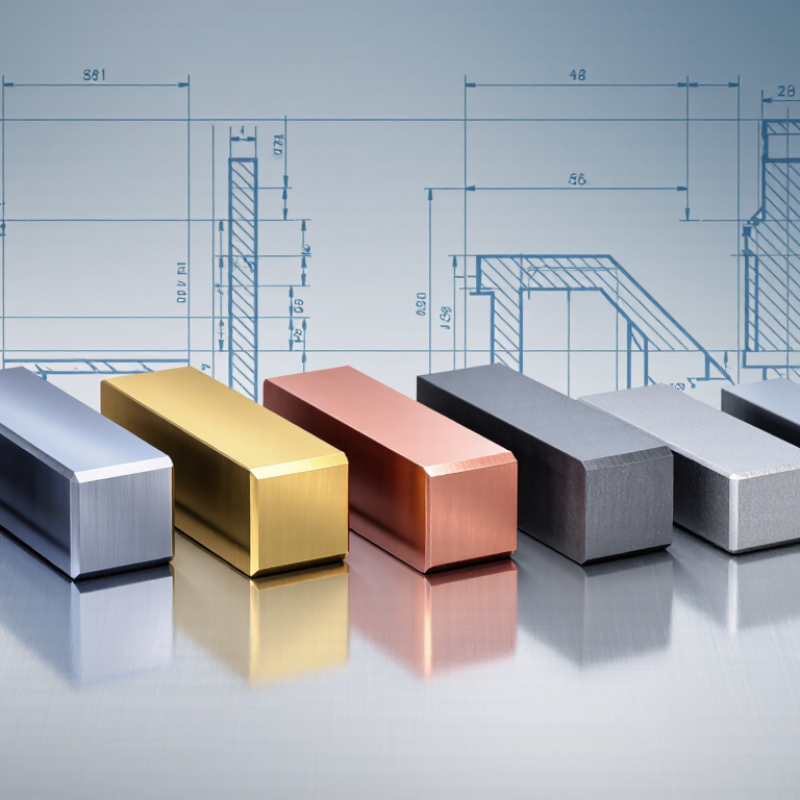
Aluminum and Magnesium Alloys for Lightweight CNC Machined Parts
For global buyers comparing CNC machining metals, aluminum and magnesium alloys deserve close attention. Both produce lightweight parts with precise features and clean edges. Aluminum alloys offer strong machinability, reliable dimensional stability, and broad finishing options. They suit housings, brackets, heat sinks, and moving components. Weight matters. Their strength-to-weight ratio supports efficient designs without excessive wall thickness.
Magnesium is even lighter than aluminum. That difference matters in portable equipment, aerospace structures, and robotics. It machines quickly and can reduce cutting forces. However, magnesium chips require careful collection, temperature control, and approved fire-prevention procedures. Coolant selection also needs technical review. A careless setup can damage both the part and the workshop environment. Not every lightweight part needs magnesium.
In production reviews, thin aluminum walls sometimes distort after clamping. Magnesium parts can show similar movement when stress relief is overlooked. I would not trust a drawing alone. Engineers should test realistic prototypes, inspect thread strength, and measure critical holes after finishing. Ask suppliers for alloy certificates, inspection records, and process details. Surface finish data can expose hidden tool-wear problems. Recheck it. A first design may look efficient, yet feel surprisingly fragile during assembly. Load testing, corrosion exposure, and repeated fastening often reveal weaknesses that initial CNC inspection misses.
Carbon, Alloy, and Stainless Steels for Strength and Wear Resistance
For global CNC buyers, carbon, alloy, and stainless steels remain practical choices for strength and wear resistance. Carbon steel machines easily and costs less, but it needs protection against moisture. Alloy steel adds elements such as chromium, molybdenum, or nickel. These additions improve toughness, fatigue performance, and hardenability. Stainless steel resists corrosion through its chromium-rich surface layer. It is not corrosion-proof.
The World Steel Association reported approximately 1.88 billion tonnes of crude steel production in 2024. That scale supports broad availability and stable sourcing. The International Stainless Steel Forum reported about 58.4 million tonnes of stainless steel production in 2023. For CNC work, grade selection matters more than the material family alone. A low-carbon grade may suit brackets, while a hardened alloy grade fits shafts and gears. Austenitic stainless steel handles wet environments, but its work-hardening can slow machining. That detail is often underestimated. I have seen poor tool paths create heat, burrs, and premature tool wear.
Tips: Confirm the material certificate, hardness, and heat-treatment condition before machining. Specify tensile strength, yield strength, and corrosion exposure. Allow extra cutting-fluid control for stainless steel. Avoid choosing the cheapest grade automatically. A small material mistake can become a large finishing cost. ISO 9001-style traceability practices also help buyers verify batch consistency and machining records.
Titanium and Nickel Alloys for Heat and Corrosion Resistance
Among the top ten CNC machining metals, titanium and nickel alloys serve demanding thermal and corrosive environments. Titanium alloys offer high strength at low density, making them useful for aircraft brackets, medical components, and chemical equipment. Nickel alloys retain strength near extreme temperatures. They also resist oxidation and chloride attack. According to the USGS Mineral Commodity Summaries 2025, global nickel mine production reached approximately 3.7 million metric tons in 2024. This scale supports a broad, though sometimes volatile, industrial supply chain.
Machining these metals requires practical discipline. Titanium can conduct heat poorly, so heat concentrates near the cutting edge. Low cutting speeds, sharp carbide tools, and controlled coolant flow can reduce built-up edges. Nickel alloys demand similar care, but work hardening makes repeated tool rubbing especially damaging. A machinist may need to maintain steady feed pressure and avoid stopping inside the cut. Small details matter. Tool wear can appear suddenly.
The International Energy Agency’s Global Critical Minerals Outlook 2024 identifies nickel as an important material for energy technologies, increasing pressure on responsible sourcing and supply planning. Buyers should request mill certificates, heat-treatment records, and corrosion-test results before approving parts. Those documents do not replace inspection. That assumption needs checking. For titanium, verify surface contamination and foreign-metal contact after machining. For nickel alloys, inspect difficult corners and drilled holes carefully, where residual stress and tool marks may remain.
Top 10 Types of CNC Machining Metals for Global Buyers? - Titanium and Nickel Alloys for Heat and Corrosion Resistance | No. | CNC Machining Metal | Typical Density
(g/cm³) | Typical Tensile Strength
(MPa) | Melting Range
(°C) | Corrosion Resistance | Heat Resistance | CNC Machinability | Common Applications |
| 1 | Aluminum 6061-T6 | 2.70 | 290–310 | 582–652 | Good | Moderate | Excellent | Machine frames, brackets, housings, automotive components |
| 2 | Aluminum 7075-T6 | 2.81 | 510–570 | 477–635 | Fair to good | Moderate | Excellent | Aerospace structures, high-strength fixtures, robotics parts |
| 3 | Stainless Steel 304 | 8.00 | 515–750 | 1400–1450 | Very good | Good | Good | Food-processing equipment, fasteners, medical and industrial parts |
| 4 | Stainless Steel 316L | 8.00 | 485–690 | 1375–1400 | Excellent, including chloride environments | Good | Good | Marine hardware, chemical equipment, surgical and pharmaceutical parts |
| 5 | Carbon Steel 1045 | 7.85 | 565–700 | 1425–1540 | Low without protection | Good | Good | Shafts, gears, pins, couplings and general machinery components |
| 6 | Tool Steel H13 | 7.75 | 1200–1550 | 1420–1480 | Fair | Excellent thermal-fatigue resistance | Fair to difficult | Die-casting dies, extrusion tooling, hot-work molds and wear-resistant tooling |
| 7 | Titanium Grade 5 | 4.43 | 895–1000 | 1604–1660 | Excellent | Excellent strength-to-weight performance | Difficult | Aerospace components, medical implants, marine parts and chemical-process equipment |
| 8 | Nickel Alloy 625 | 8.44 | 827–1035 | 1290–1350 | Excellent in aggressive media | Excellent oxidation and high-temperature resistance | Difficult | Heat exchangers, offshore equipment, turbine components and chemical-processing systems |
| 9 | Nickel Alloy 718 | 8.19 | 1035–1400 | 1260–1336 | Excellent | Retains strength at elevated temperatures | Difficult | Aerospace engine parts, power-generation hardware and high-temperature fasteners |
| 10 | Brass C360 | 8.50 | 340–520 | 885–900 | Good in typical indoor environments | Moderate | Excellent | Valves, fittings, threaded components, electrical connectors and decorative hardware |
| Note: Property ranges are representative values for commonly supplied wrought or heat-treated conditions. Actual performance varies with exact chemical composition, heat treatment, product form, cutting parameters and service environment. Melting ranges are approximate and should not be used as machining temperature limits. |
How Global Buyers Compare Metal Grades, Standards, Costs, and Suppliers
Top 10 Types of CNC Machining Metals for Global Buyers
Global buyers commonly compare carbon steel, stainless steel, aluminum, copper, brass, titanium, nickel alloys, tool steel, magnesium, and zinc. The cheapest material is not always the lowest-cost choice. Machining time, tool wear, scrap, finishing, packaging, and freight can change the landed price.
The World Steel Association reported global crude steel production of about 1.89 billion tonnes in 2023. This scale supports broad availability and competitive pricing for many steel grades. The U.S. Geological Survey reported approximately 22 million tonnes of mined copper production in 2023. Copper remains valuable for electrical parts, but its price can fluctuate sharply. Aluminum usually offers lower weight, while titanium provides higher strength and corrosion resistance. Standards still matter. Buyers should match ASTM, EN, ISO, or JIS designations carefully. Similar grade numbers may have different chemistry or mechanical requirements.
Tips: Request a material test certificate, heat number, hardness data, and dimensional inspection report. Ask suppliers to quote the same drawing revision and tolerance class. Compare raw material, machining hours, yield loss, surface treatment, and delivery terms separately. A supplier audit should check calibration records, process controls, and traceability. Certification alone is not proof of consistent performance. That assumption needs testing. A clean spreadsheet can still hide weak inspection practices or unstable lead times. Reports from the International Aluminium Institute and USGS are useful references, but market data changes quickly. Recheck prices before approving long-term contracts.



 08045479132
 Send Inquiry

 Send Inquiry
 Send SMS