Top 10 Chromium Carbide Wear Plate Manufacturers?
Choosing the right chromium carbide wear plate is not a simple ranking exercise. Mining, cement, steel, power, and recycling plants expose plate surfaces to different combinations of impact, abrasion, heat, and corrosion. A plate that survives sliding ore may crack under repeated impact. Another may perform well inside a chute but fail near a high-temperature burner.
Metallurgist George Krauss offers a practical principle: “Wear resistance must be matched to the wear mechanism.” That idea guides this review of the Top 10 Chromium Carbide Wear Plate Manufacturers. We examine more than advertised hardness. The comparison considers carbide distribution, weld-overlay quality, base-plate strength, plate thickness, dimensional consistency, and documented field experience. Manufacturing control matters. So does technical support after delivery.
Look closely at the details.
A reliable supplier should explain its alloy chemistry and welding process clearly. It should also provide test methods, tolerances, repair guidance, and application references. Independent inspection can reveal uneven overlays, visible cracks, or weak bonding beneath the hard surface. Those small defects may become costly shutdowns later.
Still, no manufacturer wins every application. That is worth remembering. Product data can look precise, while actual service conditions remain uncertain. Feed size, moisture, impact angle, temperature, and maintenance practices can change results dramatically. Our shortlist therefore balances engineering evidence with practical usability. It is not a perfect verdict. It is a structured starting point for buyers who need longer wear life, predictable fabrication, and fewer unexpected replacements.
What Is Chromium Carbide Wear Plate?
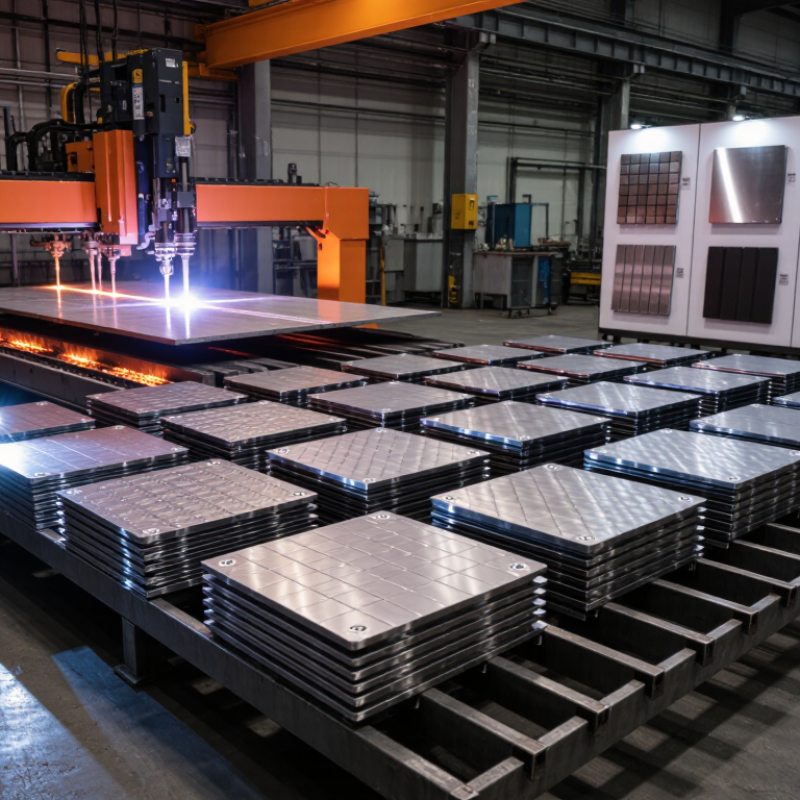
Chromium carbide wear plate is a steel base covered with a hard, chromium-rich carbide layer. The overlay is usually created through controlled welding. During cooling, chromium carbides form inside a tougher metallic matrix. This structure resists severe abrasion from sand, rock, coal, cement, and mineral slurry. The steel backing provides support and limited impact resistance. The carbide layer handles the cutting and grinding action.
In practical fabrication, plate hardness often exceeds 55 HRC, although the actual value depends on chemistry and welding conditions. Thickness commonly ranges from a few millimeters to several centimeters. It can protect chutes, hoppers, liners, crusher parts, and conveyor transfer points. I have found that surface hardness alone can mislead buyers. Impact strength, overlay uniformity, cracking patterns, and plate flatness also affect service life. Small stress cracks may appear naturally and help release welding stress.
Cutting requires suitable thermal or mechanical methods. Drilling the hardened layer is difficult, so designers often use prepared holes or machine the softer backing first. Poor alignment can leave exposed steel at high-wear edges. That detail is easy to miss. Selecting a plate should match the material size, sliding speed, impact level, temperature, and maintenance access. A thicker plate is not always better. It may increase weight, installation effort, and structural load without extending useful life. Field inspection remains valuable because laboratory abrasion results rarely reproduce every operating condition.
How Chromium Carbide Wear Plates Are Manufactured
When comparing the top ten chromium carbide wear plate manufacturers, study their production methods carefully. Manufacturing begins with a tough, weldable steel backing plate. Technicians clean and inspect its surface before overlay welding. Preparation matters.
A flux-cored welding wire deposits an alloy containing chromium, carbon, and supporting elements. Controlled heat forms hard chromium carbide particles inside a tougher metallic matrix. This structure resists sliding abrasion, impact, and mineral wear. Welding speed, current, and dilution must remain stable across the plate. Otherwise, hardness and service life can vary from one area to another.
After welding, the plate cools under controlled conditions. Small transverse cracks may appear as welding stress is released. That can be acceptable. Wide, irregular cracks need investigation. Cutting usually uses plasma, waterjet, or specialized thermal methods. Drilling requires suitable carbide tooling and reduced feed pressure. Experienced manufacturers check thickness, flatness, surface hardness, chemistry, and weld quality. Ultrasonic inspection may reveal defects beneath the overlay.
No process is flawless. Poor handling can distort a plate after inspection. A reliable supplier should provide batch records, test results, and clear limits for hardness and dimensional tolerance. Factory experience also shows in practical details, such as consistent bead overlap and clean plate edges. These details often separate durable wear protection from an attractive but short-lived surface.
Key Factors for Evaluating Wear Plate Manufacturers
Choosing among the top 10 chromium carbide wear plate manufacturers requires more than comparing hardness numbers. Real operating experience matters. A plate may survive abrasive ore but fail near welds or impact zones. Inspect production records, not only brochures. The USGS Mineral Commodity Summaries 2024 reports about 2.5 billion metric tons of global iron ore production in 2023. That scale explains why consistent wear performance matters across mining, cement, and bulk-material handling.
Ask each manufacturer for recent test evidence. ASTM G65 dry-sand rubber-wheel results can reveal abrasion resistance under controlled conditions. Request the test load, abrasive grade, test duration, and volume loss. Without these details, “high performance” means little. Check overlay thickness, carbide distribution, matrix hardness, chemical composition, and plate flatness. Trace every heat.
Manufacturing control is equally important. The World Steel Association reported 1.89 billion tonnes of crude steel production in 2023. A large supply chain does not guarantee reliable overlay quality. Evaluate heat certificates, ultrasonic inspection, dimensional tolerances, and batch traceability. Confirm welding guidance for your base material and service temperature. Ask for references from similar equipment, such as chute liners or crusher transfer points.
Price deserves scrutiny. A cheaper plate can increase shutdowns, fitting labor, and replacement frequency. I would compare cost per operating hour, not cost per sheet. No scorecard is perfect. Field feedback can still expose gaps that laboratory tests miss. Test the plate in a controlled section before approving large quantities.
Top 10 Chromium Carbide Wear Plate Manufacturers
Top 10 Chromium Carbide Wear Plate Manufacturers should be assessed through measurable engineering evidence, not advertising language. Public market reports rarely separate chromium carbide overlay plate from the wider wear-resistant steel sector. However, the MarketsandMarkets report on wear-resistant steel identifies mining, construction, cement, and power generation as major demand industries. These sectors need plates that resist sliding abrasion, impact, and elevated temperatures.
A reliable Top 10 list should compare overlay chemistry, hardness, crack management, plate flatness, and welding support. Chromium carbide content often exceeds 20%, while deposited hardness commonly reaches approximately 55–65 HRC. Actual performance depends on carbon content, carbide distribution, substrate strength, and operating conditions. ASTM G65 testing can help compare abrasive wear, but laboratory results do not perfectly represent a vibrating chute or crusher liner. Field evidence matters more.
Supply stability also deserves attention. The USGS Mineral Commodity Summaries 2024 reported roughly 41 million metric tons of global chromite ore production in 2023, showing the scale of chromium-related raw material supply. World Steel in Figures 2024 recorded about 1.89 billion metric tons of crude steel production in 2023, supporting broad industrial demand for engineered wear components. Still, raw material volume does not prove plate quality. I would rank manufacturers higher when they provide traceable test certificates, batch records, dimensional inspections, and documented field references. Some rankings remain imperfect. Regional service capacity can outweigh a small hardness advantage.



 08045479132

 Send Inquiry


 Send Inquiry
 Send SMS

