| Air-Cooled Fin-and-Tube Condenser | Copper tubes mechanically expanded into aluminum fins; axial fans remove heat directly to ambient air. | Approximately 1–150 kW of refrigeration capacity, depending on coil size, airflow, and condensing temperature. | R32, R410A, R407C, R134a, R404A, and other approved refrigerants. | Residential split systems, light commercial HVAC, rooftop units, small cold rooms, and replacement projects. | Proven design, broad service familiarity, easy maintenance, and good availability across international markets. | Requires adequate outdoor airflow; copper and aluminum material selection should match corrosion conditions and refrigerant requirements. |
| Microchannel Air-Cooled Condenser | Flat multi-port aluminum tubes joined to louvered aluminum fins, usually with compact headers. | Approximately 2–300 kW, subject to circuit arrangement, face area, and fan configuration. | R32, R410A, R454B, R407C, R134a, and other refrigerants approved for the specific design. | Packaged air conditioners, heat pumps, data-room cooling, transport HVAC, and space-limited outdoor units. | Lower refrigerant charge, reduced weight, compact dimensions, and efficient heat transfer when properly selected. | More sensitive to fin damage and blocked airflow; aluminum corrosion protection is important in coastal or industrial environments. |
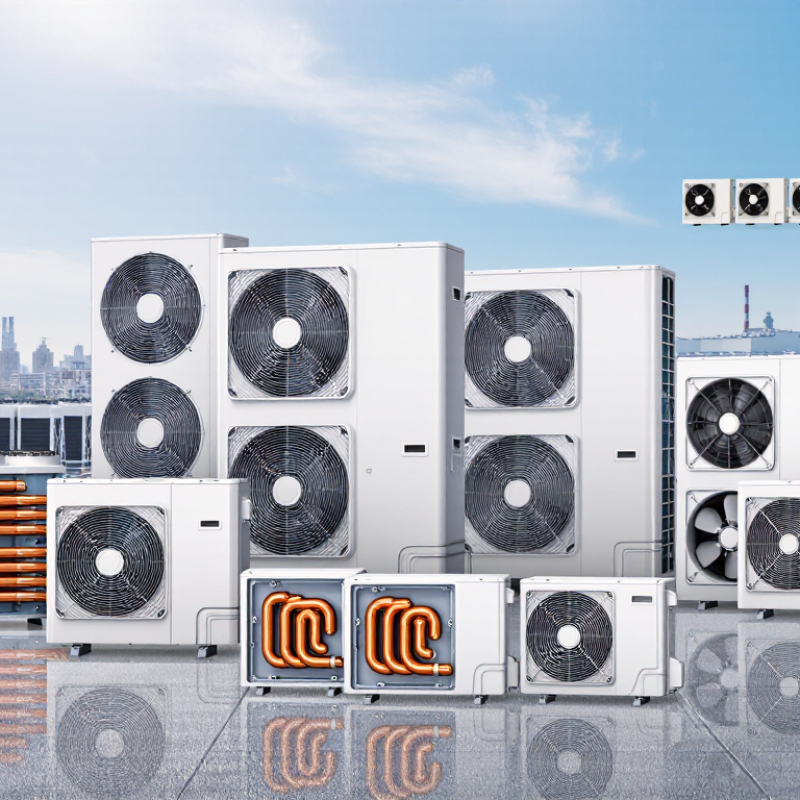
| Air-Cooled Condensing Unit | Factory-assembled compressor, condenser coil, fan, receiver or accumulator options, controls, and protective devices. | Approximately 1–100 kW for common commercial and light-industrial configurations. | R32, R410A, R134a, R404A, R507A, R407C, and lower-GWP alternatives where approved. | Walk-in coolers, supermarkets, small process rooms, commercial refrigeration, and modular HVAC systems. | Simplifies installation, reduces field assembly, and can be configured for different voltage, frequency, and control requirements. | Confirm compressor compatibility, electrical standards, start-up current, sound limits, oil type, and local refrigerant regulations. |
| Water-Cooled Shell-and-Tube Condenser | Refrigerant flows through tubes while cooling water circulates through the shell, or the flow arrangement is reversed according to design. | Approximately 20–1,500 kW for commercial and industrial water-cooled systems. | R134a, R410A, R407C, R513A, R1234ze, and other approved refrigerants. | Central chilled-water plants, hotels, hospitals, factories, and buildings with cooling towers or reliable water circuits. | Stable condensing performance in hot climates, compact plant-room layout, and lower air-side noise. | Needs water treatment, pumps, strainers, flow protection, and regular cleaning to control scale, fouling, and corrosion. |
| Water-Cooled Brazed Plate Condenser | Corrugated stainless-steel plates brazed together to create separate refrigerant and water channels. | Approximately 5–500 kW, depending on plate count, flow rate, and temperature approach. | R32, R410A, R134a, R407C, R513A, and other refrigerants compatible with the pressure rating. | Compact chillers, heat pumps, commercial hot-water systems, and packaged industrial equipment. | Very compact footprint, high heat-transfer efficiency, low internal volume, and relatively low refrigerant charge. | Not normally field-serviceable internally; filtration and water-quality control are essential to prevent blockage. |
| Evaporative Condenser | Refrigerant coil is cooled by a combination of forced air and recirculated water evaporation. | Approximately 100–2,000 kW, with capacity varying significantly by wet-bulb temperature and airflow. | Commonly used with large commercial or industrial refrigerants subject to applicable safety regulations. | Large cold-storage facilities, food processing, industrial refrigeration, and high-load applications in dry climates. | Lower condensing temperatures and potentially lower energy use than conventional air-cooled systems in suitable climates. | Requires water management, drift control, hygiene procedures, freeze protection, and compliance with local environmental rules. |
| Remote Condenser Coil | Standalone air-cooled coil and fan assembly installed separately from the compressor and receiver package. | Approximately 5–500 kW, depending on coil rows, fan quantity, circuiting, and design conditions. | R134a, R410A, R407C, R404A, R507A, R32, and other approved refrigerants. | Supermarket racks, large split systems, cold rooms, modular refrigeration plants, and projects requiring flexible equipment placement. | Separates heat rejection from occupied areas, supports flexible layouts, and can reduce indoor noise and heat release. | Requires correct refrigerant piping design, oil return, pressure-drop control, weather protection, and coordinated controls. |



 08045479132

 Send Inquiry


 Send Inquiry
 Send SMS

