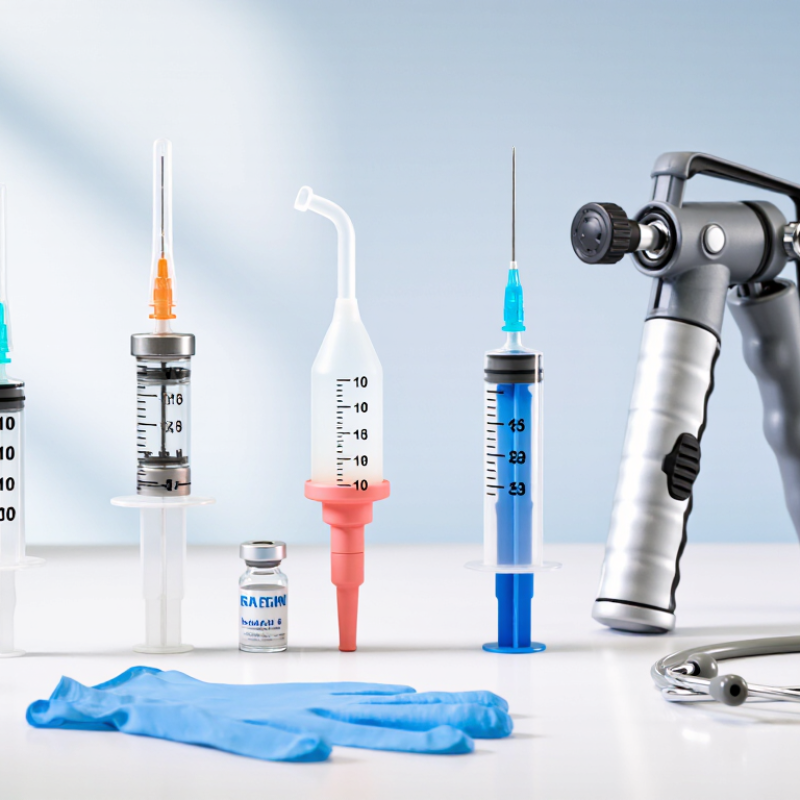
| Standard hypodermic syringe | Manual syringe with a plunger and needle connection; commonly supplied in disposable plastic and in a range of capacities. | Measuring and administering injectable medicines or vaccines when the product is intended for injection. | Choose a capacity and graduation that allow accurate measurement of the prescribed dose. Needle size and injection route must suit the medicine and animal. |
| Low-volume or fine-graduation syringe | A small-capacity syringe designed to make small liquid volumes easier to measure; tuberculin-style syringes commonly have a 1 mL capacity. | Accurate measurement of small doses when prescribed, including use in small animals or other situations requiring fine volume increments. | Check the scale units and graduation interval before drawing up medicine. A small-volume syringe is not automatically suitable for every drug or route. |
| Insulin syringe | A syringe calibrated for a specified insulin concentration, commonly U-100; U-40 syringes are also used with insulin labelled at that concentration. | Measuring insulin for animals when the syringe scale matches the concentration of the prescribed insulin. | Match the syringe calibration to the insulin concentration exactly. Do not interchange U-40 and U-100 syringes without veterinary direction. |
| Oral dosing syringe | A needle-free syringe, often with a graduated barrel and oral dosing tip. | Giving measured liquid medicines by mouth to animals that can safely receive them orally. | Use only for products intended for oral administration. Give the liquid slowly and follow veterinary instructions to reduce the risk of aspiration. |
| Automatic or multi-dose syringe | A reusable delivery device that dispenses a preset volume repeatedly, often drawing from a reservoir or attached medicine container. | Repeated dosing in settings such as livestock vaccination, when the product instructions and applicable regulations allow this method. | Verify the dose setting, maintain the device as directed, and follow medicine-specific hygiene and handling instructions. Do not use one device across animals if the instructions prohibit it. |
| Drench or livestock dosing syringe | A larger-volume, needle-free applicator designed to deliver measured liquid by mouth; some models have an adjustable dose setting. | Oral administration of suitable liquids to livestock, according to the product label and animal-care plan. | Confirm the dose setting and applicator fit. Use a technique appropriate for the species and never use an oral drench applicator for injection. |
| Catheter-tip or irrigation syringe | A needle-free syringe with a wider tip intended for delivery or flushing rather than injection. | Selected flushing, irrigation, or feeding procedures when specifically directed by a veterinary professional. | Use only for the intended procedure and compatible solution. It is not a substitute for a needle-equipped syringe when an injectable medicine is prescribed. |
| Reusable glass syringe | A syringe with a glass barrel, intended for reuse only when its design and instructions permit appropriate cleaning and sterilization. | Specialized veterinary or laboratory procedures where a reusable syringe is appropriate and validated cleaning procedures are available. | Inspect for damage and follow the manufacturer’s cleaning and sterilization instructions. Reuse is inappropriate if the device is labelled single-use. |



 08045479132

 Send Inquiry


 Send Inquiry
 Send SMS

