| Resistance Bands | Progressive strengthening and mobility exercises | Patients pull against the band to work specific muscle groups or perform controlled joint movements. Resistance can be adjusted by changing the band or its stretch. | Choose resistance that allows controlled movement without provoking excessive pain or loss of form. |
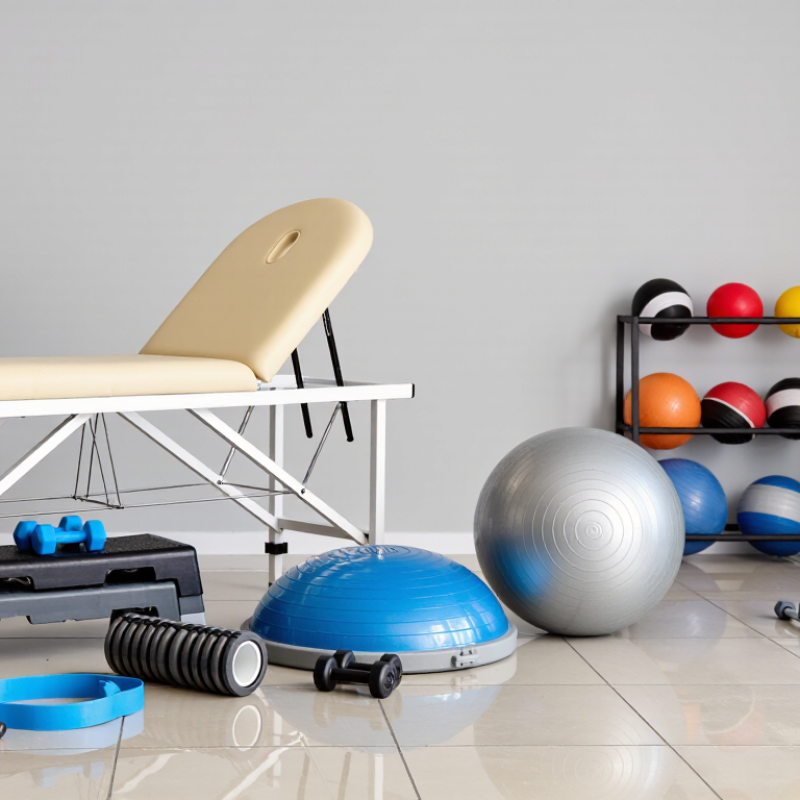
| Therapy Balls | Trunk control, balance, and functional exercise | A therapist may use a ball as a support surface or exercise tool for sitting balance, core control, gentle mobility, or selected strengthening activities. | Use an appropriately sized ball and provide support when balance or fall risk is a concern. |
| Foam Rollers | Self-massage and movement preparation | Patients use body weight to roll over selected muscle areas as part of a mobility or warm-up routine. A therapist can guide positioning and pressure. | Pressure should be comfortable; avoid rolling directly over bones, injured areas, or other sensitive structures. |
| Goniometers | Measurement of joint range of motion | The therapist aligns the instrument with anatomical landmarks to measure joint angles and track movement over time. | Consistent positioning and technique help make repeated measurements more comparable. |
| Handheld Dynamometers | Assessment of muscle strength | The patient pushes or pulls against the device while the therapist applies resistance, helping quantify force during selected strength tests. | Results depend on standardized test positions, instructions, and consistent application of resistance. |
| Balance Pads | Balance and proprioception training | Patients perform standing or weight-shifting exercises on a compliant surface, progressing from supported tasks to more challenging activities as appropriate. | Use close supervision and a stable handhold when needed to reduce fall risk. |
| Parallel Bars | Supported standing and gait practice | Patients use the bars for stability while practicing standing, weight transfer, stepping, and walking patterns under therapist supervision. | Adjust the task to the person’s mobility, balance, and level of assistance required. |
| Hot and Cold Packs | Short-term symptom management | Heat or cold may be applied for a limited period to help manage symptoms or prepare for activity, alongside an individualized rehabilitation plan. | Protect the skin with an appropriate barrier and monitor comfort and skin response; these packs do not replace active rehabilitation. |
| TENS Unit | Temporary modulation of pain symptoms | Electrodes deliver low-voltage electrical stimulation through the skin. A clinician can advise on placement and settings for appropriate cases. | Suitability varies; follow device instructions and seek clinical advice, especially with implanted electronic devices or altered skin sensation. |
| Therapeutic Ultrasound Unit | Adjunct modality in selected treatment plans | A trained clinician moves an ultrasound applicator over the skin using coupling gel. It may be considered as one component of care for selected conditions. | Its benefits vary by condition, and it should not replace exercise or other evidence-informed treatment when those are indicated. |



 08045479132

 Send Inquiry


 Send Inquiry
 Send SMS

