China Top 10 Orthopedic Spine Implant Manufacturers?
China’s orthopedic device sector includes manufacturers with different strengths, product portfolios, and levels of international experience. This guide to China’s top 10 orthopedic spine implant manufacturers offers a practical starting point for comparing them. Orthopedic Spine Implants can include pedicle screw systems, rods, cages, plates, and related instruments. Each product serves a specific role, so a broad catalogue alone does not prove quality.
A useful comparison looks beyond promotional claims. Consider each manufacturer’s production capabilities, quality-management systems, product documentation, and experience serving hospitals or distributors. Check whether technical information is current and whether relevant certifications can be independently verified. Clinical evidence, when available, should be assessed carefully and in context. It may not cover every product or patient group. Details matter.
Buyers should also ask about material specifications, traceability, instrument compatibility, training, and after-sales support. A supplier’s ability to communicate clearly can matter when a shipment, product question, or technical issue arises. Price is relevant, but it should not replace a review of safety information and product suitability by qualified professionals. No list is perfect. Rankings depend on transparent criteria, available public information, and the needs of the reader. Company capabilities can change, and public profiles may not reveal every limitation. Use this overview to identify candidates for further due diligence, not as an endorsement or a substitute for professional evaluation.
Scope and Definition of Orthopedic Spine Implants in China
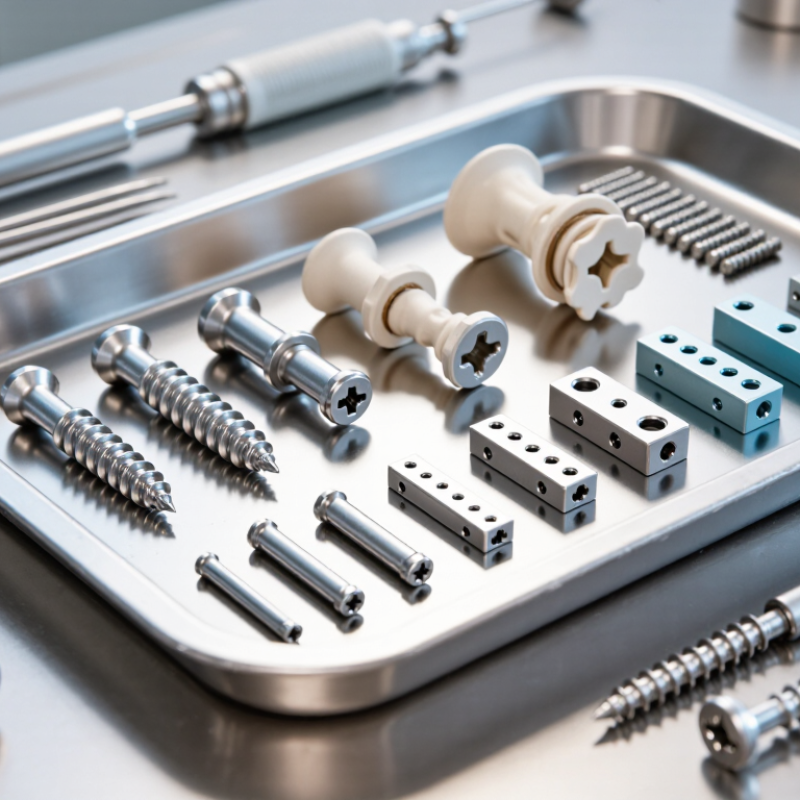
Orthopedic spine implants are devices placed during surgery to support, align, or replace parts of the spinal column. In China, the term generally covers pedicle screws, connecting rods, fixation plates, interbody cages, and artificial discs. Some systems are designed for specific spinal regions or surgical approaches. Materials may include titanium alloys, polymers, or other medically suitable materials, depending on the device and its intended use. These are not surgical instruments.
That distinction matters.
For a review of China’s manufacturers, scope should include companies that design or produce implantable spinal devices, rather than distributors alone. Product categories, intended indications, and regulatory documentation are useful comparison points; a broad label does not establish equivalent performance.
Not quite.
Terminology can vary between catalogs and clinical settings, so borderline products may need case-by-case classification. Bone graft materials and navigation equipment, for example, may support spine procedures but are not necessarily implants themselves. Buyers and researchers should verify current registration details and product indications through appropriate official records. A manufacturer’s category listing is only a starting point, not evidence of clinical suitability.
Criteria for Identifying Leading Chinese Spine Implant Manufacturers
Evaluating China’s leading spine implant manufacturers requires more than comparing product catalogs. Grand View Research estimated the global spinal implants market at USD 11.6 billion in 2022, with projected growth of 5.5% annually through 2030. Its report points to growing demand, but market growth alone cannot prove a supplier’s quality. Details matter.
Check each company’s product-specific regulatory registrations, quality-management records, and manufacturing traceability. Ask for evidence on material specifications, sterilization validation, and lot-level inspection. For implants such as pedicle screws and interbody cages, request mechanical test methods and results—not just a certificate. Clinical evidence should identify the patient group, follow-up period, and complications reported. A polished brochure is not clinical proof.
Assess production consistency through audit findings, corrective-action records, and documented change control. ISO 13485 certification can indicate a structured quality system, but it does not guarantee clinical performance. Compare delivery reliability and technical support using records from actual hospital supply programs, where available. No scorecard is perfect. I would also check how openly a manufacturer explains limitations; that detail is easy to overlook. Market-size figures describe an industry, not the performance of any individual manufacturer.
Profiles of Ten Notable Chinese Spine Implant Manufacturers
A useful profile of ten notable Chinese spine-implant manufacturers should compare capabilities, not rely on a simple ranking. Their portfolios may include pedicle-screw systems, interbody cages, cervical plates, and minimally invasive instruments. The clinical need is substantial: a 2023 Lancet Rheumatology analysis estimated that 619 million people had low back pain in 2020, with cases projected to reach 843 million by 2050. That global figure is not a measure of implant demand in China, but it shows why reliable spinal care matters.
Profiles should examine design expertise, manufacturing consistency, surgeon training, and published clinical evidence. China’s National Bureau of Statistics reported 296.97 million residents aged 60 or older at the end of 2023, a demographic context relevant to degenerative spine care. Still, age alone cannot predict surgery rates. Look for practical details: implant material specifications, instrument compatibility, traceability, and follow-up data. Good documentation matters. So does candid reporting of limitations. A polished catalogue is not clinical proof, and a broad product range may conceal uneven evidence. I would also question comparisons that omit revision outcomes; this detail is easy to miss, yet important.
Key Products, Technologies, and Clinical Applications
China’s leading orthopedic spine implant manufacturers typically offer pedicle screw-rod systems, interbody cages, cervical plates, and fixation instruments. Product comparisons should look beyond catalog size. Surgeons consider screw trajectory, rod contouring, cage footprint, and visibility on postoperative imaging. Fit matters. Porous titanium cages may support bone ingrowth, while PEEK cages allow clearer imaging. Neither material suits every patient or procedure.
Technology development includes porous, additively manufactured surfaces, expandable cages, and instruments designed for navigation-assisted surgery. These options may be used in procedures for degenerative disc disease, spinal instability, deformity, or selected fractures. The right choice depends on anatomy, bone quality, fusion level, and surgical technique. Evidence still varies. A technically advanced implant does not by itself establish better clinical outcomes, so long-term follow-up and transparent complication reporting matter.
Fortune Business Insights valued the global spinal implants market at USD 11.08 billion in 2023 and projected USD 17.92 billion by 2032, a 5.5% compound annual growth rate. This is a global estimate, not China-specific sales data. For buyers assessing Chinese manufacturers, useful questions include whether clinical data match the intended application, how implant materials are tested, and whether surgical instruments are compatible with the planned workflow. A market forecast signals demand, not proof of safety or effectiveness.
Regulatory Standards and Market Considerations in China
China’s spine implant market is shaped by more than manufacturing capacity. Regulatory readiness, clinical evidence, and procurement pricing all influence whether a product can reach hospitals. Under the National Medical Products Administration’s Medical Device Registration and Filing Measures (Order 47), Class III implants require registration. Applicants should prepare product-specific technical documentation, risk assessments, and testing against applicable Chinese standards. Clinical evaluation requirements depend on the product and available evidence; a familiar design does not automatically remove that work.
Procurement can quickly change the commercial picture. The National Healthcare Security Administration’s 2022 national volume-based procurement results for spinal consumables reported an average price reduction of about 84%. Hospitals may therefore compare clinical performance alongside price, supply continuity, and service support. A bidding price alone is not the full cost: surgeons also need reliable instrument sets, clear sizing options, and timely replacement components. Small logistics failures matter.
For manufacturers assessing China’s top orthopedic spine implant suppliers, registration status and hospital access deserve careful checking. Review the approved indications, Chinese-language labeling, and traceability arrangements before comparing market claims. The paperwork can feel repetitive. Still, gaps between overseas testing and local requirements can delay a launch. Public procurement data also cannot show every hospital’s purchasing decision, so market estimates should be treated cautiously.



 08045479132

 Send Inquiry


 Send Inquiry
 Send SMS