| Batch House and Raw-Material Mixing System | Stores, weighs, and mixes glass-making ingredients, such as silica sand, soda ash, and limestone, into a consistent batch. | Before melting | Check weighing accuracy, dust control, material-handling capacity, and compatibility with the intended glass composition. |
| Cullet Handling and Preparation Equipment | Conveys and prepares clean recycled glass, known as cullet, for addition to the batch. Cullet is commonly used to support efficient melting. | Batch preparation | Assess cullet cleanliness, sorting needs, conveying layout, and the system’s ability to handle the planned cullet proportion. |
| Glass-Melting Furnace | Melts the prepared batch into molten glass and provides a controlled supply of glass to the forming process. | Melting and refining | Compare production capacity, temperature-control capability, energy requirements, emissions controls, and maintenance needs. |
| Float Bath | Forms a continuous glass ribbon by allowing molten glass to spread over a bath of molten tin. The ribbon’s thickness and surface quality are controlled through process conditions. | Flat-glass forming | Review ribbon-width capability, thickness range, atmosphere control, tin-bath maintenance, and integration with the furnace and lehr. |
| Rolling Machine | Shapes molten glass by passing it between rollers. It is used for rolled products, including patterned glass, and is an alternative forming route to the float bath. | Flat-glass forming | Check roller design, pattern options, product thickness capability, cooling arrangements, and suitability for the intended product mix. |
| Annealing Lehr | Gradually cools the formed glass ribbon to reduce internal stresses and lower the risk of breakage during later handling and processing. | After forming | Consider working width, temperature-zone control, line speed, insulation, and coordination with the forming line. |
| Glass-Ribbon Cutting System | Scores and separates the continuous ribbon into sheets or other specified sizes after annealing. | After annealing | Check cutting accuracy, maximum sheet dimensions, handling method, recipe flexibility, and integration with inspection equipment. |
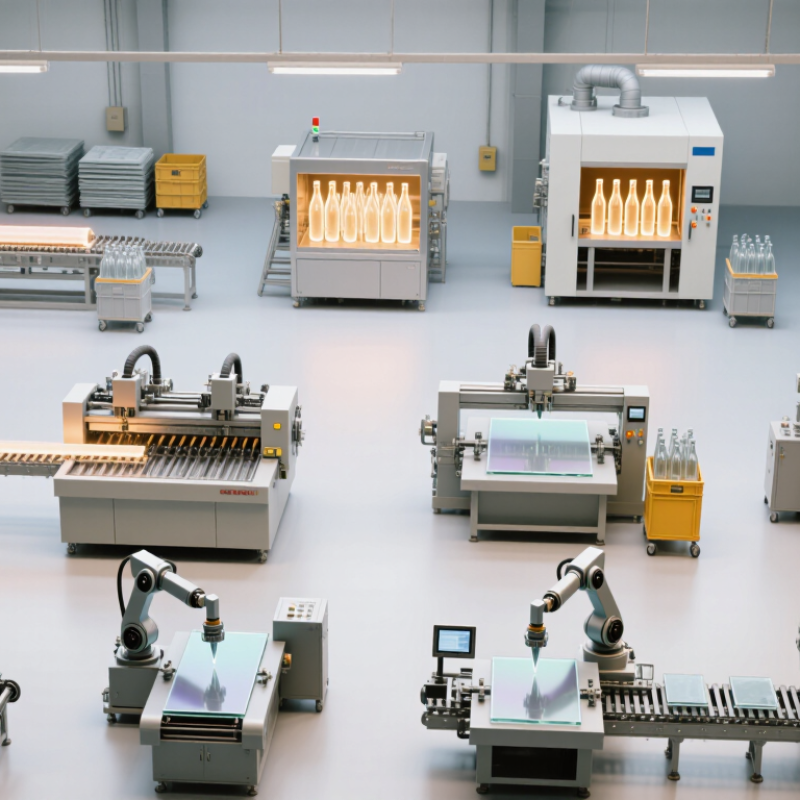
| Edge Grinding and Seaming Machine | Processes sheet edges to remove sharpness or prepare them for downstream use, handling, or further fabrication. | Downstream processing | Match the machine to sheet dimensions, edge profile requirements, glass thickness, throughput, and water-treatment arrangements. |
| Glass Washing and Drying Machine | Removes dust and processing residues from glass surfaces and dries the sheets before inspection or coating-related operations. | Downstream processing | Evaluate cleaning quality, brush and water systems, drying performance, allowable glass sizes, and maintenance access. |
| Optical Inspection and Quality-Control System | Detects visible defects and monitors product characteristics such as dimensions and surface quality, depending on the system configuration. | Inline inspection and quality control | Review detectable defect types, inspection speed, measurement capability, data recording, and integration with cutting or sorting systems. |



 08045479132

 Send Inquiry


 Send Inquiry
 Send SMS

