Top 10 Double Spiral Twin Shaft Concrete Mixers for Sale
Choosing from the Top 10 Double Spiral Twin Shaft Concrete Mixers for Sale starts with the work the machine must perform. Output capacity matters, but so do aggregate size, batch consistency, mixing time, and cleaning access. A mixer that looks impressive in a catalog may struggle with a demanding production schedule. Details matter. Inspect the shaft arrangement, spiral blade spacing, wear liners, drive system, and discharge gate. Ask how replacement parts are sourced and how quickly service is available. A clear answer is worth more than a glossy photograph.
A double spiral twin shaft design uses two counter-rotating shafts to move material through the mixing chamber. This action can help produce a more uniform blend, though results depend on the mix recipe, loading sequence, and operating discipline. As a practical guide principle, fictional equipment specialist Ethan Cole puts it this way: “Judge a mixer by the consistency it delivers, not by its nameplate capacity.” This is an editorially written quotation, not a verified interview or sourced statement. Use it as a reminder, not as evidence. The models in this guide should be compared against real plant requirements, including daily output, available space, maintenance skills, and budget. Some specifications can look excellent on paper and still disappoint on site. That deserves honest scrutiny.
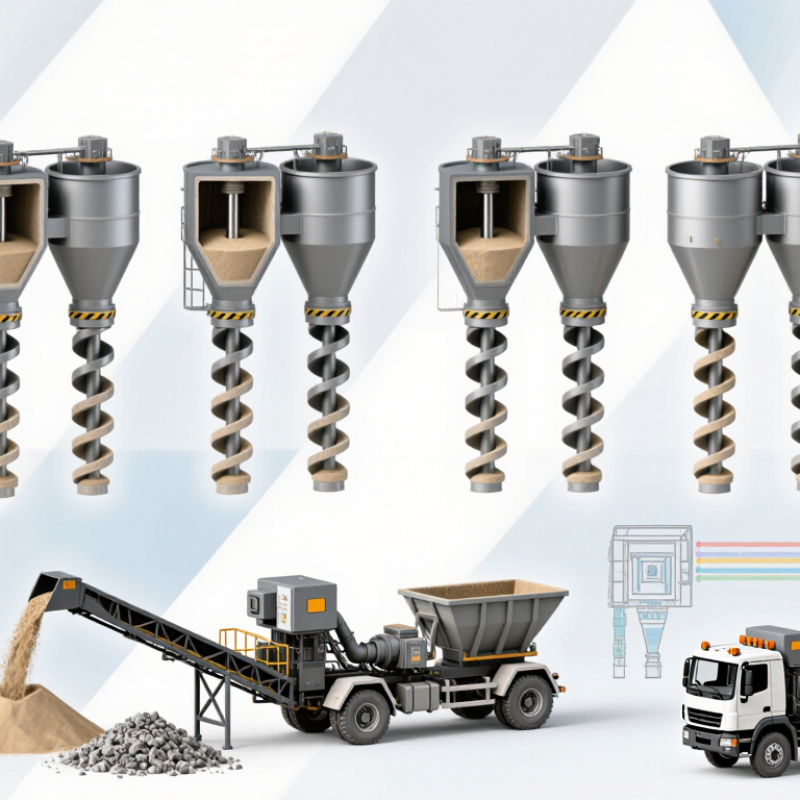
What Defines a Double Spiral Twin Shaft Concrete Mixer?
Top 10 Double Spiral Twin Shaft Concrete Mixers for Sale
What Defines a Double Spiral Twin Shaft Concrete Mixer?
A double spiral twin shaft concrete mixer has two parallel horizontal shafts fitted with spiral-shaped blades or paddles. The shafts rotate in opposite directions, moving concrete through overlapping mixing zones. This action lifts, folds, and redistributes cement paste, water, and aggregates rather than merely tumbling them. Blade shape and arrangement vary between machines.
Look inside the mixing trough. The blades should move material from the sides toward the center, then carry it through the chamber again. That circulation—not simply having two shafts—is what defines the mixing system. In practical use, a suitable design can produce a consistent batch, but results still depend on moisture, aggregate size, batch volume, and mixing time. Not magic.
When comparing mixers, check blade clearance, shaft seals, replaceable wear liners, and the discharge gate. These details affect maintenance and mixing performance. Worn blades may leave uneven pockets, while incorrect clearance can reduce effective movement. Ask how adjustments are made and how often wear parts need inspection. A specification sheet helps, but it cannot fully show how the machine handles your actual mix.
How Twin Shafts and Spiral Blades Create a Uniform Mix
A twin-shaft concrete mixer uses two parallel shafts that rotate in opposing directions. Spiral blades and paddles push materials across the mixing chamber, lifting them from the bottom and folding them toward the center. This repeated movement helps distribute cement, water, sand, and coarse aggregate throughout each batch.
The action is more than simple tumbling. Blades near the shaft ends move material inward, while other blades carry it upward and across the chamber. A well-designed arrangement can reduce stagnant pockets and uneven streaks. The result is often a more consistent mix in less time than basic gravity mixing. Still, blade geometry and shaft speed matter. More aggressive movement is not automatically better.
Watch the batch closely. Dry aggregate, variable moisture, or worn blades can affect uniformity, even in a robust mixer. Operators can compare samples from different points in the discharge and check whether the slump and texture remain consistent. Small details count. Mixing time should suit the materials and batch size, not just a fixed timer. A spiral blade can also leave some material behind if clearance or wear is overlooked. That is easy to miss. Regular inspection helps, though it cannot correct poor proportioning or inconsistent feed.
Which Specifications Matter When Comparing Mixers for Sale?
When comparing double spiral twin shaft concrete mixers for sale, start with usable batch capacity, not just drum volume. A unit’s rated output should match your plant’s hourly demand and the time allowed for loading, mixing, and discharge. Ask whether figures refer to finished concrete output or nominal volume. Small wording matters.
Check shaft speed, motor power, and paddle layout together. Higher power alone does not guarantee a uniform mix. Confirm the mixer handles your largest aggregate size and the recipes you actually run, including stiff or low-slump mixes. Inspect liner and paddle materials, thickness, and replacement access; wear parts influence downtime. Ask for typical mixing time with a stated mix design, not an ideal empty-machine claim. Short tests help.
Look closely at shaft seals, discharge-gate design, and cleaning access. Concrete trapped around a gate or bearing area can become tomorrow’s maintenance job. Verify electrical supply, installation footprint, lifting points, and service clearances before ordering. Request drawings and a parts list. A specification sheet can still mislead; real performance depends on moisture, loading sequence, and operator habits. I would compare those details with a trial batch, if possible. It may be inconvenient, but it is worth asking.
Top 10 Double Spiral Twin Shaft Concrete Mixers by Capacity and Use
Double spiral twin shaft concrete mixers are best compared by batch capacity and daily duty, not price alone. A useful top-ten shortlist can span compact 0.5–1 m³ units for precast parts and trial batches, through 1–2 m³ models for small plants. Mid-range 2–3 m³ machines suit general concrete production. Larger 3–4 m³ units handle infrastructure pours, while 4–6 m³ configurations serve high-output plants. Actual output depends on cycle time and mix design.
Match the mixer to the material. Precast work may need even dispersion and repeatable batches. Ready-mix operations often value fast discharge and consistent cycles. Abrasive aggregates can wear liners quickly, so check replacement access and expected maintenance intervals. Compare shaft-seal protection, motor power, and the rated batch volume. A bigger number is not always better. Plant layout, loader access, and downstream conveying can limit practical capacity. A tidy capacity chart can mislead; verify figures against the supplier’s test conditions.
Tips: Ask for a trial using your own mix proportions. Watch whether material clings near the end plates, and time loading, mixing, and discharge separately. Leave room for cleaning and liner changes. Small details matter. Also confirm that the quoted capacity means compacted concrete output, not merely the mixer’s internal volume.
How to Match a Mixer to Plant Needs and Operating Costs?
Choosing among the top 10 double spiral twin shaft concrete mixers starts with your actual batch pattern, not catalogue capacity. Track daily output, smallest routine load, aggregate size, slump range, and peak-hour demand. Twin shafts can mix quickly and evenly, but an oversized mixer may run partly filled. Small details matter.
Energy deserves close attention. The U.S. Department of Energy’s Improving Motor and Drive System Performance sourcebook reports that motor-driven systems use about 68% of U.S. manufacturing electricity. That figure is not mixer-specific, but it shows why drive efficiency and operating time matter. Compare motor power with measured kilowatt-hours per cubic meter, including idle time. Also price wear parts, cleaning labor, water use, and planned maintenance. A low purchase price can hide a costly duty cycle.
ACI Committee 304’s Guide for Measuring, Mixing, Transporting, and Placing Concrete stresses evaluating mixing performance for the actual concrete and equipment. Ask suppliers for trial-batch results using your aggregate and mix design, then check uniformity, discharge time, and residue around the blades. I would not trust rated capacity alone; it leaves out real production delays. Estimate total cost per cubic meter across a typical shift, not just a full-load test.
Top 10 Double Spiral Twin Shaft Concrete Mixers for Sale — How to Match a Mixer to Plant Needs and Operating Costs? | Configuration | Nominal Compacted Output per Batch | Typical Installed Motor Power | Indicative Plant Output | Best-Fit Plant or Application | Estimated Electricity Use | Electricity Cost per m³* | Key Selection Consideration |
| Compact 0.5 m³ | 0.5 m³ | 2 × 7.5 kW | 12–18 m³/h | Small precast lines, laboratories, and low-volume specialty production | 0.9–1.4 kWh/m³ | US$0.11–0.17 | Low initial power demand; check that batch size suits the smallest regular order. |
| Compact 0.75 m³ | 0.75 m³ | 2 × 11 kW | 18–27 m³/h | Small ready-mix plants and precast facilities with varied product runs | 0.8–1.2 kWh/m³ | US$0.10–0.14 | A practical step up when a 0.5 m³ unit creates a batching bottleneck. |
| Small 1.0 m³ | 1.0 m³ | 2 × 15 kW | 24–36 m³/h | Small commercial ready-mix plants and general precast production | 0.75–1.1 kWh/m³ | US$0.09–0.13 | Confirm truck-loading and aggregate-feed rates can keep pace with the mixer. |
| Small–medium 1.5 m³ | 1.5 m³ | 2 × 18.5 kW | 36–54 m³/h | Growing ready-mix plants and medium-volume precast lines | 0.7–1.0 kWh/m³ | US$0.08–0.12 | Assess aggregate grading and concrete consistency at the planned cycle time. |
| Medium 2.0 m³ | 2.0 m³ | 2 × 30 kW | 48–72 m³/h | Medium ready-mix plants and regular precast production | 0.65–0.95 kWh/m³ | US$0.08–0.11 | Check discharge-gate capacity, skip or conveyor feed, and batching-system throughput. |
| Medium 2.5 m³ | 2.5 m³ | 2 × 30 kW | 60–90 m³/h | Medium-to-large ready-mix plants with steady demand | 0.65–0.95 kWh/m³ | US$0.08–0.11 | Compare actual peak-hour demand with the plant’s aggregate and cement delivery capacity. |
| Large 3.0 m³ | 3.0 m³ | 2 × 37 kW | 72–108 m³/h | High-output ready-mix plants and larger precast operations | 0.6–0.9 kWh/m³ | US$0.07–0.11 | Allow for sufficient installed electrical capacity and dependable material feeding. |
| Large 4.0 m³ | 4.0 m³ | 2 × 45 kW | 96–144 m³/h | Large ready-mix plants with high, consistent production demand | 0.6–0.9 kWh/m³ | US$0.07–0.11 | Verify truck circulation, storage-bin capacity, and plant layout before increasing batch size. |
| High-capacity 5.0 m³ | 5.0 m³ | 2 × 55 kW | 120–180 m³/h | Large multi-truck ready-mix operations and high-volume precast plants | 0.6–0.9 kWh/m³ | US$0.07–0.11 | Capacity gains depend on keeping dosing, discharge, and transport systems synchronized. |
| High-capacity 6.0 m³ | 6.0 m³ | 2 × 75 kW | 144–216 m³/h | Very high-output plants with ample material handling and delivery capacity | 0.6–0.9 kWh/m³ | US$0.07–0.11 | Check foundation, maintenance access, power supply, and downstream capacity as part of the plant design. |
Planning note: These are representative capacity configurations, not specific models or live listings. Output ranges are indicative and assume a well-supplied plant completing roughly 24–36 batches per hour; actual production depends on mix design, loading, mixing, discharge, and site logistics. Electricity estimates are mixer-only planning values. Costs use an assumed electricity tariff of US$0.12/kWh and exclude other plant energy, labor, wear parts, maintenance, freight, installation, and taxes. Verify motor power, guaranteed output, and operating data with the equipment supplier before purchase.



 08045479132

 Send Inquiry


 Send Inquiry
 Send SMS

