Essential Tips for Choosing the Right Alloy Powder Grader?
Choosing the right Alloy Powder Grader is crucial in modern manufacturing. The global powder metallurgy market is projected to reach $25 billion by 2026, highlighting the significance of precise grading. A suitable Alloy Powder Grader can enhance material performance and optimize production efficiency. However, selecting the ideal grader can be challenging.
Many companies overlook essential factors. They often focus solely on price without considering quality or performance. For instance, a report from the Metal Powder Industries Federation indicates that poor grading can lead to product defects and increased costs. It's vital to evaluate capabilities such as particle size distribution and consistency.
In this evolving industry, precision is non-negotiable. The right Alloy Powder Grader should improve reliability and reduce waste. But, not all graders meet these criteria. Thus, a careful assessment is necessary to ensure the best choice for your specific needs.
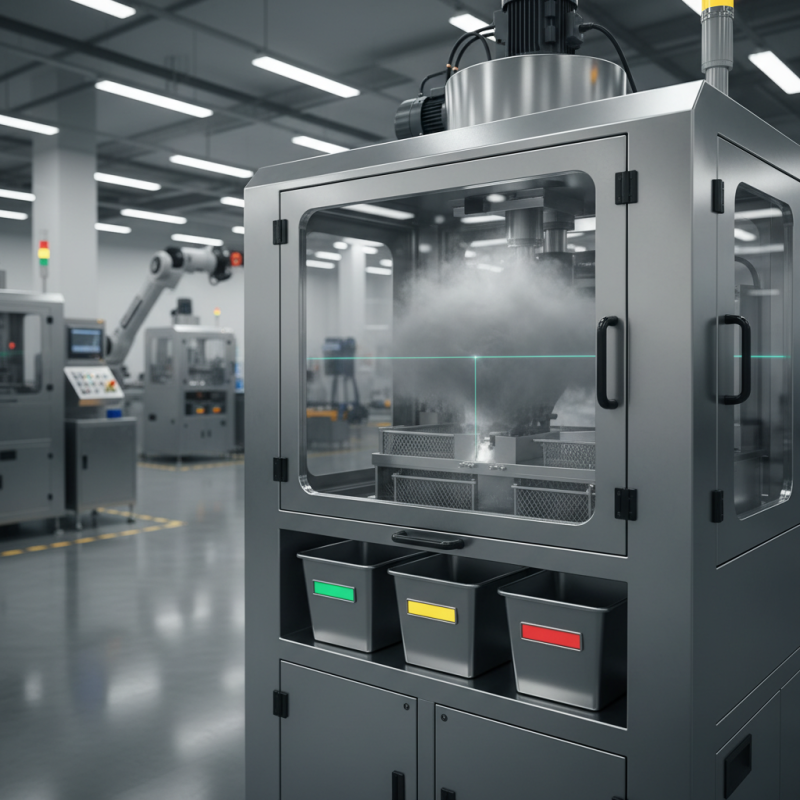
Understanding the Importance of Alloy Powder Gradation in Various Industries
When selecting the right alloy powder grader, it's crucial to grasp the role of gradation in various industries. Alloy powder gradation significantly impacts the performance of end products. Industries such as aerospace, automotive, and electronics all rely on specific particle size distributions. A well-graded powder ensures optimal flow characteristics and packing density.
However, achieving the perfect gradation isn't always straightforward. Overly fine or coarse powders may lead to inconsistent properties in finished products. This inconsistency can affect strength, ductility, and thermal properties. Some users might ignore these nuances, leading to costly mistakes in production.
Monitoring and testing the gradation of alloy powders is essential. Regular checks can help identify variations early. This practice ensures that materials meet stringent industry standards. Ignoring gradation can result in significant setbacks, both in quality and performance. A thoughtful approach can mitigate these risks.
Understanding Alloy Powder Gradation Impact
This chart illustrates the distribution of alloy powder gradation across different size ranges. Understanding this gradation is crucial for optimizing material properties in various industries such as metallurgy, aerospace, and additive manufacturing.
Key Factors to Consider When Selecting Alloy Powder Grading Equipment
When selecting alloy powder grading equipment, precision is crucial. Many industries, such as aerospace and automotive, demand high accuracy in particle size distribution. According to a 2022 report by Metal Powder Report, a variation of even a few microns can lead to significant changes in the material properties. Thus, understanding the measurement capabilities of the equipment is vital.
Consider the ease of use. Complex equipment may not only require thorough training but can also slow down production. A 2021 survey indicated that 45% of operators noted usability issues impacting their workflow. Simpler designs often lead to higher productivity. Moreover, examine the maintenance requirements. Equipment prone to frequent breakdowns can cause delays and increase costs. Finding a balance between advanced technology and reliability is essential.
Lastly, don't overlook adaptability. The alloy powder market is dynamic. Equipment that can handle various powder types may provide long-term savings. A rigid grading machine could limit your production capabilities and flexibility. It's important to assess your specific needs and anticipate future changes in material requirements. These considerations will help guide your decision.
Different Types of Alloy Powder Graders and Their Applications
When selecting an alloy powder grader, it’s essential to understand the different types available and their specific applications. There are various grades of alloy powders, including stainless steel, aluminum, and titanium. Each type serves distinct purposes in industries like aerospace, automotive, and manufacturing. Stainless steel powder, for example, is often used for its excellent corrosion resistance. Aluminum powders are popular for lightweight applications, while titanium alloys shine in high-performance environments.
Choosing the right grader is key to achieving the desired particle size and distribution. A good tip is to consider factors such as the material's density and flowability. This impacts how the powder behaves during processing. Additionally, the grading method, whether mechanical or air classification, can influence the final product quality. Don't overlook the importance of the grader's capacity and efficiency—it matters in high-volume production.
Test different graders to find the best match for your needs. Incorporate feedback from teams handling the powders. This process can reveal shortcomings or areas of improvement. It’s also important to continuously evaluate the performance of the chosen grader, as the market and technologies evolve. Being aware that no single approach is perfect can foster innovation and adaptability in processes.
Essential Tips for Choosing the Right Alloy Powder Grader - Different Types of Alloy Powder Graders and Their Applications
| Grader Type | Particle Size Range (μm) | Application | Benefits |
| Vibratory Grader | 10 - 200 | General powder classification | High efficiency, minimal contamination |
| Air Classifier | 1 - 100 | Fine powder separation | Precise size control, low energy consumption |
| Centrifugal Grader | 5 - 50 | Ultra-fine particle grading | High separation efficiency, suitable for dense materials |
| Sieving Machine | 20 - 500 | Coarse and medium powder sorting | Simple operation, economical |
| Ultrasonic Grader | 1 - 20 | Nanoparticle classification | Enhanced separation accuracy, reduces agglomeration |
Evaluating Performance Metrics for Alloy Powder Grading Solutions
When selecting an alloy powder grader, understanding performance metrics is crucial. Performance metrics often include accuracy, speed, and reproducibility. According to a market report from the Materials Science Institute, a well-calibrated grader can achieve accuracy within ±1%. This precision helps in maintaining product quality and minimizing waste.
Tip: Focus on models that offer consistent measurements. Graders with automated calibration systems tend to provide better reliability. Regular maintenance also plays a role in overall performance. Scheduled checks can enhance the life of the machine.
Speed is another important factor. Some devices can grade powder in real time, significantly enhancing production efficiency. In comparison, older models may introduce delays. This might lead to lost revenue in large-scale operations. Reflect on the speed needed for your production line and choose accordingly.
Tip: Evaluate user feedback on the speed and accuracy of different graders. Certain models might excel in one area while lacking in another. Gathering insights can help identify hidden pitfalls before making a decision.
Maintenance Tips for Ensuring Optimal Functionality of Grading Machines
Maintaining grading machines is crucial for optimal performance. Regularly checking the calibration ensures precise measurements. A small error can lead to significant product inconsistencies. Just a slight misalignment may cause larger issues downstream. It’s essential to dedicate time weekly for these checks.
Cleaning the machine often should not be overlooked. Dust and residue can accumulate, affecting functionality. Use compressed air to blow out fine particles. A soft cloth can help remove stubborn debris. Neglect may lead to breakdowns and costly repairs. Operators should be trained to identify signs of wear.
Finally, reviews should be done periodically. Operators might miss minor issues when busy. Scheduled inspections ensure everything runs smoothly. Encourage communication among team members about any machine changes. Addressing concerns early can prevent major interruptions. Small details matter significantly in the long run.



 08045479132
 Send Inquiry

 Send Inquiry
 Send SMS