| 1 | Define the intended purpose | Choose whether the piece is mainly decorative, symbolic, gift-oriented, or intended to create colored light. | Select a detailed portrait for a focal point, a simple silhouette for minimalist décor, or a playful cat shape for a casual room. | A clear purpose helps determine the appropriate size, detail level, color palette, and placement. |
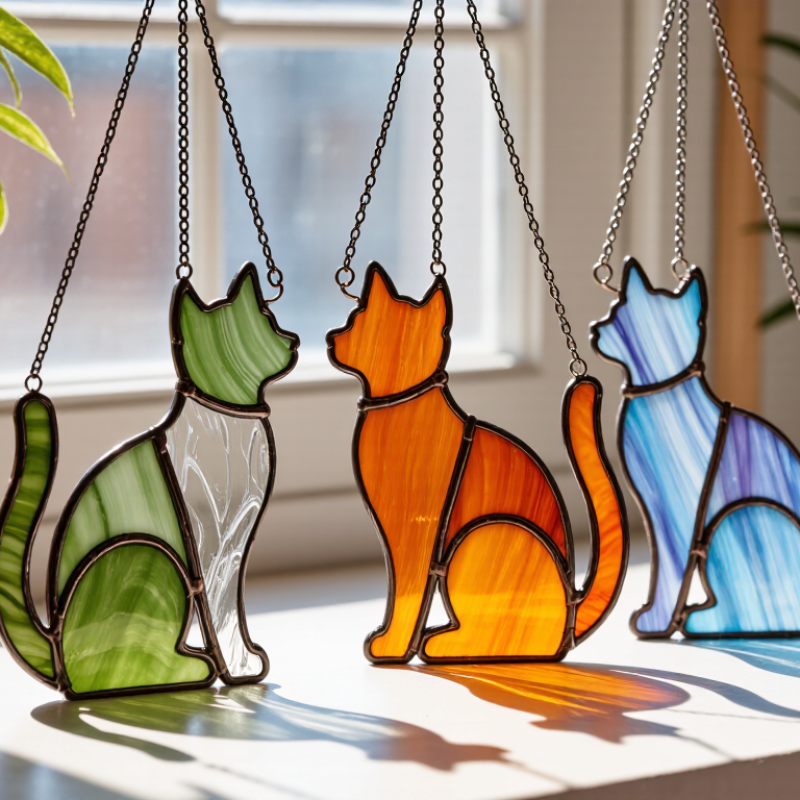
| 2 | Match the artistic style | Compare realistic, geometric, Art Nouveau-inspired, whimsical, minimalist, and abstract cat designs. | Coordinate the design with existing furniture, wall colors, window treatments, and room character. | A consistent visual style makes the suncatcher look intentional rather than visually disconnected. |
| 3 | Check the dimensions and viewing distance | Common decorative suncatchers are often about 10–30 cm wide, while larger window panels may exceed 40 cm. | Use a smaller design for a narrow window or grouped display and a larger design for a prominent single-window feature. | Proper scale preserves the cat’s recognizable features and prevents the window from appearing overcrowded. |
| 4 | Evaluate glass color and light transmission | Look for transparent, opalescent, textured, or mixed-color glass and note whether the design relies on direct sunlight. | Choose transparent or lightly textured sections for brighter colored shadows; use more opaque glass when shape and privacy are priorities. | Glass transparency directly affects brightness, projected color, and how clearly the cat design can be seen. |
| 5 | Inspect construction and materials | Check for secure joins, smooth or protected edges, a stable hanging loop, and a frame or solder lines that appear even. | Prefer a finished piece with no loose components, sharp exposed edges, visible cracks, or unstable hanging hardware. | Sound construction improves durability and reduces the risk of damage during installation or cleaning. |
| 6 | Plan the installation location | Consider sunlight direction, window movement, airflow, indoor humidity, and the distance from children or pets. | Hang it where indirect or filtered sunlight can illuminate the glass without allowing it to strike the window frame or nearby objects. | The location influences color effects, visibility, safety, and the long-term condition of the piece. |
| 7 | Confirm care requirements and value | Review cleaning instructions, hanging hardware, packaging protection, dimensions, and whether the price reflects handmade detail and materials. | Dust gently with a soft, dry cloth and avoid abrasive cleaners unless the maker specifically approves them. | Appropriate care helps preserve the glass surface, metal details, color appearance, and overall decorative value. |



 08045479132
 Send Inquiry

 Send Inquiry
 Send SMS