| Purpose and protection level | Define whether bollards are intended to guide traffic, deter casual vehicle access, protect pedestrians, or provide tested impact resistance. | A standard steel bollard is not automatically crash-rated. Where vehicle-impact resistance is required, select a system with independently verified performance appropriate to the site and follow its tested installation details. |
| Steel type and corrosion protection | Consider exposure to rain, road salt, coastal air, chemicals, and abrasion, as well as the appearance required. | Common choices include galvanized carbon steel, painted or powder-coated steel, and stainless steel. A coating can help protect steel, but damaged areas and cut edges may need maintenance; match the finish to local exposure conditions. |
| Fixed, removable, or retractable | Decide whether vehicle access must remain permanently blocked or be opened for deliveries, emergency access, or authorized vehicles. | Fixed bollards suit permanent separation. Removable or retractable models provide controlled access but add operating hardware and maintenance needs. Keep access routes and emergency provisions consistent with local requirements. |
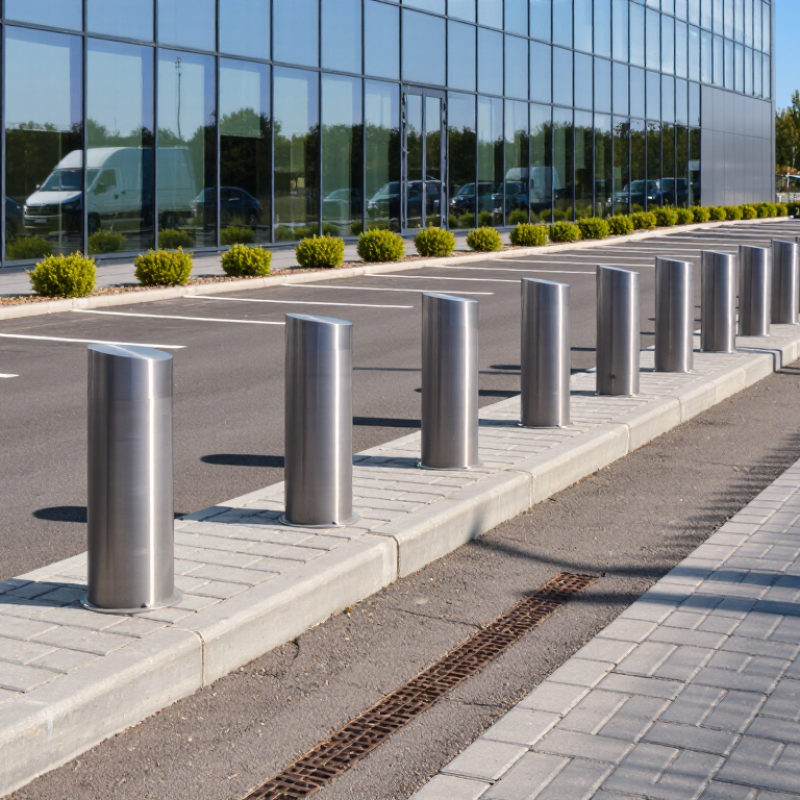
| Diameter and height | Select dimensions based on visibility, site layout, vehicle types, intended deterrence, and the product’s structural design. | Many general-purpose products are offered in diameters of roughly 4–6 inches (about 100–150 mm), with above-ground heights commonly around 30–42 inches (about 760–1,070 mm). These are common product ranges, not universal design requirements. |
| Spacing and layout | Plan spacing to deter vehicle entry while preserving pedestrian passage, wheelchair access, door operation, and service access. | There is no single spacing suitable for every site. Measure the largest vehicle or access opening that must be controlled, check applicable accessibility rules, and have the layout reviewed before drilling or excavation. |
| In-ground installation | A buried sleeve or embedded post transfers loads into the surrounding foundation; required depth and footing size depend on the product and ground conditions. | Follow the manufacturer’s foundation details and confirm soil, drainage, frost, and pavement conditions. Do not assume a generic embedment depth is adequate, especially where impact resistance is needed. |
| Surface-mounted installation | Base-plated bollards can be installed on suitable existing concrete, but their performance depends on the slab, anchors, edge distances, and installation quality. | Verify slab thickness and condition and use the specified anchors and layout. Surface-mounted models may be unsuitable where the concrete or substrate cannot support the intended loads. |
| Visibility and finish | Bollards should be easy to see in daylight and at night, including in rain or low-light conditions. | Consider contrasting colors, reflective bands, or other visible markings where appropriate. Keep markings clean and replace damaged reflective material; check local requirements for public paths and vehicle areas. |
| Utilities and site checks | Excavation can damage buried services such as electrical, gas, water, drainage, or communications lines. | Before digging, arrange utility locating through the relevant local service and follow safe excavation procedures. Check for underground structures, drainage, and property boundaries as well. |
| Maintenance and lifecycle | Inspect the bollard, coating, anchors, and surrounding pavement for damage, loosening, corrosion, or trip hazards. | Set an inspection schedule suited to traffic and exposure. Repair coating damage promptly, keep removable mechanisms clear and operating correctly, and replace components that no longer meet the site’s safety needs. |



 08045479132

 Send Inquiry


 Send Inquiry
 Send SMS

