Global buyers rarely judge a machined part by its drawing alone. They also assess repeatability, inspection records, lead times, and how reliably a supplier communicates. Precision Machining decisions become especially important when parts must fit assemblies made across multiple countries. A polished sample is useful. Consistent production matters more.
Industry data offers context, not a purchasing shortcut. The International Federation of Robotics’ World Robotics 2024 report counted about 4.28 million industrial robots operating worldwide in 2023, a 10% increase from 2022. Automation can support repeatable production, but it cannot replace sound process controls or careful measurement. The ISO Survey 2023 reported more than 1.2 million ISO 9001 certificates worldwide. Certification can indicate a documented quality system; it does not, by itself, prove that a supplier can hold your bore diameter or surface finish.
That distinction is where buyer diligence begins. Ask how critical dimensions are measured, how often inspection occurs, and whether reports match the drawing’s revision. Look for practical evidence: a clear material certificate, a traceable inspection report, and packaging that protects finished surfaces from scratches. Compare quotation details, too. A low unit price may omit tooling, secondary operations, or freight assumptions. Small omissions add up.
The following seven tips focus on those checks, from reviewing tolerances to assessing communication and delivery risk. They are not a guarantee. Even a capable supplier can miss a requirement when specifications are vague, and buyers sometimes share responsibility for that. Better questions early can prevent expensive surprises later.
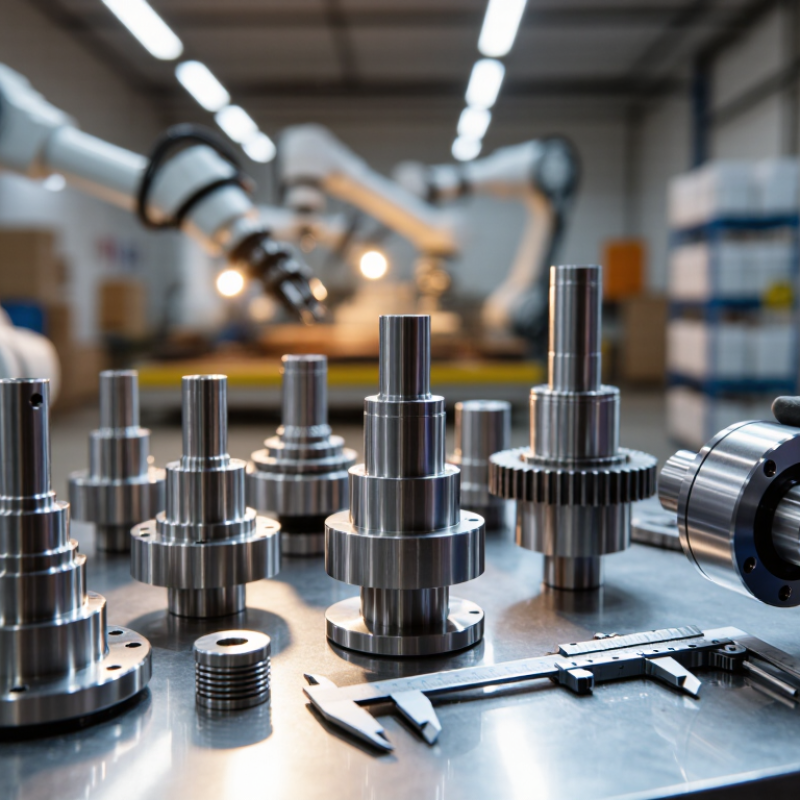
Precision machining produces components with controlled dimensions, surface finishes, and repeatable features. Cutting tools remove material from metal or plastic, while CNC systems follow programmed paths. Operators still matter: they select tools, check setups, and measure parts with micrometers or coordinate-measuring machines. A shaft can look smooth yet fail if its diameter or runout is outside specification. Small differences matter.
Global demand reflects the spread of machined parts across vehicles, medical equipment, industrial automation, and aircraft systems.
Grand View Research estimated the CNC machine market at $101.22 billion in 2023, projecting a 6.3% annual growth rate from 2024 to 2030. This is a market estimate, not a direct measure of precision-machining output.
The International Energy Agency reported that electric-car sales reached nearly 14 million in 2023, about 18% of total car sales. Motors, drivetrains, and production equipment all rely on accurately machined components. The link is clear, but not every part needs the tightest tolerance.
Extra precision can raise inspection time, scrap risk, and cost. Choosing a workable tolerance is often harder than specifying the smallest one.



 08045479132

 Send Inquiry


 Send Inquiry
 Send SMS

