| Splicing films, foils, or paper webs | PET film provides a clear, dimensionally stable backing that can help hold a splice together during handling or processing. | Choose an adhesive compatible with the materials being joined, with suitable tack and peel strength for the process. | Test adhesion on the actual surfaces. Dust, coatings, and release treatments can affect bonding. |
| Protecting smooth surfaces | Clear PET tape can provide a thin barrier against handling marks, light abrasion, or contamination while keeping the surface visible. | Look for a clear backing, clean removal when required, and an adhesive designed for the surface and length of use. | Check for residue, surface discoloration, and adhesive transfer after the intended exposure time. |
| Electrical insulation | Some PET tapes are made for insulating applications and combine a polyester backing with an electrically insulating adhesive. | Select a tape with electrical ratings and approvals appropriate to the voltage, temperature, and application. | Do not assume that any clear PET tape is an electrical-insulation tape; verify its technical data and applicable safety requirements. |
| Assembly near heat | PET film can retain its shape better than many general-purpose packaging films, making it useful in some controlled-temperature processes. | Check the stated service-temperature range and whether it applies to continuous use, short exposure, or both. | Heat performance depends on the adhesive as well as the backing. Test under the real process conditions. |
| Joining or holding lightweight components | Clear PET tape can hold parts in place while allowing alignment marks or underlying components to remain visible. | Match tape width and adhesive strength to the component size, surface finish, and expected load. | For permanent bonding or structural loads, use a product specifically rated for that purpose rather than relying on general-purpose tape. |
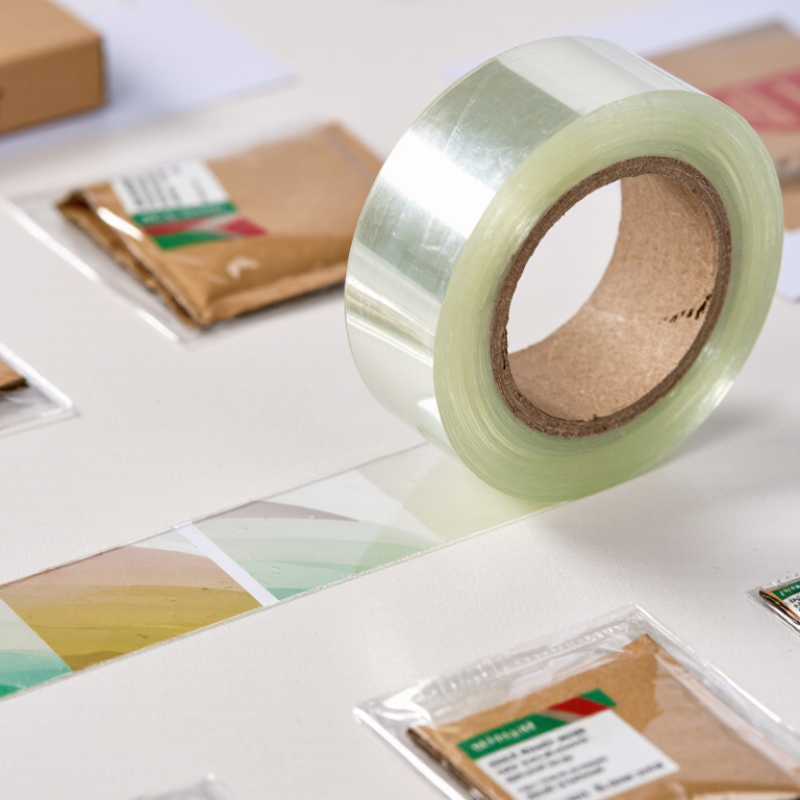
| Packaging and document protection | Clear tape keeps labels or paper contents visible and can be convenient for light-duty sealing or reinforcement. | Choose an adhesive that bonds to the packaging material and consider the required seal strength and storage conditions. | For heavy cartons or long-term storage, compare the tape’s stated performance with the package weight and environment. |



 08045479132

 Send Inquiry


 Send Inquiry
 Send SMS

