Change Language
Call Us08045479132

7 On Grid Solar System Tips for Buyers

Choosing an On Grid Solar System is not just a matter of filling a roof with panels. The right setup should match your household’s daily electricity use, roof conditions, budget, and local utility requirements. A family that runs air conditioning through the afternoon may benefit from a different system size than a home that uses most of its power after sunset. Small details matter.

These seven buyer tips will help you compare system sizes, panel and inverter specifications, installer credentials, warranties, monitoring tools, and written quotes. Check how much electricity you use during daylight hours, not only your total monthly consumption. Ask how shading, roof direction, and seasonal weather could affect expected output. Then compare projected savings with realistic assumptions about electricity prices and any export credits available in your area.

Remember that a standard grid-connected system usually shuts down during a power outage for safety. Keeping selected appliances running may require a compatible battery and additional equipment. That cost can change the value of a quote, so ask before signing. A low price may leave out important work, while an oversized system may generate power when your home cannot use it. Bigger is not always better.

A careful buyer checks the assumptions, not just the headline savings. Request itemized pricing, clear performance estimates, and warranty details in writing. If an answer feels vague, pause and ask again. These practical checks can make solar easier to evaluate and help you choose a system suited to your home, rather than a sales pitch.

7 On Grid Solar System Tips for Buyers

How an On-Grid Solar System Works

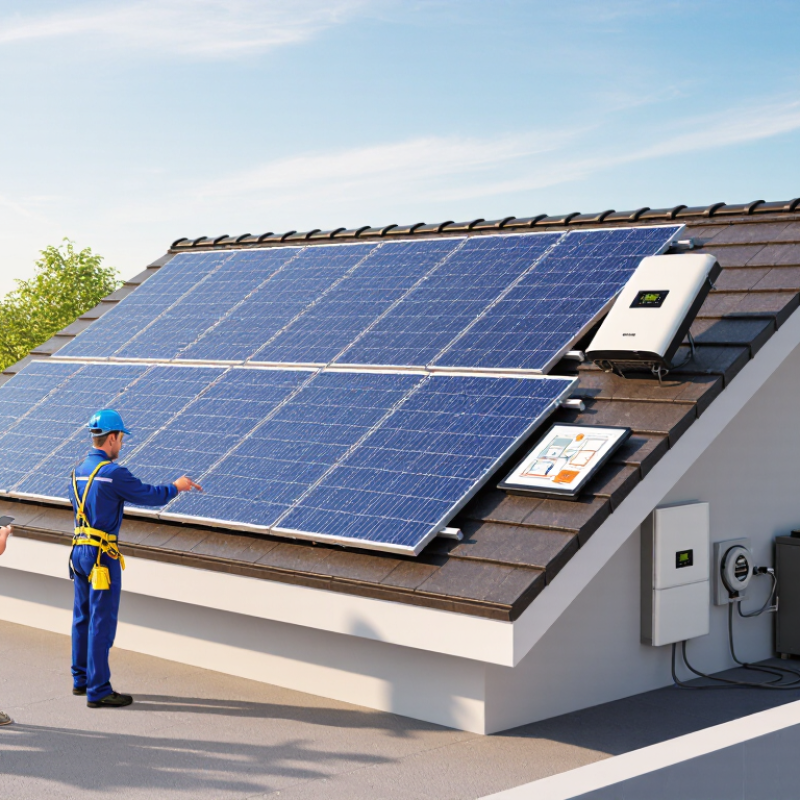
An on-grid solar system connects rooftop panels, household wiring, and the local electricity grid. Panels produce direct current (DC) electricity when sunlight reaches their cells. An inverter converts that electricity into alternating current (AC), which most home appliances use. The fridge may draw solar power while the washing machine runs. The system does not route power to appliances in a fixed sequence; electricity flows where it is needed.

When the panels produce more than the home is using, the surplus may flow to the grid. A meter records energy moving in either direction, though billing credits depend on the local utility’s rules. When sunlight fades or demand rises, the home draws electricity from the grid. That distinction matters. Most standard grid-connected systems shut down during a grid outage, even in bright sunshine, to protect workers repairing power lines. A battery or specially designed backup system is needed for power during outages.

Production changes with shade, roof direction, season, and panel temperature. A small shadow from a chimney can reduce output more than buyers expect, so a site assessment should check shade across the day. It is also worth comparing expected solar production with the home’s hourly use, not just its annual bill. A system sized for summer afternoons may still draw grid power on winter evenings. The numbers can look tidy on paper; real household habits are less tidy.

How to Assess Your Energy Use and Grid Connection

Review twelve months of electricity bills before choosing an on-grid solar system. Record annual kilowatt-hours, monthly peaks, and any time-of-use rates. The U.S. Energy Information Administration reported average residential electricity use of 10,791 kWh per customer in 2022. That is a reference, not a target. Your home may differ sharply. Note new loads, such as an electric vehicle, heat pump, or workshop equipment. One weak assumption is treating last year as normal; future usage can shift quickly.

Check the grid connection, not just the roof. Photograph the meter and electrical panel, and note the main breaker rating. Ask your utility about export limits, interconnection approval, fees, and how exported electricity is credited. Lawrence Berkeley National Laboratory’s 2023 Tracking the Sun report analyzed more than 3.2 million photovoltaic systems, showing how common system designs vary across markets. Use local installation data alongside a site-specific production estimate. A neatly matched annual total can still hide evening imports. Also, standard grid-tied systems usually stop supplying power during outages unless designed with suitable backup equipment. No spreadsheet captures every household habit.

7 On Grid Solar System Tips for Buyers - How to Assess Your Energy Use and Grid Connection

Tip What to assess Useful data or example Why it matters
1. Review a full year of electricity use Collect electricity bills or interval-meter data covering all seasons. Record monthly consumption in kWh. For example, 600 kWh per month averages about 20 kWh per day (600 ÷ 30). A full year helps reveal seasonal changes and provides a more reliable starting point than a single bill.
2. Check when electricity is used Compare daytime, evening, and overnight usage where interval data is available. List major loads such as air conditioning, water heating, cooking, and electric-vehicle charging, including their usual operating times. Solar generation is typically greatest during daylight hours. Matching flexible loads to those hours can increase direct use of solar electricity.
3. Identify changes in future demand Account for planned additions or changes to household equipment and occupancy. Note expected additions such as an electric vehicle, heat pump, or home extension; estimate their use separately from current consumption. A system sized only for current usage may not suit future needs. Estimates should be based on expected operation, not equipment nameplate capacity alone.
4. Review the roof and available solar area Check roof orientation, slope, shading, usable area, and condition. Record shaded areas and roof obstructions such as vents or skylights. Ask the installer to assess the roof structure and the condition of the covering. Shade, orientation, and usable area affect the amount and layout of panels. Roof repairs may be more practical before installation.
5. Confirm the grid connection details Check the service type, supply voltage, phase arrangement, and main switchboard capacity. Use the electricity meter, switchboard labels, or a qualified electrician to verify site details; do not assume all homes have the same connection. Connection characteristics can affect equipment selection and installation design. Local utility rules determine which configurations are permitted.
6. Ask about export limits and approval Find out whether the local network operator requires an application or limits electricity exported to the grid. Request written confirmation of the applicable export limit, approval steps, and any required inverter settings before installation. Export conditions vary by location and network capacity. They can affect system design and the value of surplus generation.
7. Compare system output with your usage and tariff Review estimated annual generation, self-consumption, import rates, and export compensation. Compare the installer’s generation estimate in kWh per year with your annual consumption. Check your current tariff for time-of-use rates and export credits. Annual production alone does not show when power is available or how much will be used on site. Tariff details help buyers compare likely bill impacts.

Note: Figures shown are illustrative calculations, not system-size recommendations. Solar production, connection requirements, export limits, and tariffs depend on the property and local rules; verify them with a qualified installer and the relevant network operator.

How to Choose System Capacity and Solar Components

Choose an on-grid system capacity from your actual electricity use, not the largest array that fits your roof. Review twelve months of bills and note when major loads run, such as an air conditioner on hot afternoons or an electric vehicle charging overnight. A 5 kW array may suit one household but produce excess power for another. Roof direction, shade from a nearby tree, and seasonal weather also affect output. Small details matter. Ask an installer to model expected production against your usage, and check the assumptions carefully; a tidy estimate can still overlook winter demand.

Compare components as a working set. Solar panels convert sunlight, while the inverter changes their output into usable household electricity. Check the inverter’s capacity, efficiency, monitoring features, and compatibility with the planned array. Mounting hardware should suit the roof material and local wind conditions. A battery is optional for many grid-connected homes; consider one only after weighing backup needs, cost, and charging patterns. Keep room for change.

Tips: Request an itemized proposal showing estimated annual production, system losses, warranties, and expected grid imports. Ask how shading or an inverter fault would appear in the monitoring app. Do not judge two offers by panel count alone; compare their assumptions and equipment specifications. I would revisit the sizing after checking recent bills, because household habits change—and estimates are never perfect.

7 On-Grid Solar System Tips for Buyers: Choosing Capacity and Components

Illustrative annual generation by system capacity

This planning estimate assumes an annual yield of 1,200 kWh per kWp of installed capacity: for example, a 5 kWp system produces an estimated 6,000 kWh per year. Actual output depends on local sunlight, roof orientation, shading, system losses, and weather. Check local requirements and compare panel, inverter, mounting, and electrical-protection specifications before choosing a system.

How to Compare Costs, Incentives, and Installer Qualifications

An on-grid solar quote is more than a panel price. Compare the full installed cost, including the inverter, mounting hardware, electrical work, permits, and any roof repairs. Ask each installer to list these items separately. A low quote may leave out work that appears later. Check estimated annual production against your roof’s orientation, shading, and local weather. Then compare the expected bill savings using your utility’s current rules for exported electricity. Those rules can change, so avoid relying on a payback estimate without checking its assumptions.

Tips: Request itemized quotes with matching system sizes. Verify incentive details through official government or utility sources, and confirm eligibility before counting them toward your budget. Check the warranty terms, too. Small details matter.

Installer qualifications deserve the same scrutiny as price. Ask who will design and install the system, whether the crew has relevant training, and whether the company carries appropriate insurance. Request recent local references and confirm that proposed permits and inspections are included. Compare written timelines and workmanship coverage, not just sales promises. If two estimates differ sharply, ask why: equipment, labor, roof complexity, and production assumptions may explain the gap. I would not treat the most polished forecast as the most reliable one; even careful estimates can miss real-world shade or usage changes.

How to Check Permits, Warranties, and Expected Performance

Before signing, ask who will prepare permit documents, submit them, and arrange inspections. Confirm the local building authority has approved the plans, and ask what remains before installation. Small details matter. Check that utility interconnection approval is included; permission to install does not always mean the system can export power. Keep copies of permits, inspection records, and the final electrical diagram.

Read each warranty separately. Panel and inverter coverage may differ from workmanship coverage, which can matter if a roof leak or loose connection appears later. Ask who pays for labor, shipping, or removal during a repair. Look for exclusions, claim deadlines, and the process for service requests. Clear answers beat reassuring promises.

For expected performance, request a monthly production estimate, not just one annual figure. Check whether it accounts for roof direction, tilt, nearby trees, seasonal shade, and normal system losses. Compare the estimate with your past electricity bills, while allowing for changes in household use. Ask what assumptions drive the numbers. A neat spreadsheet can still miss a growing tree or a new appliance, so treat projections as estimates, not guarantees.

Back to top