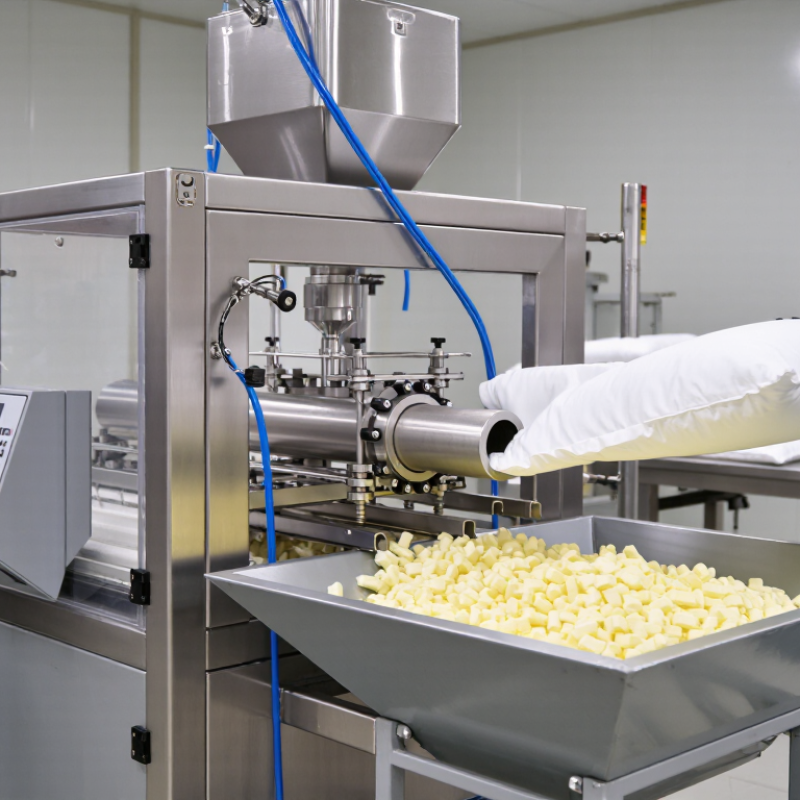
| Definition | A pillow-filling machine that meters and transfers shredded or granulated memory foam into a pillow cover or other suitable casing. | It automates the filling stage for pillows made with loose foam pieces. It is different from equipment used to mold or insert a single solid foam core. |
| Primary purpose | To place a controlled quantity of foam fill inside a pillow shell and help achieve a consistent fill level. | Consistent dosing supports repeatable pillow weight and firmness, subject to the foam type, pillow design, and filling settings. |
| Typical material | Shredded or granulated viscoelastic polyurethane foam, commonly called memory foam. | Piece size, density, shape, and static behavior affect flow through the machine and the feel of the finished pillow. |
| Typical process | Foam is loaded into a hopper, conveyed or moved toward a filling outlet, and directed through an opening in the pillow shell. | The shell may be held manually or by a fixture. The exact sequence depends on the machine and production setup. |
| Common machine elements | Depending on the design, a system may include a hopper, feed mechanism, hose or nozzle, controls, and a support or clamping fixture. | These elements help store, move, meter, and direct the foam; not every machine uses the same configuration. |
| Filling control | Fill quantity may be controlled by weighing, timed operation, or another metering method. | Weighing can help verify target mass, while timed filling depends on stable material flow and suitable setup. |
| Suitable pillow types | Pillows designed to be filled with loose foam pieces, including some adjustable-fill pillows. | Compatibility depends on the shell opening, seam construction, fill material, and the machine’s feed path. |
| Quality checks | Common checks include filled pillow weight, fill distribution, closure integrity, and visible foam residue around the opening. | Inspection helps identify underfilling, uneven distribution, or material loss before the product is packed. |
| Operational considerations | Foam pieces can vary in size and may bridge, settle, or generate loose particles during handling. | Keep the feed path suitable for the foam, clean the work area regularly, and follow equipment and material safety instructions. |
| Production rate | Output varies with fill weight, foam flow, operator handling, pillow design, and the level of automation. | There is no single representative rate for all machines; confirm performance using the intended foam and pillow shell. |



 08045479132

 Send Inquiry


 Send Inquiry
 Send SMS

