| Air-Core Transformer | Winding geometry with air or another nonmagnetic medium forming the magnetic path | No magnetic-core saturation; coupling depends strongly on coil spacing, alignment, and geometry | High-frequency and radio-frequency applications; the practical range depends on winding design and parasitic effects | Very low core loss, no hysteresis loss, no core saturation, and good performance at high frequency | Low inductance and lower magnetic coupling than many closed-core designs; magnetic fields can spread into surrounding space | RF coupling, antenna and impedance-matching networks, resonant circuits, wireless power links, Tesla-coil systems, and wideband pulse or signal transformers |
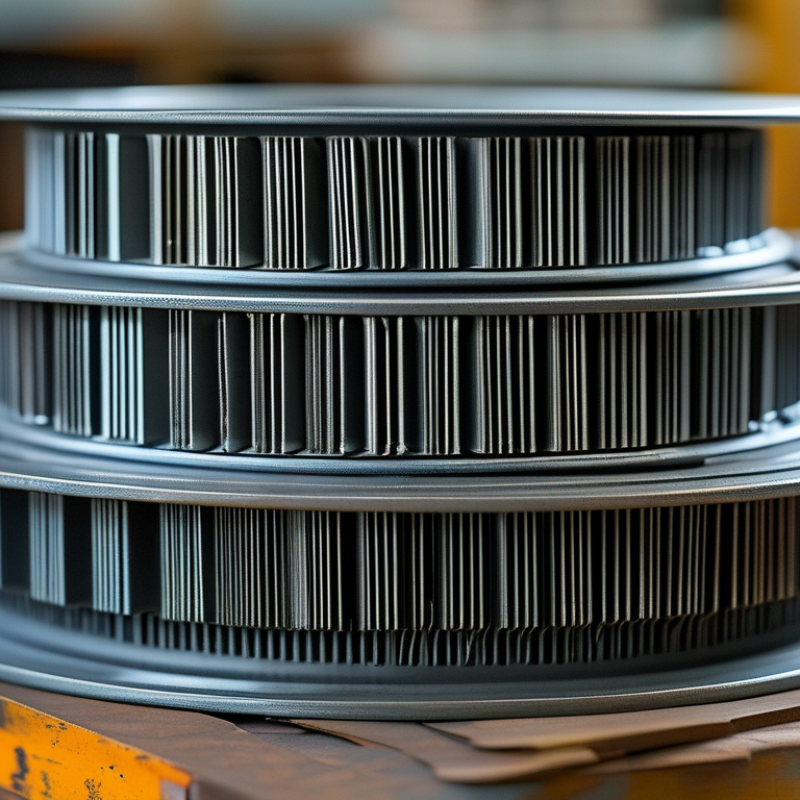
| Laminated Silicon-Steel Core | Thin insulated electrical-steel laminations assembled into a magnetic circuit | High permeability at power frequency with reduced eddy-current loss compared with a solid steel core | Primarily utility and low-frequency power applications, commonly around 50–60 Hz | High magnetic flux capability, robust construction, and efficient low-frequency power transfer | Core loss and heating increase as frequency rises; laminations add weight and manufacturing complexity | Power-frequency isolation transformers, distribution transformers, control transformers, and low-frequency audio transformers |
| Ferrite Core | Soft magnetic ceramic, usually based on iron oxides combined with other metal oxides | High electrical resistivity greatly limits eddy currents at elevated frequency | Switching-power and radio-frequency designs, commonly from tens of kilohertz into the megahertz region depending on ferrite formulation | Low high-frequency core loss, compact size, and good electromagnetic performance | Lower saturation flux density than many metal cores; performance changes with temperature, frequency, and operating flux | Switch-mode power supplies, high-frequency isolation transformers, flyback transformers, RF transformers, and common-mode chokes |
| Powdered-Iron Core | Finely divided magnetic particles insulated from one another and pressed into a distributed-gap core | Distributed air gap provides useful energy storage and gradual inductance reduction under increasing current | Low- to medium-frequency power conversion and RF applications, depending on powder composition | Good energy-storage capability, controlled permeability, and useful resistance to sudden saturation | Higher core loss than some ferrites at high frequency; material properties vary significantly by formulation | Output inductors, energy-storage chokes, resonant converters, RF tuning circuits, and impedance-matching networks |
| Amorphous-Metal Core | Very thin ribbons of non-crystalline magnetic alloy, commonly used in wound-core forms | Low hysteresis loss and favorable magnetic properties at power frequency | Power-frequency and selected medium-frequency applications | Lower no-load core loss than many conventional electrical-steel designs and good magnetic efficiency | Material and processing costs can be higher; the ribbon is thin and may require careful mechanical handling | Energy-efficient distribution transformers, high-efficiency power transformers, and selected power-electronic magnetic components |
| Nanocrystalline Core | Very fine-grained magnetic alloy produced through rapid solidification and controlled heat treatment | High permeability with low loss over a broad frequency range when operated within design limits | Medium-frequency power electronics, high-frequency filtering, and precision magnetic applications | High permeability, compact magnetic components, and strong common-mode attenuation performance | Higher material cost and sensitivity to mechanical stress, temperature, and operating conditions | Common-mode noise filters, current transformers, high-frequency transformers, and power-quality equipment |
| Gapped Ferrite Core | Ferrite core containing a deliberate air gap in the magnetic path | Air gap lowers effective permeability and increases energy-storage capacity while reducing abrupt saturation | High-frequency power conversion, commonly from tens of kilohertz upward depending on material and design | Suitable for storing magnetic energy and handling direct-current bias in inductive components | The gap increases magnetizing current and fringing fields; incorrect gap design can increase losses | Flyback transformers, energy-storage inductors, boost converters, and forward-converter output magnetics |



 08045479132
 Send Inquiry

 Send Inquiry
 Send SMS