Top Reinforcing Steel Bars Manufacturers Worldwide?
reinforcing steel bars form the hidden skeleton of bridges, towers, highways, ports, and residential buildings. Their ribbed surfaces grip concrete, while their internal chemistry supports strength, ductility, and long-term durability. Yet choosing the world’s leading manufacturer involves more than comparing annual production figures.
This guide examines major producers such as ArcelorMittal, Gerdau, Nucor, Tata Steel, JSW Steel, and other established suppliers. It considers manufacturing capacity, product consistency, mill technology, regional availability, certification, and supply-chain traceability. A reliable producer should provide clear heat numbers, test certificates, weldability data, and documented compliance with recognized construction standards. Small details matter. A missing batch record can delay an entire project.
As Lakshmi Mittal, Executive Chairman of ArcelorMittal, has said, “Steel is the backbone of modern society.” That statement reflects the material’s essential role, but it does not make every supplier equally suitable. Project climate, seismic requirements, bar diameter, coating needs, and delivery distance can change the best choice.
No ranking is perfect. Market data changes. Regional performance differs. A large producer may not offer the fastest local service, while a smaller mill may provide stronger technical support. Therefore, this overview uses practical criteria rather than brand visibility alone. It aims to help engineers, contractors, procurement teams, and developers compare Reinforcing Steel Bars manufacturers with greater confidence, while recognizing that final decisions require current certificates and project-specific verification.
What Are Reinforcing Steel Bars and Why Are They Important?
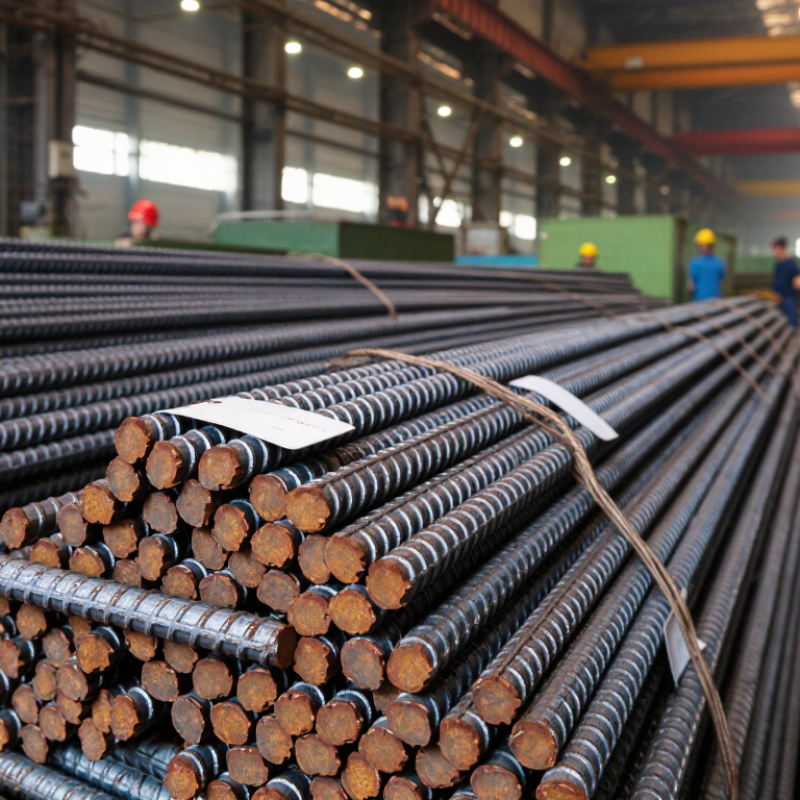
Reinforcing steel bars, commonly called rebar, strengthen concrete where it performs poorly. Concrete resists compression well, but it is weak under tension. Steel carries those tensile forces and limits cracking. Together, both materials support slabs, beams, columns, bridges, and foundations.
A 12-metre bar may look simple. Its diameter, grade, rib pattern, bend, and placement all affect structural performance. The ACI 318-19 building code stresses development length, concrete cover, and proper lap splices. These details prevent bars from slipping inside concrete. They also reduce corrosion risks. A site inspection often reveals misplaced bars or insufficient cover. Small errors matter.
The World Steel Association reported about 1.9 billion tonnes of crude steel production worldwide in 2023. Rebar represents an important construction application within this enormous supply chain. The International Energy Agency estimates that steelmaking creates roughly 7–9% of global energy-related carbon dioxide emissions. That figure makes material efficiency increasingly important. Reliable manufacturers therefore need controlled chemistry, consistent mechanical testing, and traceable production records. Standards such as ASTM A615 and EN 10080 provide useful benchmarks, but certificates alone cannot guarantee good installation. Weather, storage, cutting, and handling still influence performance. This is where industry practice becomes less tidy than technical specifications suggest.
Top Reinforcing Steel Bars Manufacturers Worldwide? - What Are Reinforcing Steel Bars and Why Are They Important?
| Rebar Standard / Market | Common Grade | Minimum Yield Strength | Nominal Tensile Strength | Typical Manufacturing Route | Typical Uses | Key Purchasing Checks |
| ASTM A615, United States | Grade 60 | 420 MPa | 620 MPa | Electric arc furnace or basic oxygen furnace, followed by hot rolling and rib formation | Building frames, slabs, beams, columns and foundations | Grade, bar size, bend performance, chemical composition and mill test certificate |
| ASTM A706, United States | Grade 60 | 420 MPa | 550 MPa minimum | Controlled-alloy steel with hot rolling and controlled chemistry | Seismic-resistant structures and heavily reinforced concrete members | Weldability, carbon-equivalent limits, elongation and bend-test results |
| EN 10080, Europe | B500B | 500 MPa | 550 MPa minimum | Continuous casting, hot rolling and, where specified, thermomechanical treatment | Residential, commercial, industrial and infrastructure construction | Product standard, ductility class, rib geometry, dimensional tolerances and traceability |
| BS 4449, United Kingdom | B500B | 500 MPa | 550 MPa minimum | Hot-rolled ribbed bar, commonly produced from continuously cast billet | Reinforced concrete buildings, bridges and civil engineering works | Certification, ductility, weldability, surface condition and bar identification |
| CSA G30.18, Canada | 400W | 400 MPa | ≥ 1.5 × yield strength | Hot rolling with controlled chemistry and ribbed surface production | Cold-climate concrete structures, transportation and utility projects | Grade designation, weldability, low-temperature suitability and dimensional accuracy |
| JIS G3112, Japan | SD345 | 345 MPa | 490 MPa minimum | High-control hot rolling with strict dimensional and surface-quality checks | Buildings, foundations, retaining structures and infrastructure | Japanese grade marking, chemical limits, elongation and bend-test compliance |
| IS 1786, India | Fe 500 | 500 MPa | 545 MPa minimum | Hot rolling, frequently combined with thermomechanical treatment for ductility | High-rise buildings, housing, highways, railways and industrial facilities | Grade suffix, ductility, weldability, rib pattern and batch traceability |
| AS/NZS 4671, Australia and New Zealand | 500N | 500 MPa | ≥ 1.08 × yield strength | Hot rolling with controlled mechanical properties and rib geometry | Buildings, bridges, marine works and earthquake-resilient construction | Strength class, ductility category, bendability and Australian/New Zealand certification |
| ABNT NBR 7480, Brazil | CA-50 | 500 MPa | ≥ 1.08 × yield strength | Hot-rolled ribbed bar manufactured from continuously cast steel billet | Residential construction, infrastructure and reinforced concrete works | Brazilian conformity marking, diameter tolerance, ductility and surface quality |
Why reinforcing steel bars are important: Ribbed steel bars improve the bond between steel and concrete, carry tensile forces that concrete handles poorly, control cracking, and increase the load-bearing capacity and ductility of reinforced concrete structures. Actual requirements should always be confirmed against the project design code and the applicable national standard.
How Are Reinforcing Steel Bars Manufactured and Classified?
Reinforcing steel bars begin as billets, usually produced from carefully controlled steel chemistry. In a rolling mill, workers heat each billet above 1,000°C before passing it through shaped rolls. The rolls reduce its section and form ribs along the surface. These ribs improve mechanical interlock with hardened concrete.
Many modern bars use controlled cooling after hot rolling. Water cools the outer layer quickly, while the hotter core tempers it naturally. This process can create a strong, ductile structure without excessive alloy additions. Mill technicians then inspect bar diameter, rib spacing, mass, chemical composition, yield strength, and elongation. Small measurement errors still matter.
Classification depends on regional standards and project requirements. Bars may be identified by strength grade, nominal diameter, rib pattern, surface condition, and weldability. Plain bars have limited surface texture, while deformed bars provide stronger concrete bonding. Grades commonly distinguish yield strength and tensile performance. Some bars are weldable, but welding procedures must match their carbon equivalent. Exact markings differ across markets. That detail is easy to overlook.
Manufacturers also classify bars by corrosion resistance, including ordinary carbon-steel and stainless-steel options. Tests usually include tensile loading, bend testing, dimensional checks, and heat analysis. Certificates should connect each bundle to its heat number and production record. Without traceability, a visually perfect bar proves little.
Which Manufacturers Lead the Global Reinforcing Steel Bar Market?
Which manufacturers lead the global reinforcing steel bar market? The strongest suppliers are usually integrated producers with reliable raw material access, large rolling capacity, and consistent quality control. Their advantage is not only production volume. It includes stable chemical composition, accurate rib patterns, dependable tensile strength, and delivery across difficult routes.
In practical sourcing work, buyers should examine mill certificates, third-party test reports, and batch traceability. A reputable manufacturer can explain how each bar moves from billet heating to bundling and shipment. Site audits may reveal details that brochures miss, such as worn rolling equipment or unclear storage practices. Regional producers can also compete strongly when they offer faster delivery and better knowledge of local building standards. Global leadership is not always measured by size.
Tips: Compare yield strength, elongation, bend performance, coating quality, and production capacity. Ask for recent test results, not only standard templates. Check whether bundles arrive dry, clearly tagged, and protected from ground moisture. Cost matters, but replacing inconsistent bars can create delays, waste, and structural concerns. I would also question unusually low quotations; they may reflect efficiency, or they may hide assumptions about grade, freight, or testing.
How Can Buyers Compare Quality, Standards, and Production Capacity?
Comparing reinforcing steel bar manufacturers requires more than checking price or annual output. Buyers should review mill test certificates for every heat number, including yield strength, tensile strength, elongation, chemical composition, and bend performance. A reliable supplier can explain testing methods and provide traceability from billet to finished bar. Certificates matter, but paperwork alone cannot prove consistent quality.
Standards must match the construction project and destination market. Common references include ASTM, BS, EN, and JIS requirements, but their grades and testing rules differ. Check bar diameter tolerance, rib geometry, weldability, corrosion requirements, and certification validity. Independent laboratory testing is wise, especially for a first order. A factory may pass one inspection and still show uneven control later. I have learned that consistency deserves more attention than impressive samples.
Tips: Ask for recent test reports, production photos, inspection records, and a sample batch. Compare stated annual capacity with actual rolling lines, furnace size, storage space, and delivery history. Confirm whether the manufacturer can maintain your required grade during peak seasons. Also review lead times, minimum order quantities, packing methods, and export experience. A factory visit can reveal details that brochures hide, such as rust exposure, crowded yards, or poor labeling. Perfect comparisons are rare. Careful buyers leave room for verification.
Reinforcing Steel Bar Quality Benchmark by International Standard
Specified minimum yield strength provides a consistent starting point for comparing reinforcing steel bars across global markets.
How buyers can use this comparison: Higher specified yield strength generally indicates greater load-bearing capacity, but it should not be used alone to select a supplier. Buyers should also verify tensile-to-yield ratio, elongation, bend and rebend performance, chemical composition, dimensional tolerances, heat traceability, third-party certification, and compliance with the destination market’s standard. Production capacity should be assessed separately through verified annual output, rolling-mill capacity, export history, delivery lead time, quality-control systems, and the supplier’s ability to provide consistent heat-by-heat test certificates.
Reference standards: ASTM A615 Grade 60, BS 4449 B500B, JIS G3112 SD490, GB/T 1499.2 HRB400, and AS/NZS 4671 500N. Values shown are specified minimum yield strengths in the respective standards.



 08045479132

 Send Inquiry


 Send Inquiry
 Send SMS

