How to Source Sr Element for Industrial Use?
Sourcing Sr Element for industrial use begins with a practical question: which form, purity, and delivery schedule fit the process? Strontium is commonly supplied through celestite-derived compounds, including strontium carbonate. Buyers may use these materials in ferrite magnets, ceramics, or other specialized applications. Each use demands different controls. A powder that looks consistent in a sample jar may still vary in particle size, moisture, or trace impurities between shipments.
The U.S. Geological Survey’s Mineral Commodity Summaries 2024 reports 100% net import reliance for U.S. strontium consumption. That figure makes supplier continuity more than a purchasing detail. It also supports checking the producer’s country of origin, processing route, quality certificates, and contingency stock. USGS mineral commodity specialist Joseph Gambogi’s published assessment is best represented here as a paraphrase, not a verbatim quotation: domestic buyers depend on imported strontium materials. That is the sourcing signal.
A sound qualification process asks for recent certificates of analysis and tests representative production lots, not just a polished sample. Confirm the chemical form, assay method, packaging, and shipment lead time in writing. Small details matter. Still, a specification sheet cannot reveal every risk. Buyers should review supplier history and recheck critical properties after delivery. This guide examines those checks, the trade-offs between suppliers, and the questions worth asking before an industrial order is placed.
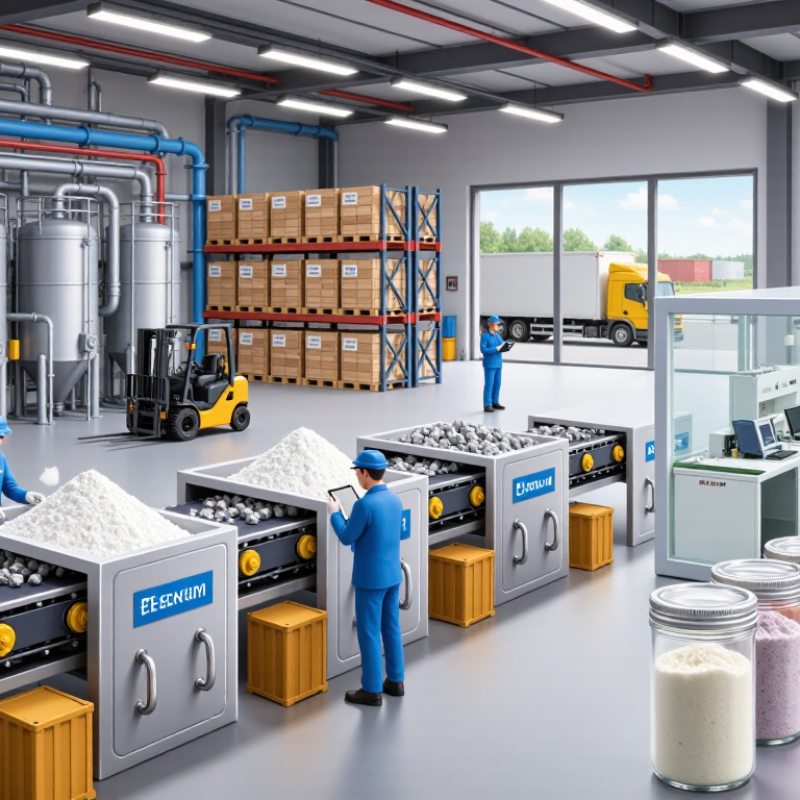
Define the Required Strontium Grade, Form, and Application
How to Source Sr Element for Industrial Use?
Define the Required Strontium Grade, Form, and Application
Start by confirming that you need elemental strontium, not a strontium compound. They are not interchangeable. For alloy production, specify the required purity and acceptable levels of calcium, barium, and other trace elements. Ask for a certificate of analysis tied to the actual production lot, not only a typical value. A first specification is rarely perfect; review it against your process results.
The physical form matters too. Ingots may suit controlled melting, while granules can support measured additions. Check particle size, packaging, and storage requirements with your process and safety teams. Small details matter. State the intended application, such as alloying, so suppliers can assess whether the grade and form fit your equipment. A test sample may reveal handling or yield issues that paperwork cannot.
Tips: Compare supplier data using the same purity basis and test method. Confirm lot traceability, packaging condition, and lead time before placing an order. If the material behaves differently than expected, revisit the specification rather than assuming the grade alone is at fault.
How to Source Sr Element for Industrial Use? - Define the Required Strontium Grade, Form, and Application
Start by identifying whether the process needs elemental strontium (Sr) or a strontium compound. The products are not interchangeable: choose the chemical form, purity, particle characteristics, and packaging to match the process and its safety requirements.
| Application | Material and Typical Form | Grade and Specification to Define | Key Quality Checks | Handling and Sourcing Considerations |
| Aluminum alloy modification | Elemental strontium metal (Sr), or an aluminum-strontium master alloy such as Al-Sr rod or ingot | Specify the required Sr concentration in the master alloy, delivery form, dimensions, and limits for relevant metallic impurities. If using elemental Sr, state the required assay and addition method. | Certificate of analysis (COA); Sr content; consistency between lots; impurity limits; physical condition and dimensions | Elemental Sr is reactive and requires controlled, dry handling. A master alloy may be easier to dose in aluminum foundry operations; confirm suitability with the alloy and process supplier. |
| Hard ferrite magnets | Strontium carbonate (SrCO3), typically supplied as powder | Specify chemical purity, particle-size distribution, moisture, and limits for iron, calcium, barium, and other process-relevant impurities. | COA; assay; particle-size data; moisture; impurity profile; consistency of powder characteristics | Powder fineness and impurity levels can affect ceramic processing and final magnet properties. Agree on test methods and acceptance limits before ordering. |
| Red signal and pyrotechnic compositions | Strontium nitrate (Sr(NO3)2) or, where the formulation allows, strontium carbonate | Specify the exact compound, assay, particle-size range, moisture limit, and any formulation-specific impurity limits. | COA; identity and assay; particle-size distribution; moisture; packaging integrity | Strontium nitrate is an oxidizing agent. Store and segregate it in accordance with its safety data sheet (SDS) and applicable dangerous-goods rules; do not treat it as interchangeable with carbonate. |
| Specialty glass and ceramic formulations | Strontium carbonate (SrCO3), powder; another strontium compound may be selected if the formulation requires it | Define the required chemical form, assay, particle size, moisture, and limits for coloring or fluxing contaminants based on the finished product. | COA; chemical composition; particle-size distribution; moisture; lot-to-lot variation | Confirm the compound’s compatibility with the batch recipe and firing process. Request representative sample material when changing source or grade. |
| Strontium-compound manufacturing | Strontium carbonate or another specified strontium feedstock, supplied as powder or granules | State the downstream reaction, required compound and assay, soluble or insoluble impurity limits, moisture, and acceptable physical form. | COA; compound identity; assay; impurity profile; moisture; packaging and traceability | Choose feedstock based on the reaction route rather than total Sr content alone. Confirm whether the process requires a particular particle size or dissolution behavior. |
Procurement note: Grade names and specifications can vary by producer and application; the values and acceptance limits should be agreed in the purchase specification rather than assumed from a general-purpose grade. Request a current COA and SDS, define sampling and test methods, and verify local transport, storage, and regulatory requirements before purchase.
Identify Suitable Strontium Sources and Supply Routes
Industrial strontium usually enters procurement as celestite concentrate or processed strontium carbonate, rather than as a finished specialty compound. The USGS Mineral Commodity Summaries 2025 reports 100% U.S. net import reliance for strontium. It identifies Mexico, Germany, China, and Spain among U.S. import sources. That matters. Buyers should compare both the chemical form and the route, because conversion steps affect cost, lead time, and impurity control.
For glass, ceramics, or ferrite production, request a recent assay showing strontium content, barium, calcium, iron, and moisture. Match the specification to the process; paying for high-purity material may add little value when the formulation tolerates wider limits. Ask suppliers to document origin, processing location, lot traceability, packaging, and delivery terms. A certificate of analysis is useful, but it does not replace periodic incoming checks. It is easy to overlook.
Build a route comparison around delivered cost, not the quoted price alone. Include freight, port handling, conversion, and buffer-stock needs. The USGS import profile signals exposure to overseas supply, but it does not guarantee availability for a particular grade. Qualify a second source early, and test its material in a small production batch. That extra step can feel slow. It may prevent a costly reformulation later.
How to Source Sr Element for Industrial Use?
Identify suitable strontium sources and supply routes
Celestite (SrSO₄) is the principal commercial strontium ore; strontianite (SrCO₃) is a less common source. Celestite is commonly processed through strontium sulfide and carbonate to produce SrO. Metallic strontium can then be produced by vacuum reduction of SrO or by electrolysis of molten SrCl₂. Percentages shown are theoretical strontium mass fractions calculated from chemical formulas, not measured ore grades or product purities.
Evaluate Suppliers for Quality, Capacity, and Traceability
When sourcing strontium (Sr) for industrial use, evaluate the supplier’s evidence, not just the quoted price. The USGS Mineral Commodity Summaries 2025 estimates 2023 global celestite output at about 300,000 metric tons and shows production concentrated among a small group of countries. That concentration makes capacity checks practical, not theoretical. Ask for recent shipment records, monthly deliverable tonnage, current inventory, and a written plan for interruptions. A large annual capacity figure means little if material cannot arrive on schedule.
For quality, request a lot-specific certificate of analysis and confirm the test method, sampling date, and laboratory. Check SrSO₄ content alongside relevant impurities, moisture, and particle size; limits should match your process, not a generic specification. Then compare the certificate against an independently tested sample. Small details matter.
For traceability, ask suppliers to link each lot to its mine or feedstock origin, processing site, and shipment documents. Keep those records with incoming inspection results. I would treat a forecast as something to verify, not a fact. Even a tidy document trail can miss a weak handoff between intermediaries, so test the process with one trial shipment before relying on it.
Verify Product Specifications, Safety, and Regulatory Compliance
When sourcing strontium (Sr) for industrial use, treat the specification sheet as a working document, not a sales promise. Confirm the exact chemical form, assay, particle size, moisture limit, and impurity thresholds against your process needs. A stated purity alone is not enough. Ask for a lot-specific certificate of analysis, named test methods, sampling date, and traceability details. Compare results with your own acceptance limits before approving a shipment.
Review the current safety data sheet for the supplied form, not a generic entry for strontium. Check hazard classification, handling controls, storage conditions, spill response, and disposal guidance. Package integrity matters too: inspect seals, labels, and signs of moisture or damage on arrival. Make sure workers can access suitable protective equipment and understand the controls. Small details matter. If documents and labels disagree, pause receipt and request clarification.
Compliance depends on where the material will be shipped, stored, and used. Verify applicable chemical inventory, transport, workplace, and environmental requirements with qualified compliance staff or local authorities. Request supporting declarations and retain them with the purchase record; requirements can change. A certificate may look complete yet omit a relevant impurity or test limit. That gap is easy to miss. Supplier paperwork supports due diligence, but does not replace independent review when an application carries higher risk.
Plan Procurement, Transport, and Industrial Storage
Sourcing elemental strontium starts with a precise purchase specification. Confirm that the material is Sr metal, not a strontium compound. State the required purity, physical form, particle size, quantity, and intended process. Ask for a certificate of analysis, safety data sheet, and lot-level traceability. A specification sheet can look complete yet omit a detail that matters on the production floor, such as particle size. Check it against the actual equipment and handling procedure.
Plan transport before placing the order. Elemental strontium reacts with moisture, so request packaging suited to keeping it dry and protected. Confirm shipment conditions, package integrity, and receiving procedures with the supplier and carrier. Applicable transport requirements can depend on the material’s form, quantity, and packaging; verify them for the specific shipment. Small details matter. At delivery, inspect seals and labels, then record the lot number and condition. Records are not always tidy, so reconcile them before releasing material for use.
Store the material in a compatible, tightly closed container, in a dry area away from water and incompatible substances. Follow the supplier’s safety data sheet and site procedures for storage and handling. Keep access controlled and inspect containers periodically for damage or signs of moisture exposure. If the storage setup changes, reassess it rather than assuming the old arrangement remains suitable.



 08045479132

 Send Inquiry


 Send Inquiry
 Send SMS

