How to Choose the Right Bridge Crane?
How to Choose the Right Bridge Crane?
Choosing the right Bridge Crane begins with the work, not the product brochure. Every facility has different loads, travel distances, duty cycles, and working conditions. A crane lifting steel coils needs different features from one handling maintenance tools. Small details matter.
David R. Smith, a veteran overhead-crane engineer, says, “The best crane fits the task before it fits the budget.” This principle deserves careful attention. A low purchase price can become expensive when downtime, repairs, or unsafe operating habits appear later. The decision should consider rated capacity, span, lifting height, runway length, control method, and expected operating frequency. It should also account for temperature, dust, humidity, and restricted floor space.
Walk through the working area.
Measure before specifying. Observe how operators move loads around columns, machinery, and personnel routes. A seemingly suitable Bridge Crane may create blind spots or limit access during maintenance. That weakness is easy to miss on paper. It should not be ignored.
Reliable selection also requires verified technical data, competent installation, regular inspections, and operator training. Local safety requirements and site conditions must guide the final design. No general recommendation replaces an on-site engineering review. Even experienced buyers can overlook future production changes. Therefore, leave practical space for heavier loads, altered layouts, and improved controls. The right crane is not simply the strongest option. It is a balanced system that supports safe, efficient, and maintainable lifting over many years.
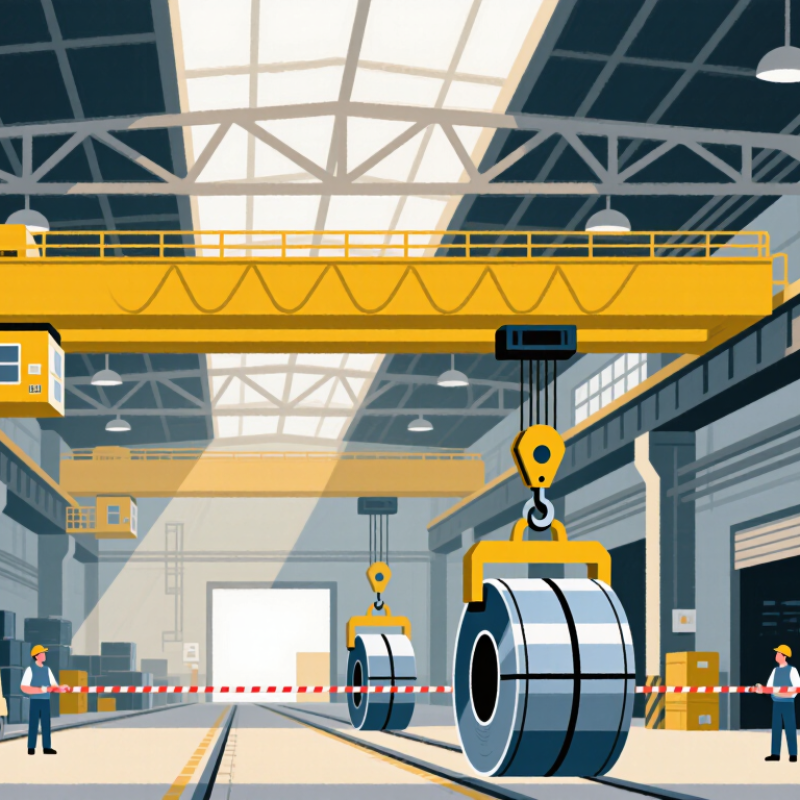
Define Bridge Crane Types and Their Main Applications
How to Choose the Right Bridge Crane?
Define Bridge Crane Types and Their Main Applications
Bridge cranes move loads along parallel runways and across a bridge beam. The right type depends on load, span, lift height, duty cycle, and building structure. A single-girder crane suits workshops, maintenance bays, and moderate lifting. It usually needs less steel and offers lower installation weight. A double-girder crane handles heavier loads, longer spans, and frequent production cycles. Steel mills, foundries, and large assembly halls often require this configuration.
Top-running cranes travel on runway rails above the operating area. Under-running models run beneath the runway structure, preserving valuable floor space. Gantry cranes use legs and serve outdoor yards, precast plants, and loading zones. Workstation bridge cranes support lighter, repetitive tasks near assembly benches. They feel simple. They are not always simple to specify.
Fortune Business Insights’ 2024 overhead crane market analysis valued the global market near USD 4.6 billion in 2023. It also projects continued growth through 2032. That growth does not justify choosing the largest crane. OSHA 29 CFR 1910.179 requires clear rated-load markings and safe operating provisions. Engineers should also review duty classification, impact loads, headroom, power supply, and runway deflection. A 10-ton crane may lift the load, yet fail the workflow. Poor hook positioning can add minutes to every cycle. Real measurements matter. A site survey may reveal uneven floors, restricted maintenance access, or insufficient roof strength. A cheaper selection can become an expensive correction.
Compare Controls, Safety Features, and Maintenance Needs
How to Choose the Right Bridge Crane?
Compare Controls, Safety Features, and Maintenance Needs
Choosing a bridge crane begins with the operator’s daily work, not catalog capacity. I inspect travel distance, lifting frequency, load shapes, and floor conditions before comparing controls. Pendant controls are familiar and affordable. Radio controls can improve visibility when the operator must stand away from the load. Cab controls suit large facilities, but they require training and more inspection.
Control response should feel predictable, with clear emergency-stop access and smooth speed changes. Variable-speed travel reduces sudden movement near racks or walls. Safety features deserve equal attention. Limit switches, overload protection, audible alarms, and anti-collision devices should match the site’s risks. Guarding matters too. A well-designed crane cannot compensate for blocked walkways or poor operator habits. That part is often underestimated.
Maintenance needs should be visible before purchase. Ask how technicians will reach brakes, ropes, wheels, electrical panels, and festoon systems. Choose inspection points that do not require unsafe climbing or lengthy shutdowns. Keep a service log with dates, findings, repairs, and unusual noises. Small changes matter. A dragging wheel or delayed brake may signal a larger problem. In my experience, maintenance plans look complete on paper, yet spare parts and staff time are missing. That is an uncomfortable gap. Review technical documents, train operators regularly, and verify each safety device during scheduled inspections.
How to Choose the Right Bridge Crane?
This practical comparison uses a 1–5 rating scale. Higher scores indicate stronger suitability for the category, except for maintenance demand, where a higher score means more maintenance attention may be required. Pendant controls are simple and cost-effective, radio controls improve operator mobility, and cabin controls provide strong visibility and integrated safety management for large or complex facilities. All crane types should include emergency stops, overload protection, upper-limit switches, reliable brakes, warning devices, and scheduled inspections.



 08045479132
 Send Inquiry

 Send Inquiry
 Send SMS
