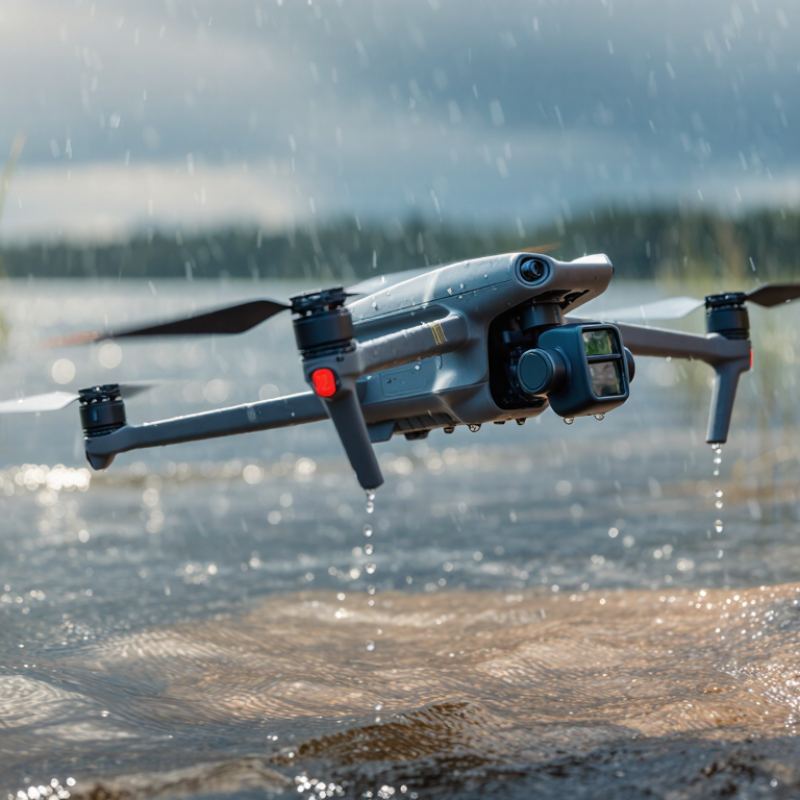
| Light rain or occasional splashes | At least IPX4, if operation in these conditions is explicitly permitted | IPX4 indicates protection against splashing water from any direction under specified test conditions. | It does not certify protection from immersion, strong water jets, or every real-world rainfall condition. “X” means a dust-protection rating was not specified. | Check the flight manual for weather limits and confirm that the rating applies to the complete aircraft, not just one component. |
| Spray or water jets near a shoreline | IPX5 or IPX6, depending on the expected exposure | IPX5 is tested against water jets; IPX6 is tested against more powerful water jets. | Jet testing is not the same as submersion, and it does not guarantee protection from salt, sand, prolonged exposure, or water entering through worn seals. | Look for explicit manufacturer guidance on spray, wind, saltwater, and post-flight cleaning. |
| Risk of a brief accidental drop into calm, shallow water | IPX7 or a stated IP67 rating | IPX7 specifies temporary immersion in water up to 1 metre for 30 minutes under defined test conditions. IP67 also includes a dust-tight rating. | This test does not establish suitability for flight in rain or jets. Moving water, impact, depth, temperature, and open or damaged ports can change the outcome. | Confirm the exact immersion conditions and whether the maker permits recovery and reuse after submersion. |
| Repeated or deeper immersion | IPX8 or a stated IP68 rating with specific conditions | IPX8 indicates immersion beyond the IPX7 test conditions, at depths and durations specified by the manufacturer. IP68 also includes a dust-tight rating. | There is no single universal depth or duration implied by IPX8 or IP68. A higher number does not automatically mean protection against every water exposure. | Ask for the exact tested depth, duration, water type, and whether the rating covers the assembled drone and its battery compartment. |
| Flight over open water where recovery may be difficult | Choose a rating suited to the likely exposure; treat flotation and recovery as separate requirements | An IP rating describes tested ingress protection for an enclosure; it does not measure a drone’s ability to stay afloat or remain controllable. | Waves, currents, wind, cold, and a depleted battery can make recovery difficult even if the aircraft resists water ingress. | Consider flotation, return-to-home behavior, link range, battery reserve, and a safe landing plan in addition to the IP rating. |
| Dusty work sites combined with water exposure | A rating with a first digit of 6, such as IP67 or IP68, plus a suitable water rating | The first digit “6” indicates dust-tight protection in the applicable IP classification; the second digit describes water protection. | Dust-tight does not mean impact-proof, corrosion-proof, or maintenance-free. Seals and covers can wear or be fitted incorrectly. | Check enclosure inspection and maintenance instructions, and inspect seals, doors, and connectors before each flight. |
| Any use where the drone has no published IP rating | No certified water rating stated | Without a published rating, there is no stated IP test level to rely on for water or dust ingress. | Marketing terms such as “weather-resistant” or “waterproof” do not by themselves identify a standardized test or guarantee safe operation in wet conditions. | Ask for the specific IP code and test conditions; otherwise, avoid wet-weather operation and follow the manual. |



 08045479132
 Send Inquiry

 Send Inquiry
 Send SMS
