| Cast-in-place foundation | Excavation and a concrete footing; adequate clearance from buried utilities, foundations, and drainage lines. | New construction, permanent perimeter protection, and locations where the surface can be excavated. | Provides a fixed installation and allows the footing to be designed for the site’s soil and loading conditions. | Requires excavation, concrete placement, curing time, and coordination with underground services. | Have a qualified designer determine footing dimensions, reinforcement, embedment, and concrete requirements for the actual ground and impact criteria. |
| Core-drilled and grouted | An existing concrete slab or pavement that can be drilled; sufficient slab thickness and sound concrete around the opening. | Retrofitting a fixed bollard into suitable existing concrete where full excavation is undesirable. | Can reduce surface disruption compared with installing a new footing and may suit retrofit projects. | Performance depends on slab thickness, concrete condition, hole geometry, grout specification, and edge distances. It is not automatically equivalent to a designed footing. | Confirm the slab construction and condition before drilling. Check for reinforcement and utilities, and follow the bollard and grout installation specifications. |
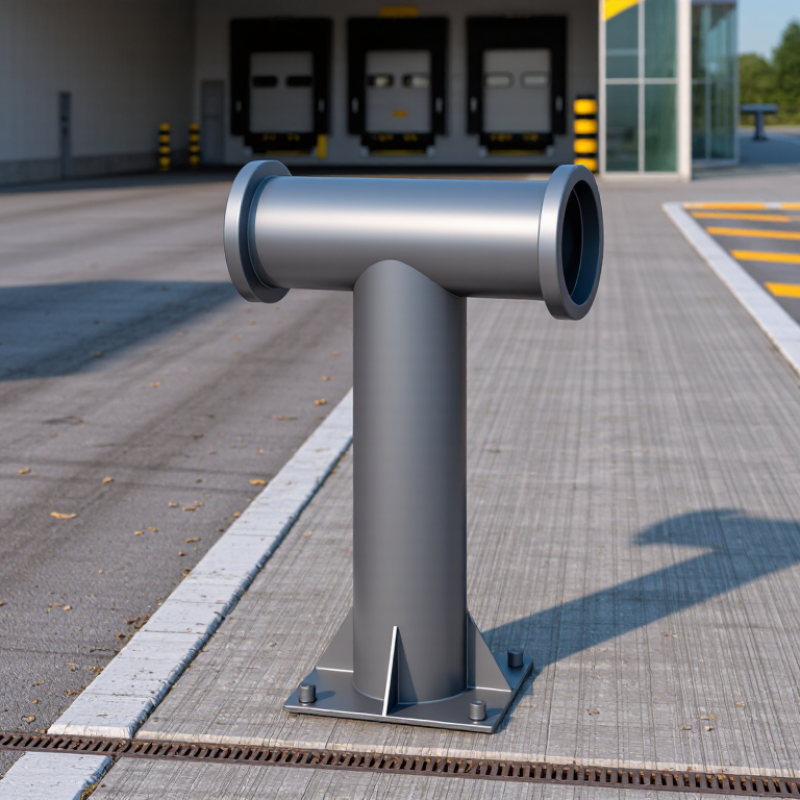
| Surface-mounted base plate | A sound concrete surface with suitable thickness, anchor spacing, edge distance, and access for drilling and fixing anchors. | Sites where excavation is restricted or where a bolted installation is preferred for maintenance or replacement. | Typically avoids deep excavation and can be straightforward to inspect or replace. | Anchors transfer forces into the slab; weak, cracked, thin, or poorly supported concrete can limit capacity. The base plate may create a trip or clearance concern. | Check the anchor design, slab condition, drainage, accessible-route requirements, and whether the plate or fixings will obstruct pedestrian movement. |
| Removable bollard in an in-ground socket | A prepared socket and foundation, plus clear space to lift out and store the bollard when access is required. | Occasional vehicle access, service entrances, or areas that need a removable barrier. | Allows the opening to be cleared when authorized access is needed while retaining a defined bollard location. | The socket needs maintenance and may collect water, grit, or debris. Removal and storage procedures must be practical and controlled. | Confirm the locking method, drainage provision, storage location, and the required security level. Follow the installation details for the selected system. |
| Surface-mounted removable system | A suitable concrete surface for the specified anchors and a clear operating area for installation and removal. | Temporary or changeable layouts where the surface should not be excavated. | Can offer flexibility and avoid an in-ground socket when the selected system is designed for surface fixing. | Capacity depends on the complete system, including anchors and substrate. Removed components and anchor openings may affect access or maintenance. | Use only a system with installation instructions suited to the site. Check the surface, anchor layout, removal process, and pedestrian safety. |
| Site and tee-head selection checks | Assess vehicle paths, pedestrian routes, visibility, ground levels, drainage, underground services, and the material and condition of the mounting surface. | All projects before selecting bollard size, finish, spacing, and installation method. | Helps match the bollard arrangement and installation to the actual access, safety, and maintenance needs. | A tee-shaped top does not by itself indicate impact resistance or a particular security rating. Appearance alone is not a performance specification. | Specify overall height, body dimensions, finish, spacing, and any required tested performance separately. Confirm applicable local codes and accessibility requirements. |



 08045479132

 Send Inquiry


 Send Inquiry
 Send SMS

