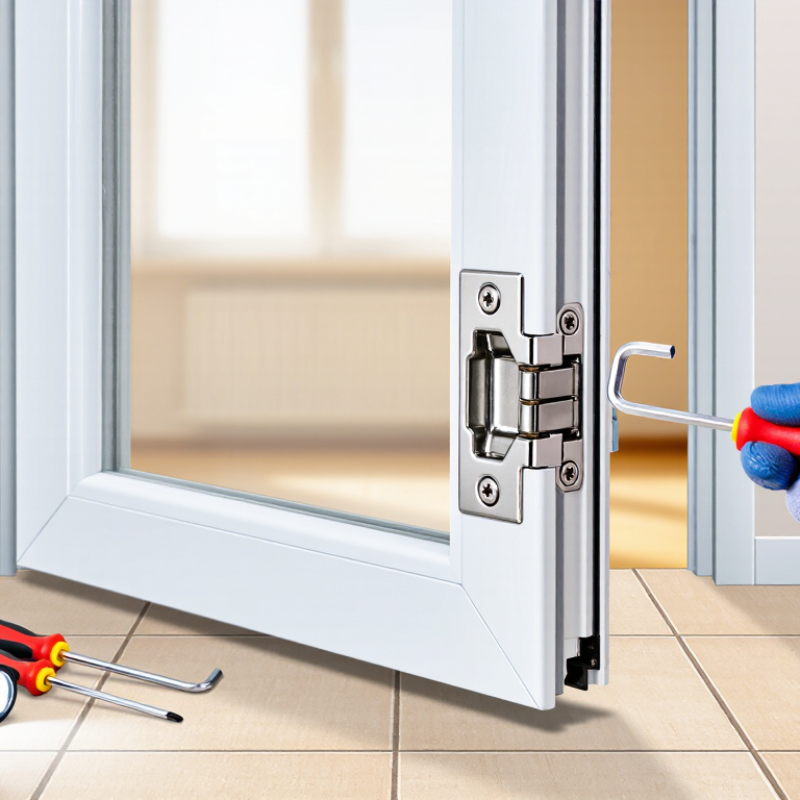
| Inspect the door gaps | Compare the gaps around the top, sides, and bottom. Look for a gap that narrows noticeably at one corner. | The sash may have dropped, or the hinges may need lateral or height adjustment. | Identify the hinge adjustment points and consult the door or hinge instructions. Adjust in small increments; adjustment directions vary by hinge design. | Gaps appear more even without the door touching the frame. Use the manufacturer's specified clearances where available. |
| Door catches on the bottom | Open and close the door slowly, noting where the bottom edge makes contact with the threshold or frame. | The door may have dropped, or the frame or threshold may be out of square. | If the hinge model provides height adjustment, raise the sash gradually and evenly as directed. Do not force the hinge or turn an unidentified screw. | The door clears the threshold through its full swing and does not scrape when closed. |
| Door catches along the side | Check the latch-side edge and hinge-side edge while slowly closing the door. | The sash may be positioned too close to one side, or the hinges may be misaligned. | Use the hinge's lateral adjustment, if provided, following its instructions. Make a small change, then check the full perimeter again. | The edge clears the frame evenly and the door closes without rubbing. |
| Latch does not meet the keep smoothly | Check whether the latch lines up with the strike plate and whether the handle operates without excessive force. | Door height or side-to-side position may be incorrect; the keep or locking hardware may also need inspection. | Correct the door position at the hinges first. If alignment is correct but the latch still misses, inspect the keep and hardware rather than forcing the handle. | The latch enters the keep cleanly and the handle returns to its normal position. |
| Draught or uneven seal contact | Look for sections of gasket that appear loose, flattened, or less compressed than the rest. Check for visible daylight around the closed door. | The sash may not sit evenly against the seal, or the gasket may be worn or damaged. | Check hinge compression adjustment only if the hinge supports it. Inspect the gasket and follow the door manufacturer's guidance; do not over-compress the seal. | The seal contacts evenly around the door, and the door still closes and locks without excessive force. |
| Check hinge fixings | Look for loose screws, movement at the hinge, cracked uPVC, or a hinge that appears bent or damaged. | Loose or damaged fixings can prevent reliable adjustment and may affect door support. | Tighten accessible fixings only as recommended for the hinge. Stop if a screw spins, the profile is damaged, or the hinge is under strain; seek qualified repair. | Hinges remain secure and the sash does not shift when gently tested. |
| Final operation test | Open and close the door several times, then test the latch and lock with the door fully closed. | An adjustment may have improved one area while creating friction or misalignment elsewhere. | Recheck the gaps, clearances, seal contact, and latch after each adjustment. Make only one small adjustment at a time. | The door swings freely, closes evenly, and locks without scraping or unusual force. |



 08045479132

 Send Inquiry


 Send Inquiry
 Send SMS

