| Well | Water source | Provides access to groundwater for irrigation. | Available flow and water quality can vary; local regulations may apply to well construction and water withdrawal. |
| Reservoir or storage pond | Water source | Stores water for use when it is needed by the irrigation system. | May collect runoff or receive water from another source. Intake screening helps limit debris entering the system. |
| River, stream, or canal intake | Water source | Allows water to be drawn from a surface-water supply. | Intakes commonly need a screen or strainer to reduce the entry of leaves, sediment, and other debris. |
| Municipal or utility connection | Water source | Supplies water through a public or managed distribution network. | Connection rules, permitted flow, and backflow-prevention requirements depend on the local water provider and regulations. |
| Intake screen or foot valve | Intake component | Helps prevent debris from entering the pump; a foot valve also helps retain water in a suction line when the pump stops. | Typically installed at the submerged end of a suction line. Screens need inspection and cleaning to prevent clogging. |
| Suction pipe | Pump connection | Carries water from the source to the pump inlet. | Must be suitable for suction service and sized to limit friction loss. Air leaks on the suction side can interfere with pump operation. |
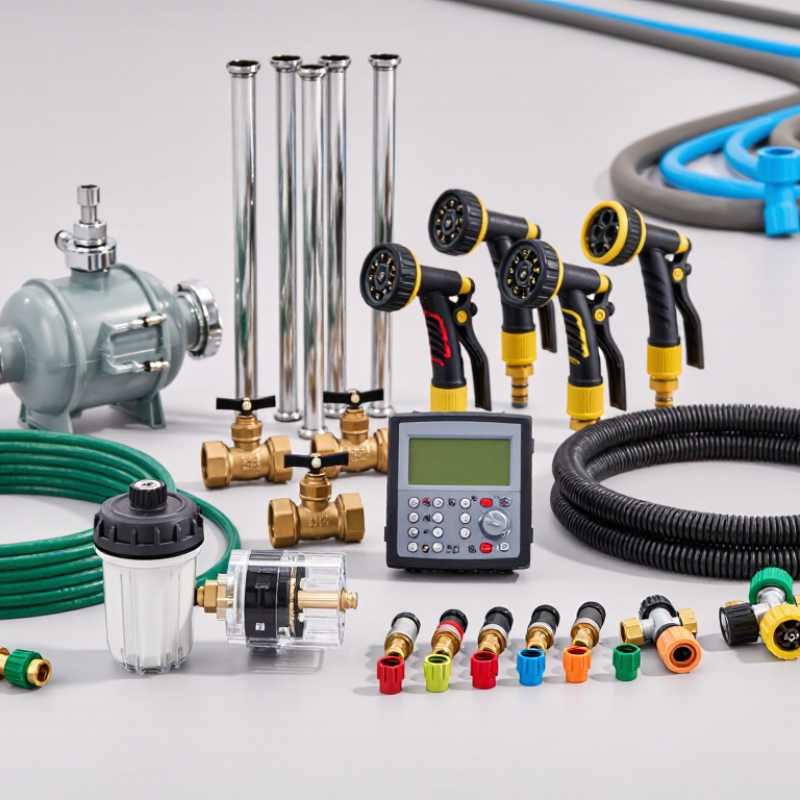
| Centrifugal pump | Pump | Uses a rotating impeller to move water and provide flow for an irrigation system. | Commonly used for surface-water supplies and pressurized systems. Selection should match the required flow and total operating head. |
| Submersible pump | Pump | Operates while submerged and pushes water upward through a discharge pipe. | Often used in wells or other deep water sources. Pump capacity should be matched to the water source and system demand. |
| Discharge pipe | Pump connection | Carries pumped water from the pump toward the irrigation network. | Pipe material and diameter should suit the system pressure, flow, and installation conditions. |
| Check valve | Flow-control component | Allows flow in one direction and helps prevent reverse flow when the pump stops. | Installed in a suitable location on the discharge line or as part of a pump assembly, according to the system design. |
| Pressure gauge | Monitoring component | Displays water pressure at the point where it is installed. | Useful for checking pump and system operation; readings should be interpreted with the gauge location and system conditions in mind. |
| Pressure switch or controller | Control component | Starts or stops a pump based on system conditions or a control signal. | Settings and control method should be compatible with the pump and the irrigation system requirements. |
| Filter or strainer | Water-treatment component | Removes suspended particles that could clog emitters, nozzles, or other downstream equipment. | Filter type and mesh or screen rating should be selected for the water quality and the needs of the irrigation equipment. |
| Flow meter | Monitoring component | Measures the volume or rate of water moving through a pipe. | Can help monitor water use and identify unexpected changes in flow that may indicate a leak or blockage. |



 08045479132

 Send Inquiry


 Send Inquiry
 Send SMS

