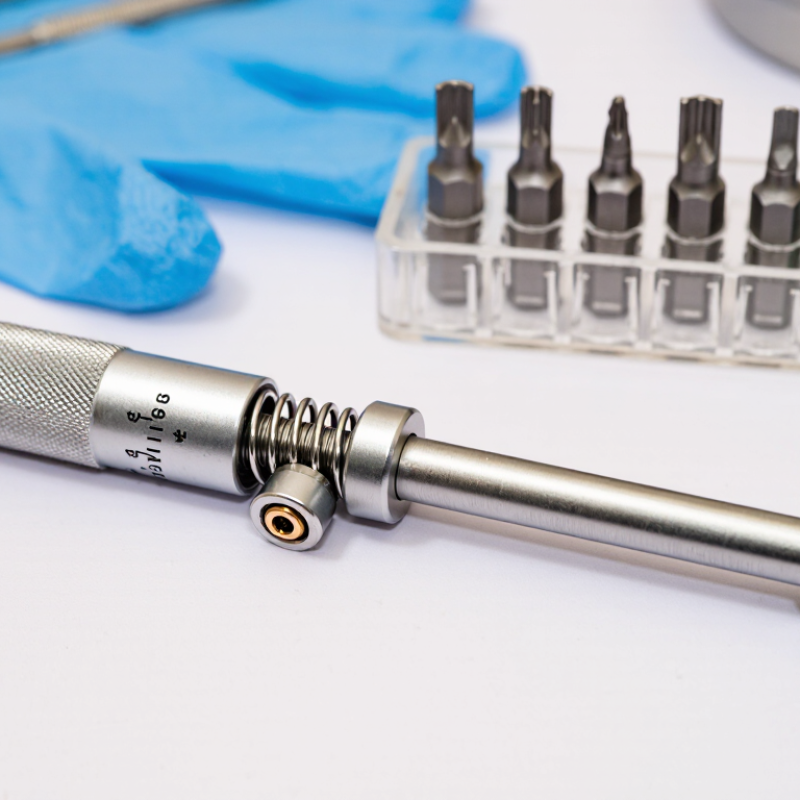
| Purpose | A dental implant torque wrench applies a controlled rotational force when tightening compatible implant components, such as an abutment screw. | Use the wrench only with compatible components and according to the applicable instructions for use (IFU). |
| Torque units | Torque is commonly specified in newton-centimeters (N·cm). The required value depends on the specific implant component and procedure. | Check the component’s prescribed torque value before use. Do not rely on a generic value for all implant systems. |
| Calibration interval | There is no single calibration interval that applies to every wrench. The interval may depend on the manufacturer’s guidance, device design, and frequency of use. | Follow the IFU and the practice’s documented maintenance policy. If the IFU does not specify an interval, ask the manufacturer or an authorized service provider. An annual interval may be adopted as an internal policy, but it is not a universal requirement. |
| When to check accuracy | Accuracy can be affected by wear, repeated use, damage, or improper handling. | Arrange inspection or calibration if the wrench is dropped, damaged, behaving inconsistently, or outside its scheduled service interval. Keep any calibration or service record with the device log. |
| Calibration method | Calibration or torque verification should be performed with suitable test equipment by a qualified service provider or as directed by the manufacturer. | Do not estimate calibration accuracy by feel or adjust the mechanism unless the device instructions explicitly permit it. |
| Over-torque risk | Applying more torque than specified may damage or deform a screw or component, strip threads, or make later removal difficult. The exact risk depends on the component and clinical situation. | Use the prescribed torque setting and a controlled technique. Stop if the wrench does not operate normally; do not compensate by applying extra force. |
| Under-torque risk | Torque below the specified value may leave a connection inadequately tightened, potentially contributing to loosening or mechanical complications. | Confirm the setting and follow the component-specific tightening sequence. Do not assume that a hand-tight connection has reached the required torque. |
| Use and handling | Wrenches may have specific operating, cleaning, sterilization, storage, and reset requirements. | Follow the device IFU for reprocessing and storage. Avoid using the wrench as a general-purpose lever or applying force beyond its intended operating range. |
| Documentation | A maintenance log can record the device identifier, inspection or calibration date, service provider, and next review date. | Keep records current and remove a damaged or overdue wrench from clinical use until it has been assessed according to policy. |
| Clinical note: Component-specific torque instructions and the device IFU take priority. This table is general maintenance information and does not replace professional judgment or manufacturer guidance. |



 08045479132

 Send Inquiry


 Send Inquiry
 Send SMS

