Change Language
Call Us08045479132

What Is a Crystal Table and Why Buy One?

A Crystal Table can transform a quiet room into a brighter, more deliberate space. The name may describe clear glass, engineered crystal, or a table decorated with crystal accents. That distinction matters. Solid natural crystal is uncommon and often impractical for everyday furniture. Many products use tempered glass, acrylic, or crystal-inspired surfaces instead. Buyers should confirm the material, thickness, edge treatment, and weight capacity before purchasing.

Market evidence supports the broader appeal of visually light furniture. Grand View Research valued the global furniture market at more than 500 billion U.S. dollars in 2023 and expects continued growth through 2030. Its analysis connects demand with interior upgrades, urban housing, and premium design preferences. The International Trade Centre also records substantial global trade in glass and furniture products, showing how widely transparent materials move through established supply chains. These reports do not measure Crystal Table sales specifically. The category remains slightly slippery. Still, they provide useful context for its popularity.

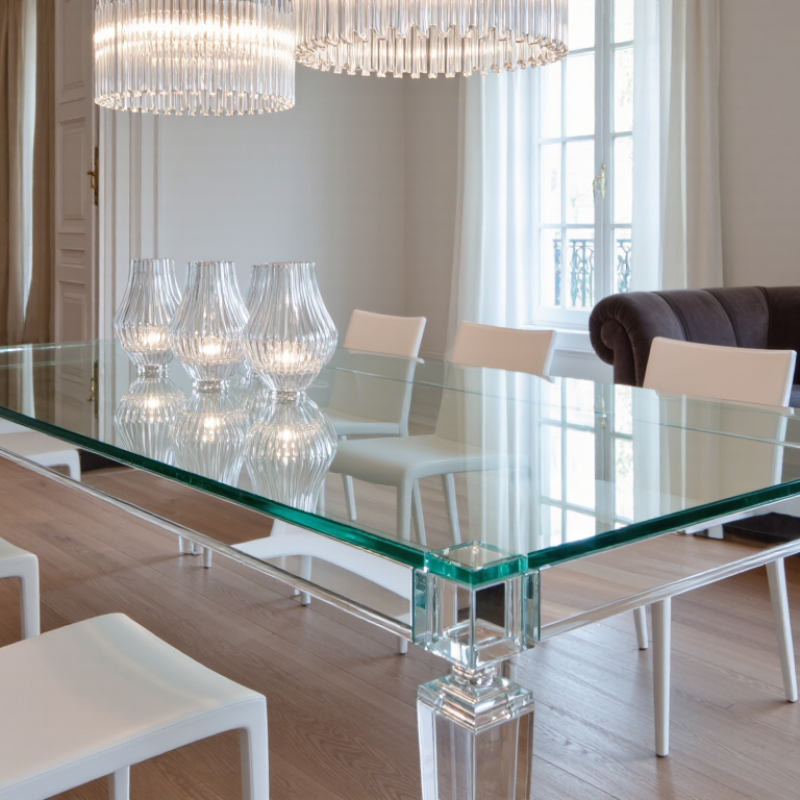
In practical terms, a Crystal Table can reflect pendant light across a dining room, make a narrow hallway feel less crowded, or add a polished accent beside a velvet sofa. Retail research from Houzz repeatedly identifies renovation spending and personalized interiors as strong homeowner priorities. A transparent table supports both goals when selected carefully. It should feel stable, not merely beautiful. Look for certified tempered glass, reinforced joints, smooth corners, and clear care instructions. Fingerprints will appear. Cleaning will become part of ownership. That minor inconvenience is easy to overlook in showroom lighting, but important at home. The best purchase balances appearance, safety, maintenance, and lasting value.

What Is a Crystal Table and Why Buy One?

What Is a Crystal Table?

What Is a Crystal Table and Why Buy One?

What Is a Crystal Table?

A crystal table is furniture built around a crystal, mineral, or crystal-like tabletop. Natural designs may use quartz, amethyst, agate, or polished stone slices. Other tables use engineered quartz or clear glass with crystal details. The name can be confusing. A careful buyer should ask what the surface actually contains.

Natural crystals often show cloudy areas, tiny fractures, uneven edges, and changing color bands. These marks are not necessarily defects. They may prove the material is genuine. However, they can also affect strength and cleaning needs. A professional inspection should check the base, joining points, tabletop thickness, and edge finish. Heavy stone needs stable support, especially in homes with active children or pets.

Crystal tables bring strong visual character to dining rooms, lounges, and reception spaces. Light can pass through translucent sections and create soft reflections across the floor. The effect changes during the day. It feels almost alive.

Care is simple but not careless. Use coasters, wipe spills quickly, and avoid harsh acidic cleaners. Some stones require sealing. Glass needs different treatment. Buyers sometimes focus only on sparkle and overlook weight, maintenance, or delivery access. That is an understandable mistake, but an expensive one. A table should be beautiful, stable, and practical enough for ordinary daily use.

How Crystal Tables Are Designed and Made

A crystal table is not always made from a single mineral slab. In furniture, the term may describe a clear crystal-glass top, a polished quartz surface, or decorative crystal set into a frame. That distinction matters. Experienced makers begin with the intended use, room scale, and load requirements. A dining table needs different edge protection than a display table. Designers sketch the base and tabletop together, leaving enough legroom and checking balance from several angles. They also consider light, because a clear top can reveal fingerprints, dust, and every support beneath it.

For a glass version, technicians select a thick, low-iron panel for cleaner clarity, then cut it with computer-guided tools. The edges are ground, polished, and softened to reduce sharp contact points. Tempering may follow, depending on thickness and fabrication standards. The panel is heated and cooled under controlled conditions, improving resistance to ordinary impact. It does not make glass unbreakable. Not even close.

A quartz version follows another route. Fabricators inspect the slab for veins, pinholes, and internal stress before cutting. CNC equipment shapes the outline and openings, while diamond tools refine the surface. Hand polishing remains important around corners. Small variations survive. During assembly, makers use pads, concealed connectors, or engineered brackets to separate the top from the base. They test wobble, joint movement, edge finish, and alignment before delivery. A responsible workshop records material details and care instructions instead of promising impossible permanence. A beautiful design can still fail if its support is undersized or its surface is difficult to maintain.

What Is a Crystal Table and Why Buy One? - How Crystal Tables Are Designed and Made

Design and Material Dimension Typical Information Why It Matters
Meaning of “crystal table” A table featuring a crystal or glass-like stone surface, a crystal-inspired design, or decorative crystal elements. The term is not a standardized material classification. Checking the exact material prevents confusion between natural stone, engineered quartz, glass, and crystal-style décor.
Common tabletop materials Natural quartz or other minerals, engineered quartz, tempered glass, acrylic, wood, and metal combinations. Material choice affects weight, appearance, maintenance, impact resistance, and price.
Natural crystal or mineral surface Each slab or specimen can vary in color, translucency, inclusions, veining, and crystal formation. Variation gives the table a unique appearance but means the finished piece may not exactly match a sample image.
Engineered quartz surface A manufactured composite made primarily from quartz particles combined with polymer binders and pigments; the exact formulation varies. It can provide more consistent color and pattern than many natural slabs, while still requiring protection from excessive heat.
Tabletop thickness Residential tabletops commonly use approximately 10–30 mm material, depending on the material, support system, and edge design. Thickness influences visual weight, structural requirements, edge treatment, and overall mass.
Typical table height Dining tables are commonly about 710–760 mm high; coffee tables are often approximately 350–500 mm high. Correct height supports comfortable posture and compatibility with chairs or sofas.
Design and proportion Designers balance tabletop size, base width, overhang, visual weight, and the location of supports. Balanced proportions improve stability, legroom, usability, and the table’s visual appearance.
Base construction Bases may use powder-coated or polished metal, solid wood, stone, or a combination of structural materials. The base must distribute loads evenly and resist rocking, tipping, and long-term deformation.
Fabrication process Typical steps include material selection, templating, cutting, edge shaping, surface finishing, drilling if needed, base fabrication, and final assembly. Each stage affects fit, edge safety, surface quality, alignment, and the finished table’s durability.
Edge profiles Common options include eased, rounded, bevelled, bullnose, and waterfall-style edges. Rounded or eased edges reduce sharp corners, while bevels and polished profiles emphasize the material’s appearance.
Surface durability Quartz-based surfaces are generally resistant to everyday scratching and staining, but no tabletop is completely scratch-proof or stain-proof. Using coasters, placemats, and cutting boards helps preserve the finish and reduce surface damage.
Heat resistance Direct contact with very hot cookware can damage sealants, resins, finishes, or engineered surfaces. Always use a heat-resistant trivet and follow the care instructions for the specific material.
Cleaning requirements Routine care generally involves a soft cloth, warm water, and a mild, non-abrasive cleaner; porous stone may require periodic sealing. Avoiding abrasive pads, harsh chemicals, and prolonged spills helps maintain the surface and finish.
Main reasons to buy Distinctive appearance, customizable dimensions, durable construction, and compatibility with contemporary, minimalist, or natural interiors. A well-designed table can function as both everyday furniture and a visual focal point.
Important buying checks Confirm material composition, dimensions, weight, load guidance, edge finish, base stability, delivery access, care instructions, and repair options. These checks reduce the risk of choosing a table that is unsuitable for the room, access route, daily use, or maintenance expectations.

What Types of Crystal Tables Are Available?

Crystal tables are not one fixed product. The name may describe a natural crystal surface, crystal accents, or a glass top with mineral pieces. Knowing the construction matters more than the sparkle. I once focused too much on color and overlooked stability. Ask for material details, weight, finish, and care instructions before buying.

Natural crystal tables use quartz, amethyst, agate, or other mineral slices. They show uneven edges, visible bands, and individual color changes. Each top is different. These pieces often need a metal or stone base because crystals can be heavy and fragile. A polished quartz slab feels substantial, while an agate slice usually works better as a smaller accent table. Check for filled cracks and secure mounting.

Tempered glass tables with crystal inlays offer a cleaner silhouette. Clear glass lets light reach the stones beneath it. They suit modern rooms and are easier to level. Yet fingerprints show quickly, and a chipped edge needs prompt attention. Resin or engineered-stone tables provide another option. They imitate mineral colors with consistent dimensions and lower cost. Quality varies. Some surfaces may yellow under strong sunlight or scratch from rough ceramics. Request a sample, inspect the underside, and confirm the table’s load rating.

What Benefits Does a Crystal Table Offer?

A crystal table usually refers to a table with a crystal-like glass, quartz, or faceted stone surface. Its reflective finish catches daylight and softens the look of nearby furniture. In a small room, this effect can create more visual space. The surface also pairs well with wood, metal, and neutral fabrics. However, “crystal” does not always mean solid natural crystal. Check the material description before buying.

The main benefit is visual brightness. Light moves across the tabletop, making dinnerware, flowers, or books look more noticeable. Many crystal-style surfaces are also easy to wipe clean after coffee or fingerprints. A well-made table can become a strong focal point without adding heavy color. From practical use, rounded edges feel safer in busy walkways. Still, the finish may show dust quickly, and some surfaces can scratch or chip. It is not flawless. That small weakness matters in daily life.

Tips: Place the table near natural light, but avoid harsh direct sun for long periods. Use coasters and soft cloths instead of abrasive cleaners. Test the table’s stability before placing lamps or heavy decorations. Measure doorways carefully. A beautiful table that cannot enter the room becomes an expensive mistake. Consider your routine, too. If children, pets, or frequent meals are involved, choose a durable surface with clear care instructions.

What Is a Crystal Table and Why Buy One?

Scratch-resistance reference for crystal and glass-related tabletop materials

What Benefits Does a Crystal Table Offer?

Quartz crystal has a Mohs hardness of 7, while ordinary glass is approximately 5.5. This higher hardness can help a quartz-based crystal tabletop resist everyday surface scratches better than standard glass, while still providing a bright, elegant appearance that reflects and transmits light.

The Mohs scale is an ordinal mineral-hardness scale, so the values indicate relative scratch resistance rather than impact strength or load capacity.

What Should You Consider Before Buying One?

Before buying a crystal table, clarify what “crystal” means. Some tables use cut glass, while others contain quartz, mineral fragments, or resin. These materials differ in weight, transparency, scratch resistance, and repair options. Ask for a written material description, not only a showroom label. A close-up photo can hide bubbles, seams, or uneven polishing. Request dimensions and thickness. That sounds obvious.

Measure your room, doorway, lift, and turning space before ordering. A thick top may look elegant but become difficult to carry safely. Check the base for stable feet, level adjustment, and secure contact points. For dining use, confirm the tested load rating and edge treatment. Rounded edges are usually kinder in busy homes with children or pets. Still, no edge is completely impact-proof. Place coasters under drinks, and avoid dragging ceramics across the surface. Use a soft cloth instead of abrasive powders.

Ask how the table was packed, delivered, assembled, and inspected. A reliable seller should explain damage procedures, warranty limits, and replacement parts. Read exclusions carefully; accidental chips may not receive full coverage. If the table uses resin or unknown coatings, ask about heat and sunlight tolerance. I would also compare the top’s visual drama with daily practicality. Fingerprints, dust, and reflected light can demand more cleaning than expected. My first choice might be too large. That is worth admitting. A smaller table with a proven base may serve better than a spectacular, unstable centerpiece.

Back to top