What Is a CNC Prototype and How Does It Work?
A Cnc Prototype is a physical sample produced with computer numerical control machining. It helps engineers test a design before committing to expensive production tooling. Unlike a digital model, it reveals real issues through weight, texture, fit, and movement. A machined aluminum housing may look perfect on screen, yet its cover can still bind during assembly.
The process begins with a three-dimensional CAD file. Engineers convert that design into machining instructions through CAM software. The resulting G-code controls cutting paths, spindle speed, feed rate, and tool changes. A machinist then secures the material, selects suitable cutters, and checks the first operation carefully. Small choices matter. Tool deflection, heat, burrs, and incorrect workholding can change the final result.
John Saunders, founder of Saunders Machine Works and a respected CNC machining educator, says, “The best way to learn is to make.” That idea fits prototype development well. Each Cnc Prototype creates evidence, not just confidence. It can expose thin walls, sharp internal corners, weak threads, or tolerances that cost too much to maintain.
The method is highly repeatable, but it is not effortless. Software cannot replace practical judgment. A prototype may also fail because the design is wrong, not because the machine performed poorly. That distinction deserves honest review. When engineers inspect dimensions, test assembly, and record revisions, CNC machining becomes a reliable bridge between concept and manufacturable product.
What Is a CNC Prototype?
What Is a CNC Prototype and How Does It Work?
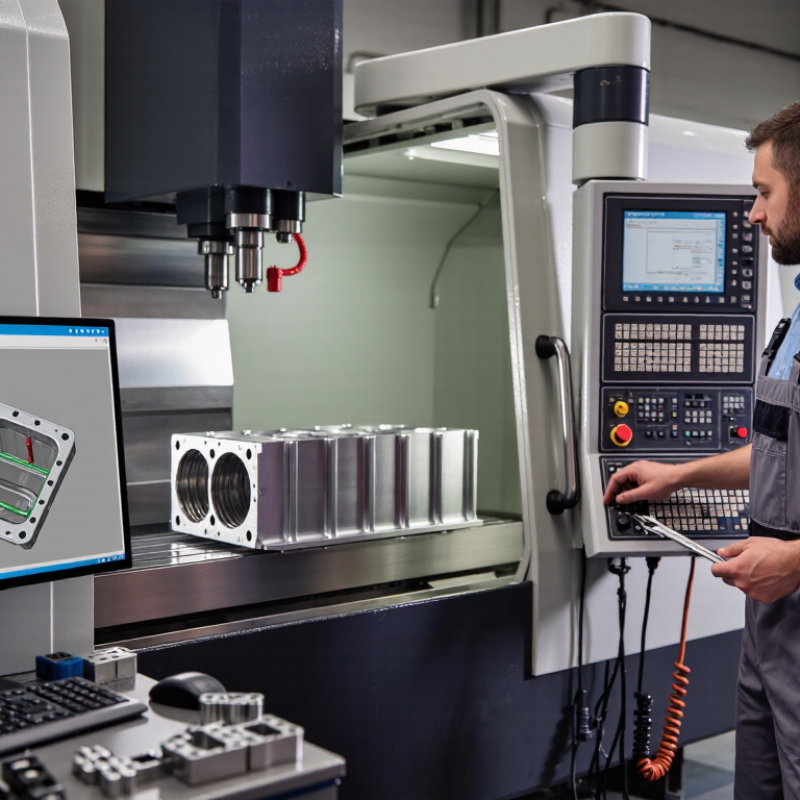
A CNC prototype is a physical test part made by computer-controlled machining. Engineers begin with a 3D CAD model, then create toolpaths for cutting, drilling, or turning. The machine removes material from aluminum, plastic, steel, or other stock. Unlike a sketch or digital model, the prototype fits in a hand and can face real assembly conditions.
The process usually follows a practical loop. A designer checks wall thickness, holes, tolerances, and surface requirements. A machinist then selects tools, cutting speeds, fixtures, and inspection methods. The machine follows coded instructions while sensors and operators monitor its movement. Small details matter. A deep pocket may trap chips. A thin rib may vibrate. These issues rarely appear clearly on a screen.
The global CNC machine market was valued at about USD 83.99 billion in 2023, according to Grand View Research, with projected growth through 2030.
This expanding market reflects wider use of digitally controlled production. The 2024 Wohlers Report also identifies prototyping as a major driver of advanced manufacturing adoption, although it focuses mainly on additive methods. That comparison is useful, but not perfect.
A CNC prototype can reveal expensive mistakes early. It may expose poor fit, sharp edges, weak geometry, or an unrealistic tolerance. Yet one prototype cannot prove full production stability. Material batches vary. Tool wear changes dimensions. Inspection can also miss functional problems. Careful teams test, revise, and sometimes admit the first design needs more work.
What Are the Main Steps in the CNC Prototyping Process?
What Is a CNC Prototype and How Does It Work?
What Are the Main Steps in the CNC Prototyping Process?
CNC prototyping begins with a production-ready CAD model. The designer checks wall thickness, holes, radii, and assembly points. Sharp internal corners often create machining problems. I usually replace them with practical internal radii. That small change can reduce tool stress and improve consistency.
The next step converts design data into CAM toolpaths. The programmer selects cutting tools, speeds, feeds, and machining sequences. Material choice matters here. Aluminum machines quickly, while stainless steel demands slower cutting and stronger fixturing. The Global CNC Machine Market report by Grand View Research estimated the market at USD 83.8 billion in 2023. This scale reflects growing demand for precise, flexible production, but market growth does not remove basic process risks.
The machinist then secures the stock, sets work offsets, and runs the program. A dry run can reveal collisions before cutting begins. After roughing, finishing passes create the required surfaces and dimensions. Deburring follows, though it is sometimes underestimated. Inspectors measure critical features with calipers, micrometers, or coordinate measuring equipment. The 2023 Deloitte Smart Manufacturing and Operations Survey reported that 86% of manufacturers viewed smart manufacturing as a major competitiveness driver. Still, a prototype can fail despite advanced software. I always compare the part against the drawing, not visual confidence. Feedback may require another toolpath, a revised tolerance, or a completely different fixture.
How CNC Prototypes Support Product Testing and Development
A CNC prototype is a test part machined directly from engineering material. The process converts CAD data into toolpaths, cutting aluminum, steel, plastics, or other approved materials. Engineers can inspect a physical component before committing to expensive tooling.
CNC prototypes support product testing through measurable evidence. Teams check hole positions, wall thickness, thread fit, surface finish, and assembly clearance. They can also test heat, vibration, load, and repeated operation. The 2024 Wohlers Report recorded a 13.5% expansion in the global additive manufacturing industry, reaching about $20 billion in 2023. This growth reflects stronger demand for faster physical validation across product development. CNC machining remains valuable when prototypes must match production-grade density and mechanical behavior.
A prototype can lie.
Machining may reveal a design error, but it cannot represent every production condition. Different cutting tools, operators, batch materials, or tolerances can change results. That weakness requires documented inspection. The ISO Survey 2023 reported more than 1.26 million ISO 9001 certificates worldwide, highlighting the importance of controlled quality processes. Engineers should record material certificates, measured dimensions, machine settings, and deviations. They should also compare prototype performance with the intended manufacturing method. A beautifully finished part may still fail after long-term cycling. That uncomfortable result is useful. It forces teams to revise the design before testing becomes more expensive.



 08045479132

 Send Inquiry


 Send Inquiry
 Send SMS

