| Beam connector and upright profile | Compare the beam connector design, connector dimensions, locking method, and upright hole pattern. | Confirm that the beam connector is designed for the specific upright system. Do not rely on appearance or nominal dimensions alone. | Incompatible connectors may not seat or lock correctly, reducing the reliability of the connection. |
| Upright frame depth | Measure the frame depth and compare it with the rack layout, beam length, and stored load dimensions. | Verify dimensions against the rack design and the intended load arrangement. | Correct frame depth helps provide appropriate support for the beam and stored goods. |
| Load capacity | Check the rated capacity for the complete rack configuration, including beam levels, upright frames, and load distribution. | Use capacity information supplied for the exact configuration; do not assume a rating from a similar-looking upright applies. | Capacity depends on factors such as frame height, bracing, beam arrangement, and how loads are placed. |
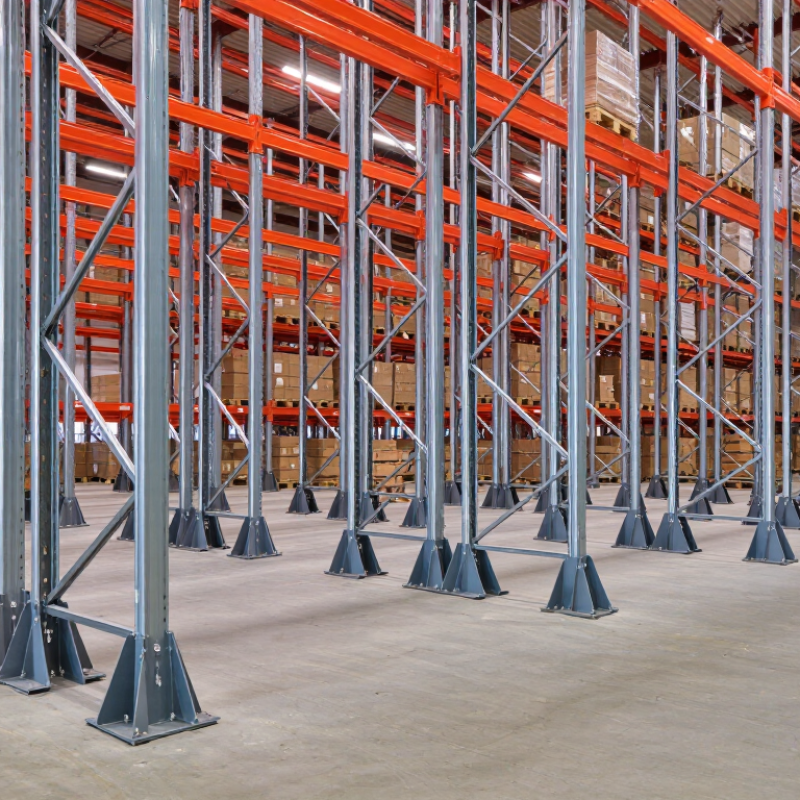
| Frame bracing | Inspect the horizontal and diagonal bracing for secure connections, damage, and consistency with the rack design. | Ensure bracing is present and installed as specified for the frame. | Bracing helps maintain frame stability and resist movement under intended operating conditions. |
| Base plates and floor anchoring | Check that base plates are compatible with the upright and that anchoring suits the floor and installation design. | Confirm anchor type, placement, and installation requirements with the rack design and site conditions. | Appropriate base support and anchoring help secure the rack in place. |
| Upright protection | Consider end-of-aisle guards or upright protectors where rack legs may be exposed to vehicle impact. | Select protection that fits the upright and does not obstruct inspection or interfere with the rack system. | Impact protection can help reduce damage from accidental contact with material-handling equipment. |
| Locking and retention features | Check that beam safety locks or retaining devices are fitted where specified and engage correctly. | Verify each connector is fully seated and its retention feature is engaged after installation. | Retention features help prevent accidental beam disengagement during normal use. |
| Condition and inspection | Look for bent or twisted uprights, cracked welds, damaged bracing, loose anchors, and corrosion. | Do not use visibly damaged components until they have been assessed and repaired or replaced appropriately. | Damage can affect the structural performance of the rack and may require prompt action. |



 08045479132

 Send Inquiry


 Send Inquiry
 Send SMS

