How to Choose the Right Position Sensor for Your Project?
Choosing the right Position Sensor is crucial for any engineering project. Position sensors are essential for various applications, from robotics to automotive systems. According to industry reports, the global position sensor market was valued at $3.44 billion in 2022 and is expected to grow significantly. This growth highlights the increasing importance of accurate measurement and control in engineering fields.
Different types of position sensors exist, including potentiometric, magnetic, and optical sensors. Each type has its advantages and disadvantages. For instance, potentiometric sensors are affordable and simple, but they may be less durable. In contrast, magnetic sensors can withstand harsh conditions but may have higher costs. Understanding these differences is vital to make informed decisions.
When selecting a position sensor, consider factors like accuracy, range, and environmental conditions. The wrong choice can lead to project setbacks and increased costs. Reflecting on your specific needs is necessary. Achieving the best results often means revisiting your choices and learning from past experiences. Finding the right position sensor may seem challenging, but thorough research can simplify this critical decision.
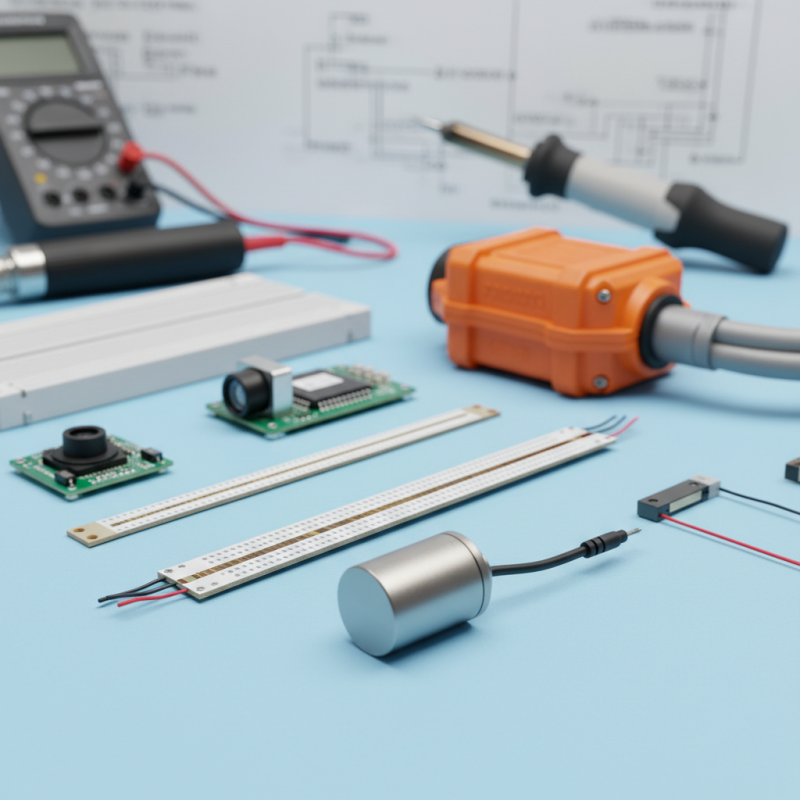
Understanding Different Types of Position Sensors Available
Choosing the right position sensor can significantly impact your project’s success. There are various types available, each suitable for different applications. Understanding these differences is crucial. Common types include potentiometric, capacitive, and inductive sensors. Each has unique capabilities.
Potentiometric sensors are popular for their simplicity. They provide accurate linear measurements. However, they may degrade over time, especially in harsh environments. Capacitive sensors are more robust. They can measure non-contact position changes. Yet, they may be sensitive to noise, which can affect accuracy. Inductive sensors excel in measuring position without direct contact. They are reliable and durable. However, their installation can be complicated.
**Tip:** Assess your project requirements rigorously. Consider environmental factors like humidity and temperature. Ensuring compatibility with your application is vital for performance.
It’s important to conduct thorough testing. Some sensors might not perform well in all conditions. Be prepared to adjust your choice based on real-world feedback. Analyze their long-term reliability by checking industry reports. For instance, a report from the Sensor Industry Association noted that over 30% of projects faced delays due to sensor failures. Evaluating these aspects early on can save time and resources.
How to Choose the Right Position Sensor for Your Project? - Understanding Different Types of Position Sensors Available
| Sensor Type | Measurement Principle | Common Applications | Advantages | Limitations |
| Potentiometric Sensor | Variable resistance | Robotics, automotive | Simple design, cost-effective | Limited lifespan, wear issues |
| Magnetic Sensor | Magnetic field detection | Positioning systems, automotive | High durability, no mechanical wear | Sensitive to external magnetic fields |
| Capacitive Sensor | Capacitance change | Touch screens, industrial automation | High accuracy, non-contact measurement | Affected by environmental factors |
| Optical Sensor | Light interruption or reflection | Automated assembly, safety applications | High speed, contactless sensing | Performance affected by dust or obstructions |
| Ultrasonic Sensor | Sound wave reflection | Distance measurement, leveling | Works in various environments, non-contact | Limited resolution, affected by temperature |
Key Factors to Consider When Selecting a Position Sensor
When selecting a position sensor, various factors come into play. Precision is crucial. Consider the resolution necessary for your project. A sensor with higher resolution can lead to better performance. However, this may come with increased complexity and cost. Balance is key.
Another critical aspect is the environment. What conditions will the sensor face? Dust, humidity, and temperature can affect performance. For extreme conditions, a robust sensor is vital. Sometimes, you may not need top-tier sensors for non-critical applications. Reflect on your requirements carefully.
Lastly, think about ease of integration. Compatibility with existing systems is essential. A sensor that requires extensive modification may lead to delays. Sometimes, simpler solutions work better. Test options in real-world conditions. This approach helps confirm your choice aligns with your project's needs.
Assessing the Accuracy and Resolution Requirements for Your Project
When choosing a position sensor, accuracy and resolution are crucial factors. Accuracy defines how close your measurements are to the true value. For precision tasks, even small fluctuations can affect performance. Resolution, on the other hand, reflects the smallest detectable change in position. A high-resolution sensor can capture minute movements.
Tips: Consider your project's specific needs. If you require fine detail, prioritize resolution. If your project demands consistent results, accuracy becomes vital. For example, in robotic applications, slight inaccuracies can lead to missed targets.
Think about the environment as well. Dust and moisture can impact sensor performance. Some sensors may not perform well in extreme conditions. Reflect on your setup and choose accordingly. Not all sensors fit all projects. Evaluate if your chosen sensor meets your expectations and consider different scenarios. Don't assume the highest specs always mean the best fit.
Evaluating Environmental Conditions and Sensor Compatibility
When selecting a position sensor, evaluating environmental conditions is crucial. Sensors operate differently in various settings. Temperature, humidity, and even electromagnetic interference can affect performance. A recent industry report highlighted that nearly 40% of sensor failures are due to inadequate environmental assessments.
Consider the application environment. Will the sensor be exposed to dust, moisture, or extreme temperatures? Each of these factors can influence the choice. For instance, sensors in outdoor settings may require a higher ingress protection rating. Some may struggle in high humidity, leading to inaccurate readings.
Tip: Always assess your environmental conditions early in the design process. Testing sensors under real-life scenarios can reveal potential issues. This prevents costly changes after deployment.
Be mindful of sensor compatibility too. Some sensors perform well in certain conditions but not in others. The technology used in manufacturing can play a huge role. Understanding these intricacies is vital. Seek reports and case studies to gain insights into specific environments. Don't underestimate this step—it can save you time and resources.
Budgeting and Cost Considerations for Position Sensor Selection
When selecting a position sensor, budgeting plays a crucial role. The type of sensor significantly impacts the cost. For instance, capacitive sensors may be more expensive than resistive ones. Understanding the project’s requirements helps narrow down options while considering expenses. A precise sensor can save money in calibration and maintenance over time. However, cheaper sensors might compromise accuracy.
Initially, it's tempting to opt for the lowest price. But this can lead to long-term costs. A poorly functioning sensor could cause errors in measurements. These errors may increase overall expenses due to project delays. Furthermore, consider additional costs such as installation and integration. These can add up, sometimes surpassing the initial sensor cost.
Think about the intended application’s environment as well. Sensors exposed to harsh conditions often require more robust designs. These typically come with higher price tags. It's essential to weigh the benefits against the risks. Spend wisely to ensure the sensor truly meets the project’s needs. Balancing quality and cost is not easy, and it’s an ongoing learning process.
Position Sensor Cost Comparison



 08045479132
 Send Inquiry

 Send Inquiry
 Send SMS