How to Choose the Right Injection Molding Equipment
Choosing Injection Molding Equipment is not simply a matter of buying the largest machine a budget can support. The right choice must match the part, material, production volume, and available factory space. A small mismatch can show up as long cycle times, excess scrap, or a mold that never runs consistently. These are practical costs, not just spreadsheet details.
The market’s scale makes careful selection increasingly important. Grand View Research valued the global injection molding machine market at approximately US$10.5 billion in 2023 and projected growth through 2030. That estimate signals sustained investment, but it does not identify the right machine for any individual plant. Market reports also use different scopes and methods. Treat their figures as context, not a purchasing forecast.
A sound evaluation starts with measurable production needs: projected annual output, part weight, mold dimensions, resin type, and required tolerances. Then compare clamping force, shot capacity, tie-bar spacing, control features, energy use, and service support. A machine that fits today’s mold may limit tomorrow’s product. I have seen specifications look perfect on paper, yet leave too little room for a safe, efficient setup. That deserves a second look. This guide explains how to compare machine types and specifications, assess supplier claims, and build a shortlist based on real operating conditions. The aim is not the most impressive machine. It is reliable production, with room for sensible growth.
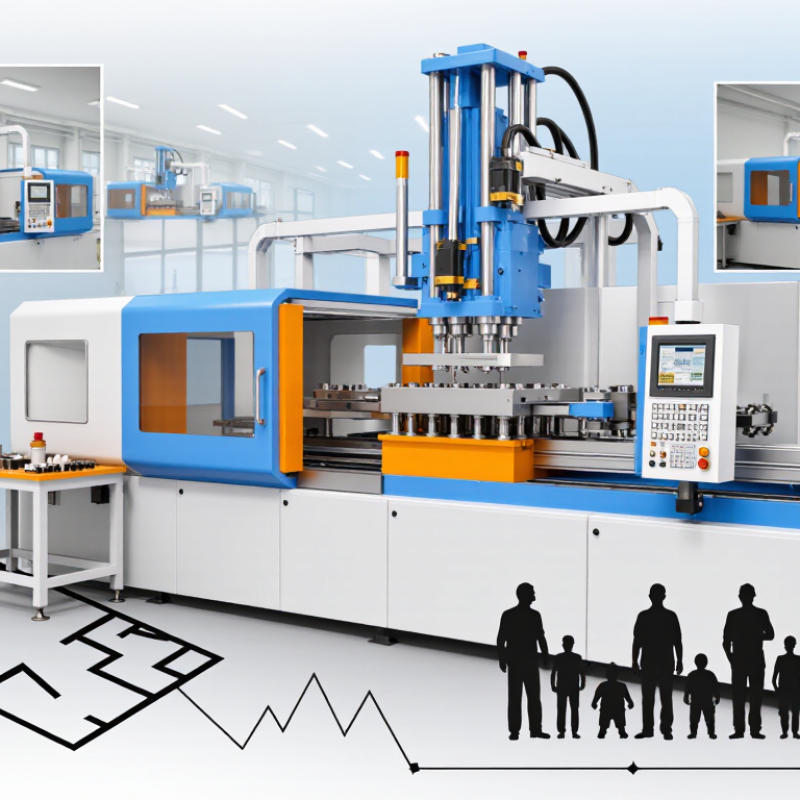
Define the Product and Production Requirements
Before comparing injection molding machines, define the part and the production plan. Record resin type, expected shrinkage, part weight, wall thickness, dimensions, and tolerance. A thin housing with long flow paths behaves differently from a thick, compact component. PlasticsEurope’s Plastics—The Fast Facts 2023 reports global plastics production of 400.3 million tonnes in 2022. That broad material mix makes resin choice a practical starting point, not a detail to leave until machine selection.
Estimate annual demand, shift patterns, target cycle time, and acceptable scrap. Then calculate the required shot size, clamping force, and mold dimensions with a qualified process engineer. Include runner volume and planned future cavities; otherwise, a machine may look adequate on paper but struggle during production.
Check the resin supplier’s processing window and confirm the machine can control melt temperature, injection speed, and holding pressure consistently. Numbers help. They are not the whole story. A tidy estimate can still miss startup losses or maintenance downtime, so leave room for validation.
Tip: Bring a sample part, resin data sheet, and mold drawing to supplier discussions. Ask for a documented sizing rationale and a trial using production material. Revisit assumptions after the first run; actual cycle times can be humbling.
Compare Injection Molding Machine Types
Hydraulic machines remain common for large parts and high clamping forces. Their pump systems can handle changing loads, but may generate heat during idle periods. All-electric machines use servo-driven axes for injection, clamping, and metering. They often suit repeatable, high-volume work where tight shot control matters. Hybrid machines combine electric injection with hydraulic clamping, balancing precision and force. A useful comparison starts with the part, not the machine label.
Energy deserves a closer look. Thiriez and Gutowski’s 2006 study, “An Environmental Analysis of Injection Molding,” estimated process energy at roughly 2–3 megajoules per kilogram, with results varying by material and operating conditions. That figure is not a guaranteed machine-type saving. Actual use depends on cycle time, machine size, cooling, and idle hours. Measure a representative production run. Watch the screw recover, note the clamp movement, and record energy per good part. For example, a small, precise component may favor an all-electric press; a heavy part with a demanding clamp load may fit a hydraulic or hybrid model better. The trade-off is real. I would still question any comparison that ignores utilization: a fast machine sitting idle can be a poor choice.
Calculate Clamping Force and Shot Capacity
Calculate clamping force from the part’s projected area, including runners, then apply a material-specific pressure factor. Plastics Technology’s published machine-sizing guidance gives roughly 2–5 tons per square inch as a practical starting range. For a 40-square-inch projected area, that suggests about 80–200 tons. The spread is wide for a reason: resin viscosity, flow length, wall thickness, and cavity pressure all matter. Small margin matters. Treat the estimate as a starting point, not a guarantee. A short trial with flash or mold separation may reveal that your assumptions were too optimistic.
Shot capacity needs equal care. Add the part and runner weights, then compare that total with the press’s rated shot capacity. Many machine-selection guides recommend using about 20–80% of rated capacity; the suitable range depends on resin and screw design. Confirm whether the rating is based on polystyrene, then convert the shot weight when processing another resin. For example, a lightweight part can still need a larger machine if its runner system adds substantial material. Leave room for a stable cushion, but avoid sizing so large that the shot uses only a small fraction of the barrel. That can increase residence time and make process control less forgiving. These rules are useful, but not perfect; verify them with mold trials and actual fill-pressure data.
Assess Materials, Automation, and Facility Needs
Choosing injection molding equipment starts with the resin, not the machine’s headline tonnage. Confirm the material’s melt range, drying needs, abrasiveness, and sensitivity to moisture. A hygroscopic resin may need a dryer beside the press; glass-filled grades can wear screws and barrels faster. Check the expected shot size against the machine’s usable capacity, and verify clamp force for projected part area and cavity pressure. Oversizing can waste energy and make process control less forgiving. Small details matter.
Automation should match part geometry and production rhythm. A simple conveyor may handle stable, easy-to-release parts, while a robot can reduce handling variation for delicate components. Include end-of-arm tooling, guarding, sensors, and changeover time in the estimate. A robot waiting through long mold changes is not automatically an efficiency gain. Leave room for people, too.
Facility limits often decide what can actually be installed. Measure doorways, ceiling clearance, aisle width, and service-side access before ordering. Confirm electrical supply, cooling-water capacity, compressed air, floor loading, and ventilation against equipment specifications. Utility drawings are useful, but they can be outdated; verify connections on site. It is easy to focus on cycle time and miss the chiller footprint or a blocked maintenance panel. That mistake is fixable, but costly.
Compare Costs, Efficiency, and Equipment Support
How to Choose the Right Injection Molding Equipment
Compare Costs, Efficiency, and Equipment Support
A low purchase price can be misleading. Compare the full operating cost, including energy use, routine maintenance, tooling changes, and expected downtime. Ask for estimates based on your own resin, part geometry, and production volume. A cycle-time figure without those details may not tell you much. Use the same assumptions for every machine under review.
Efficiency is more than maximum injection speed. Check whether the clamp force, shot size, and control features suit your parts, and consider how often jobs will change. A machine that runs quickly but needs frequent adjustment may deliver less output across a real shift. Downtime is expensive. Still, projected savings can be uncertain, so treat them as estimates rather than promises.
Equipment support deserves equal attention. Ask how quickly technicians respond, whether common replacement parts are readily available, and what operator training includes. A clear maintenance plan can reduce avoidable stoppages, especially when production is tight. Speak with current users if possible, and ask what support looks like after installation—not just during the sale. One detail is easy to miss: a capable machine is only useful when your team can keep it running.
How to Choose the Right Injection Molding Equipment
Compare energy efficiency, purchase cost, and equipment support before selecting a machine.
Energy use: Hybrid machines are commonly reported to use about 30–50% less energy than conventional hydraulic machines, while all-electric machines may use about 50–70% less. Actual savings vary with the machine, process, and operating conditions. All-electric equipment often has a higher purchase price, so compare total cost of ownership. For support, check local technician availability, spare-parts access, training, and expected response times.



 08045479132

 Send Inquiry


 Send Inquiry
 Send SMS

