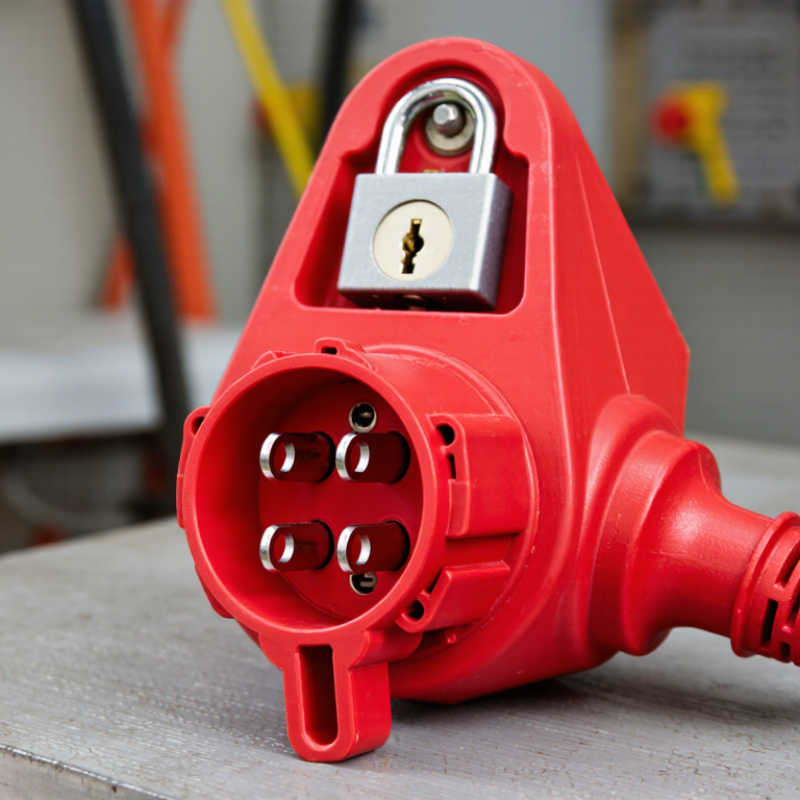
| What it is | An electrical plug lockout is a device that encloses or secures an unplugged electrical plug so it cannot be reconnected to an outlet. | Choose a device designed for the plug’s shape and dimensions, including the plug body and cord exit. |
| How it works | The plug is disconnected from its power source and placed inside the lockout device. The enclosure is closed and secured with a personal safety padlock. | Keep the plug under the control of the person performing the work. Do not treat the device as a substitute for verifying that equipment is de-energized. |
| Plug size and shape | Plug bodies vary in width, length, thickness, pin arrangement, and cord-entry position. Some lockouts accommodate a range of plug sizes; others fit only specific dimensions. | Compare the manufacturer’s stated capacity with the actual plug. Check that the enclosure closes fully without crushing or sharply bending the cord. |
| Voltage and current rating | These values describe the electrical circuit or equipment, not necessarily the mechanical fit of the lockout. A plug lockout does not interrupt current by itself. | Confirm that the plug and equipment are suitable for the circuit. Follow the equipment instructions and site lockout/tagout procedures. |
| Number of workers | A lockout point may need to accommodate more than one authorized worker during group work. | Check the number and size of lock holes. Each worker should apply their own personal lock when required by the site’s procedure. |
| Material and environment | Construction materials and design affect durability and suitability for conditions such as impact, moisture, dust, or temperature variation. | Select a device rated or recommended for the work environment, and inspect it for cracks, deformation, or worn locking features before use. |
| Cord protection | The cord must exit the enclosure without being pinched, cut, or subjected to excessive strain. | Choose a compatible cord opening and route the cord so the device does not damage insulation or create a trip hazard. |
| Basic application steps | Notify affected workers, shut down equipment, disconnect the plug, secure the plug in the device, and apply the required lock and identification tag. | Follow the site’s written energy-control procedure and applicable regulations. Only authorized workers should perform lockout work. |
| Verification | A plug lockout helps prevent reconnection but does not prove that all hazardous energy has been removed. | Verify isolation using the method specified by the equipment instructions and site procedure. Address stored or alternate energy sources as required. |
| Before purchase | Compatibility depends on the plug, cord, lock, work conditions, and the organization’s lockout/tagout process. | Measure representative plugs, check lock compatibility, review the device instructions, and confirm suitability with the responsible safety professional. |



 08045479132
 Send Inquiry

 Send Inquiry
 Send SMS